



Thursday through Saturday were an extraordinary 48 hours for Israel. In Israel, citizens have been on standby to enter bomb shelters at a moment’s notice with significant threats from Hezbollah and Iran. Across the ocean in Paris, Israel achieved the most successful 48 hours in its athletic history. From Thursday evening to Saturday evening, the Israeli delegation to the Olympic Games in Paris won six medals: three in judo, two in sailing, and another medal in gymnastics. Even though I saw it with my own eyes, still, as I write this, I’m double-checking to make sure it actually happened.
These were hours of temporary insanity alongside pure, yet somewhat unfamiliar, athletic joy. Especially in these days, with winds of war raging throughout Israel, watching the literal winds in Marseille, where the sailing competitions were held, provided comfort. Of course, this is just an illusion of normality, since the situation in Israel is far from normal and just one channel away from our Olympic success is the distressing and painful reality. But sometimes one can take comfort in this illusion. How nice and moving it is to take comfort in the successes of Israeli athletes, who deserve every compliment and praise.
***
The Olympic Games are always a show of peak emotion. The shift from the joy of the winners to the sadness of the losers is so extreme. Tears of joy mingle with tears of despair. An athlete whose entire world revolves around a sport and is disqualified due to an early jump, and an athlete who had not lost a fight in five years and is eliminated in his first bout. Athletes who come without expectations and finish as world champions. These are the Olympic Games; that’s their beauty and that’s the emotion they’re capable of producing.
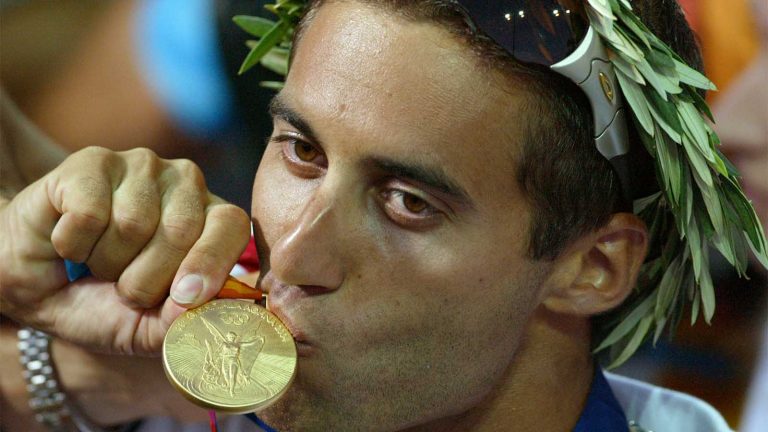
Israeli sports have provided emotional moments in the history of the Olympic Games, but professionally the results did not always live up to expectations. It took Israeli sports 52 years, from Helsinki 1952 to Athens 2004, to win six medals. In Barcelona 1992, it was Yael Arad and Oren Smadja, who were the first to stand on the podium. Then came Gal Fridman in Atlanta 1996 and won Israel's first gold. Michael Kolganov did it in Sydney 2000 and Athens 2004, Fridman did it again and another medal was won by Arik Zeevi. And that was it. Six medals in ten Olympic Games, seven more between 2008 and 2020, and then suddenly this floodgate opened: six medals in 48 hours.
Until Thursday evening, the Israeli delegation to Paris had not recorded any significant achievements. Artem Dolgopyat secured a place in the floor exercise final and the 4x200m freestyle relay team qualified for the Olympic final, but the Israeli delegation had not yet won a medal. For people who don’t follow the Olympics, the medal is everything, and when there isn’t one, they grow impatient. So the cynics sharpened their pens. Skeptics predicted doom. Fans of failure began to celebrate and evil spirits began to whisper.
***
Even before these Olympics began, I wrote that this was the best delegation ever sent in Israel’s history. I wrote that piece based on the results of these athletes over the past four years. None of the medal contenders entered the competition circuit in the first five days, and those who really followed the Olympics couldn’t have been disappointed by Tomer Zaltsman’s 29th place in cycling or Shira Rishony’s loss in judo. The disappointments were in line with expectations and in the first five days there was no real expectation of winning a medal.
The successes began on Thursday night with Inbar Lanir winning silver and Peter Paltchik winning bronze in judo. They continued with another silver win from Raz Hershko’s judo performance on Friday.
Then came Saturday’s Sabbath queen: three medals in two and a half hours. Sharon Kantor stood up to expectations and pressure and won silver in windsurfing. Artem Dolgopyat made an impressive comeback to win silver in gymnastics and Tom Reuveny, the new Olympic champion in windsurfing, took home the most surprising medal in Israel’s Olympic history. All these stories unfolded in less than two and a half hours.

Although these Olympic athletes compete in individual sports, they did not achieve these accomplishments alone. Surrounding every Olympic athlete is a supportive professional network. An athlete’s achievement is the accomplishment of the entire system that works with them, and at the forefront is the personal trainer. Reuveny, the new Olympic champion, is coached by Gal Fridman, Israel’s first Olympic champion. Kantor, the Olympic runner-up, is coached by Shahar Tzuberi, an Israeli Olympic medalist from Beijing 2008.
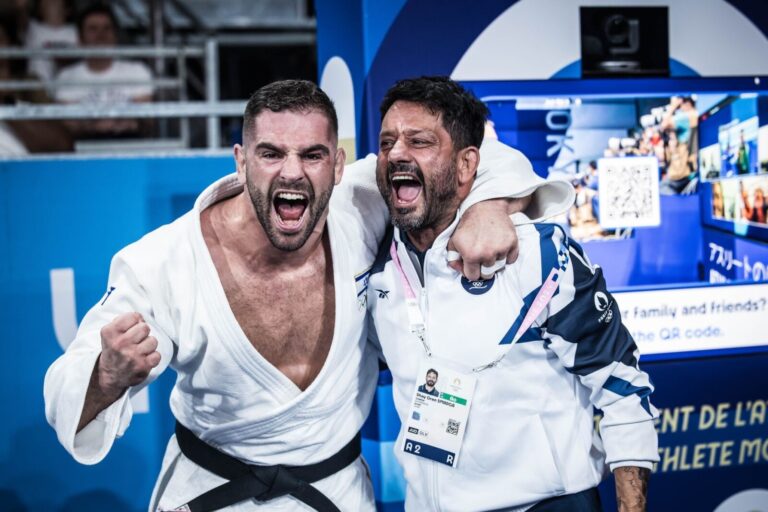
Paltchik, who won a bronze medal, was coached by Oren Smadja, who won an Olympic medal for Israel in 1992. Dolgopyat is coached by Sergei Weisberg, who has been coaching him since Dolgopyat moved to Israel, and the women’s judo team is coached, built and assembled by Shany Hershko. When there are such coaches, you can already start talking about a sporting tradition, and when you see the connection between these coaches and their athletes, you realize that they are also part of this success.
I like to keep things in perspective when it comes to sports, especially the Olympics, but there are moments when it’s okay to lose perspective a little. It’s okay to go overboard with admiration and tears. We have to enjoy these moments, because until now they haven’t been many, and yes, these days, there’s comfort even in illusion, and it’s okay to rejoice. Even if it’s only for 48 hours.