


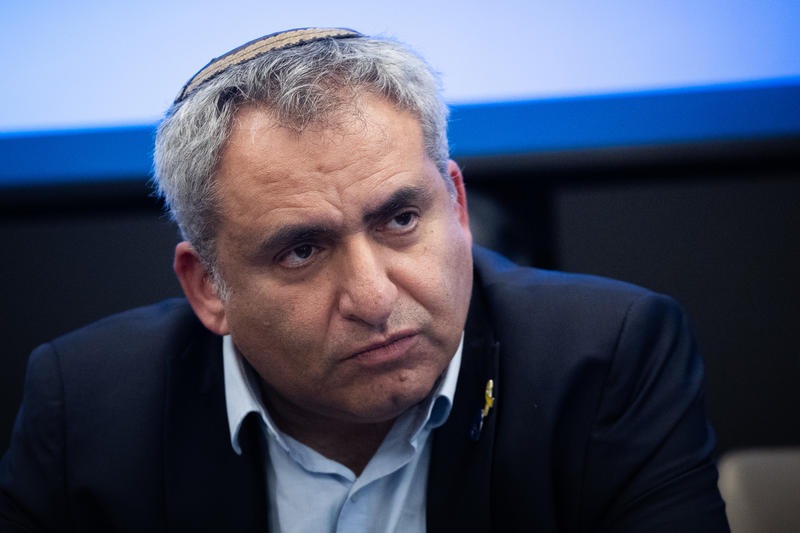
We understood that there is no alternative to direct investment in fortifying the North. The prime minister insisted, against the Ministry of Finance, not to rely on partial formulas,” Minister Ze’ev Elkin, responsible for the rehabilitation of the North and the South, told Davar, in reference to the government’s unprecedented decision to fully fund the fortification of all ground-floor buildings along the northern border area.
The decision, approved last week, also includes significant investment in urban renewal and the fortification of dense housing in the cities of Kiryat Shmona, Nahariya, and Ma’alot-Tarshiha, at a cost of 6.6 billion shekels.
The plan, which is expected to fortify around 10,000 housing units, reportedly faced strong opposition from the Budget Department, which supported partial funding and only for parts of the border area. “It was the right thing to do and required many battles with the Treasury.”
The minister, who has led the rehabilitation programs for the Gaza border area and the North over the past year and a half, called for full funding of the fortification plans.
The partial version of these programs, which covers only two-thirds of the cost of a protected safe room (Mamad), was approved before Elkin took office and suffered implementation failures.
According to him, the fortification crisis is part of a broader problem that has accompanied his work and the work of the rehabilitation headquarters throughout the war.
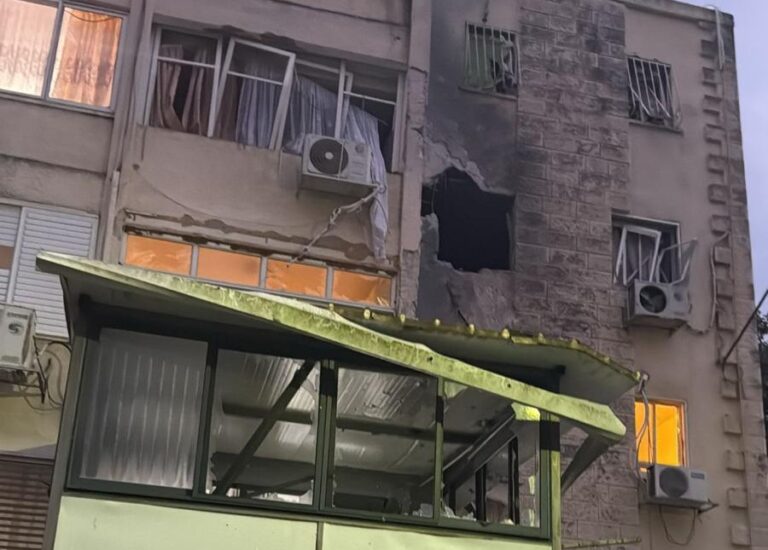
“We as a country are not prepared for civilian emergency events,” Elkin explains. “We can no longer continue operating with regular bureaucratic tools. Just as we have an operating system that knows how to activate all systems during a security emergency, we need an emergency procedure for civilian events, one action that enables dozens of other decisions immediately.
I had to create dozens of legal definitions on my own, and that was one of the reasons for the slow pace. We went through seven levels of hell just to approve all the reconstruction decisions, and we will go through seven more during implementation.”
“In the North, you have to fight for everything,” says the head of the Frontline Forum and head of the Mateh Asher Regional Council, Moshe Davidovich, following the government decision. “We are given the feeling that everything we are entitled to is treated as a benefit.”
He made the remarks today at the Eli Hurvitz Conference for Economy, amid ongoing uncertainty regarding how tax benefits will be distributed.
The benefits are currently budgeted at 300 million shekels, but a series of additional government and Finance Committee decisions are still required for them to be implemented.
“The government decision is welcome, but it took two and a half years to pass—through blood, sweat, and tears. And I ask: why does it have to be like this? The consequences of this conduct are clear. We are among the strongest regional councils in Israel, and even from here, people are already leaving.”
“This is the most contentious decision I’ve ever been involved in,” says the head of the North Momentum Forum, Aviad Friedman, referring to the process that led to the creation of the North’s multi-year recovery plan.
He added that despite unresolved issues, the plan represents a significant achievement for advancing the rehabilitation of the North. “I promised that by Independence Day we would finalize the decision, but in the end, with delays, we managed to submit it. We will fight to ensure that the 300 million shekels allocated for tax benefits reach all northern residents who are entitled to them.”