
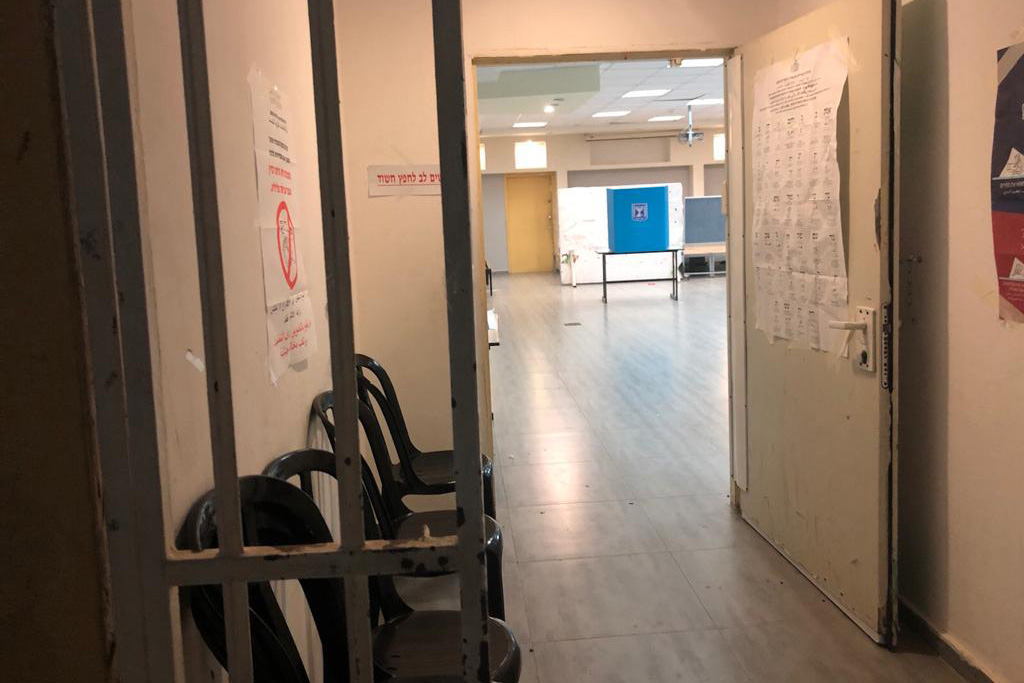
The ritual of Israeli election campaigns is all too familiar: as election day approaches, the political system is gripped by demographic anxiety. On the right, voices of delegitimisation can be heard, while on the left, paternalistic outcry campaigns urge Arab society to awaken from its “chronic apathy.” On both sides of the political divide, there is a convenient tendency to treat Arab citizens as a homogeneous bloc, a button that can simply be pressed at the last minute.
But a closer look at the data from a 2025 survey conducted by the Raqaz Institute at the Galilee Society, among 1,500 respondents, dismantles this myth piece by piece. Arab citizens do not dismiss the democratic process: more than 76% consider elections important. So where do the voters disappear to? The answer lies in a concept every political commentator and politician should understand: “conditional voters.” Around 40% of the public say they vote “sometimes.” They are not ideological boycotters, and they are certainly not apathetic. They are simply waiting to see whether their vote will carry real weight the day after the election.
The hierarchy of trust in institutions helps explain part of the picture. At the bottom is the police: 46.9% of the public do not trust them, and around a quarter have no trust in them at all. Next is the Knesset, with 40.7% expressing distrust, while only around one in ten express a high level of trust in it. The government is viewed differently, as an executive body that people can engage with and obtain funding from, while the judicial system enjoys the highest level of trust, at around 36%. This is not an outright rejection of the state, but a sharp distinction between institutions perceived as delivering something and those perceived as having abandoned the public.
There Is No Single “Arab Street”
The most striking anomaly in the data concerns the generational divide, which contradicts every conventional assumption. It turns out that the older generation (55 and above), which expresses the deepest distrust of state institutions — including 61% who distrust the police and around 54% who distrust the Knesset — is the group that votes at the highest rates: 51.6% of those in this age group say they “always” vote. For them, voting is an act of survival, a historic commitment to making their presence felt.
Young people, by contrast, present a completely different outlook. Although 18–24-year-olds report higher levels of trust in the judicial system (around 47%, compared with around 36% among the public as a whole), and around one-fifth of those aged 25–34 express high levels of trust in the government, around a third of young people stay home on election day. Young Arab citizens today view the ballot box in terms of returns and investment. They are willing to believe, but they demand tangible results. They refuse to be a captive audience.
These tangible results are measured at the municipal and everyday level, long before they reach the Knesset chamber. It is impossible to separate the ballot from the broken road leading to it. Almost 40% of women in Arab society do not feel safe in their neighbourhood, and the proportion of women who do not feel safe at all is four times that of men. When organised crime dictates the pace of life in a neighbourhood, it is difficult to convince a woman that her vote will bring about change.
Around 45% of residents are dissatisfied with traffic and congestion within their localities, and around 38% are dissatisfied with the state of roads and pavements. More than a third complain about the lack of green spaces and parks, while around a quarter are dissatisfied with public transport. These are not merely quality-of-life issues; they are the concrete measures through which Arab citizens assess political promises.
Moreover, the geography of voting shows that there is no single “Arab street.” There is a clear gap between the more stable north, where the potential for participation exceeds 90%, and the central region, where most people vote “sometimes” and a pragmatic approach prevails. In the Haifa district, there are signs of erosion, with 21% saying elections are not important at all. In the south, the picture becomes sharply polarised, with around a third not voting.
The type of locality also changes the picture: in small villages, 51% consider elections very important and only 3% reject them, while in mixed cities the proportion who reject them rises to around 19% — a finding that should concern anyone who speaks of shared society. In unrecognised villages, meanwhile, the rate of complete abstention exceeds 43%, a painful reflection of relations with a state that denies the existence of tens of thousands of its own citizens.
The conclusion is clear: full democratic participation at the national level cannot be expected when the state is absent at the local level. Increasing voter turnout in Arab society will not come from last-minute campaigns, catchy radio jingles or billboards. It will be achieved only through a sustained fight against crime that restores a sense of security to the streets, genuine investment in infrastructure, and recognition of Arab citizens as legitimate and equal partners in decision-making, rather than as an electoral lifeline once every four years.
As long as this partnership remains conditional and qualified, “conditional voters” will continue to exercise the only leverage they have left: voting with their feet.
Ahmed Sheikh Muhammad is the CEO of the Galilee Society and a partner in the “Tza’ad – Trust-Building Communications” project.