
Food, consumer goods, fuel and electricity – everything has gotten more expensive, especially with substantial price rises announced in recent weeks. But while big businesses are maximizing their profits, neighborhood business owners, those just starting to recover economically from the past two years of the pandemic, find themselves in a tough dilemma: should they absorb more losses, or transfer the cost to their customers?
Roey Shadur (50), restaurant owner: “Monopolies need to be recognized; prices should be monitored”
Shadur opened his home-style restaurant “Menza” 11 years ago, close to Israel’s stock exchange building in Ramat Gan.
“To get the necessary funds and set up the restaurant, I used my house as collateral,” Shadur tells Davar. “The leftover money I set aside for my own salary has risen not one shekel in the last decade. The only thing that has risen is the cost of living.”
Shadur says that during normal times, the average profit margin in the restaurant industry is between 20-25% per quarter. In the last two years, it has dropped to 10-15%.
“I did not come into the pandemic with financial stability that I could afford not to work for a year,” says Shadur.
“I worked every day throughout the pandemic and all the lockdowns. We dealt with all the hardships one can imagine: managing deliveries, pick-ups, etc. We didn’t close for even one day,” he continues.
“Luckily, we’ve experienced a recovery of some sorts. We’ve gone back up to the volume of 80-90% [of the profit margins] of the previous cycles. But then Omicron arrived, and we’ve gone a step backward. And now since there are no elections, we aren’t receiving any stipends [which the government hands out to various industries to lobby for their vote].”
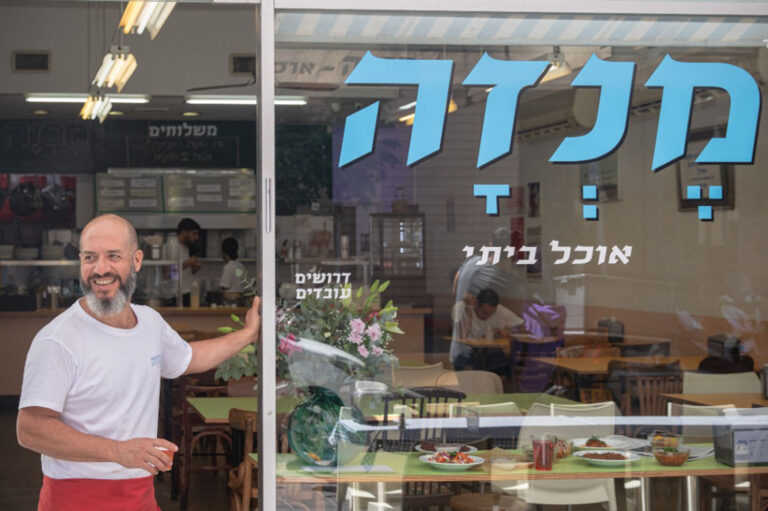
Shadur was forced to raise menu prices at the restaurant.
“Everything has become more expensive, from worker wages to shipping raw materials, the plastic-ware for delivery and take-out, which are now our main areas of operation,” he explains.
“Every Monday and Thursday, I receive letters from our suppliers with price increases. An increase of 8% here, 5% there, and 10% over there. I pay 10,000 shekels ($3,089) in property taxes, seven times that of my house. The landlord wants to increase my rent, and now the electricity and water bills are also rising,” Shadur says.
Shadur understands that it is very expensive for his employees, like him, to live in the Tel Aviv metropolitan area.
“Even when I pay a relatively decent salary, 50 shekels ($15.45) per hour, my employees get 8,000-9,000 shekels ($2,472-$2,781) a month. Living with three kids in metropolitan Tel Aviv, that salary is just not enough,” he says.
“The workers and I are in the same boat. People are trying to divide us up and say there are workers and there are employers, that these are two very different sectors. But we all live in this country in the end. The 120 people in the Knesset do not care about us, the nation in general and the self-employed in particular.”
Shadur believes that the government can adequately tackle the wave of price increases by combating monopolies, but instead, it only eases things for the monopolies in the economy.
“It needs to begin with declaring that food distributors and manufacturers like Osem and Strauss are monopolies, and prices should start to be monitored. Instead they give them tax breaks,” he says. “When the government rolled out the single-use plastic tax, all utensils up to a liter were exempted for these companies. But they didn’t do this for cutlery and other plastics for the restaurant industry or for cafes.”
Ra’aya Mevashev (62), corner store owner: “I don’t know how long people will continue to scrape by”
Mevashev is often referred to by the local residents of the Shapira neighborhood in south Tel Aviv as “the mother of the neighborhood.” In fact, she has 4 children and 17 grandchildren.
When Mevashev was 18, she immigrated to Israel from Bukhara, Uzbekistan, some 45 years ago. Since then, every morning, she opens her family-owned corner store called “Rachel’s Grocery.”
“I do not remember anything like [the drastic price increases] happening before,” Mevashev says. “It was very difficult at the onset of the pandemic even after all the lockdowns. However, people still preferred to come shop here because they didn’t want to shop at supermarkets.
“Many people fell ill in the neighborhood, some also died. It’s been a very difficult time for the whole area,” she says.
During the interview, Mevashev simultaneously rings up a six-pack for a regular at the register, and prepares a sandwich for a child from the neighborhood, who visits her during his breaks from the school across the street.
“Meanwhile, food products like raspberries and soft drinks have become more and more expensive,” she goes on. “Customers used to buy soda by the crate, but today they only buy a bottle or two. We also have to pay more; the products cost more, and so do the bills.”
")
Despite all this, Mevashev does not worry about business. “Somehow we’ve managed to survive, little by little,” she sighs.
But Mevashev is very worried about the residents of the neighborhood.
“I do not know how long people will continue to scrape by here. Most of the people here are working-class, and there are a lot of religious people here with a lot of children as well,” Mevashev says.
“You have to go out and buy groceries, go to the supermarket. I try wholeheartedly to do what I can so as not to raise the prices for these families. But there are things I have no control over, it comes from above. I do not get to decide what will be taxed and what won’t; I don’t get to decide that there will be no tax on raspberries or that the pasta will cost less.

“Nowhere abroad are there such high prices. On the one hand, the taxes here are high, and on the other hand the cost of living is also very high. It is very difficult to live here,” Mevashev explains. “At least in the previous government, they provided economic relief and there was some semblance of concern for helping small businesses. God help us with what's going on here today.”
Mevashev calls on the government to make things easier for people.
“Everything went up because of the pandemic, but the government should do what it can to mitigate the rising prices. They need to address rising costs of electricity, fuel, and food. Something must be done, otherwise people will not be able to live here, this country we came to because it is ours.”
Baruch Nisimov (50), salon owner: “Simply making ends meet and surviving – this is more and more how life looks here”
Nisimov is a hair stylist and the owner of the “Baruch Style” salon for the last 32 years in south Tel Aviv. At the time of our interview, he was skipping his lunch break to schedule appointments with customers.
“The last two years have been awful,” says Nisimov somberly. “Lots of losses across the board. Former customers started to cut their hair on their own, and after all the lockdowns even fewer customers returned. We did experience a decline, but recovered somewhat up until the Omicron wave arrived. Now it’s not what it used to be.”
“I’ve seen that electricity prices will now increase by 10%. Using electricity and electronics is central to the salon, such as lights or hair clippers. Everything now will cost me more. The water prices are rising as well, so each wash will cost more too.
“Other than that, I also buy products and cosmetics from abroad, and the suppliers have announced that there will be price increases because shipping costs have soared,” he continues. “The property taxes will also go up. You add a little cost here and a little cost there – these all add up and in the end, it’s significantly high. To make matters worse, I was asked to return the stipend I received [from the government] during the lockdowns.”
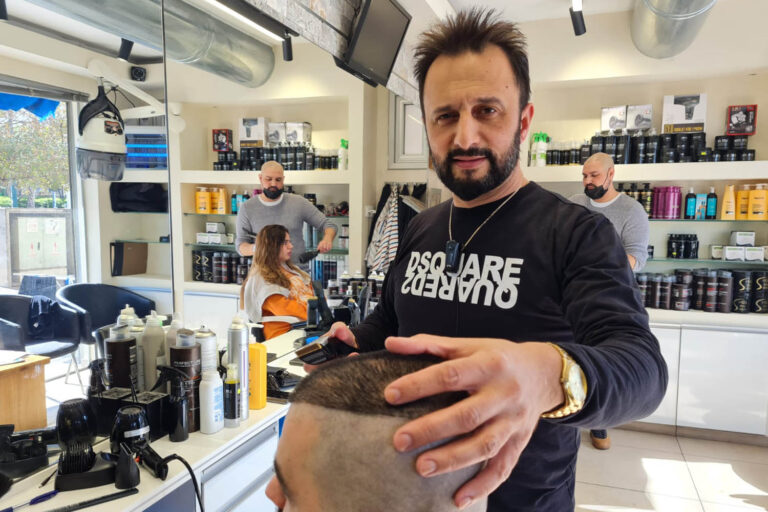
Despite all the costs incurred by Nisimov, he has yet to raise his rates for haircuts.
“Times are hard for people right now. I hope I can handle it. I don’t have it in me to place the business costs onto my customers,” he says.
By his rough calculations, Nisimov takes on price increases of an additional 1,000 shekels ($309) a month.
“It will not put me out of business, but I will have to put in more hours, give up on some luxuries. Traveling less and going out to eat less. I’ll be more focused on simply making ends meet and surviving. This is more and more how life looks here [in Israel].”
Nisimov also believes that the government can make it easier on businesses.
“For a start, they can lower taxes,” he asserts. “They even promised to do it, but it never happened. On fuel, for example, they take more than 60% tax. The country is in excellent condition, all the reports show that the country is rich, but the people are poor.”
Ya’akov Ofri (73), taxi driver: “The weak are the ones who bear the brunt”
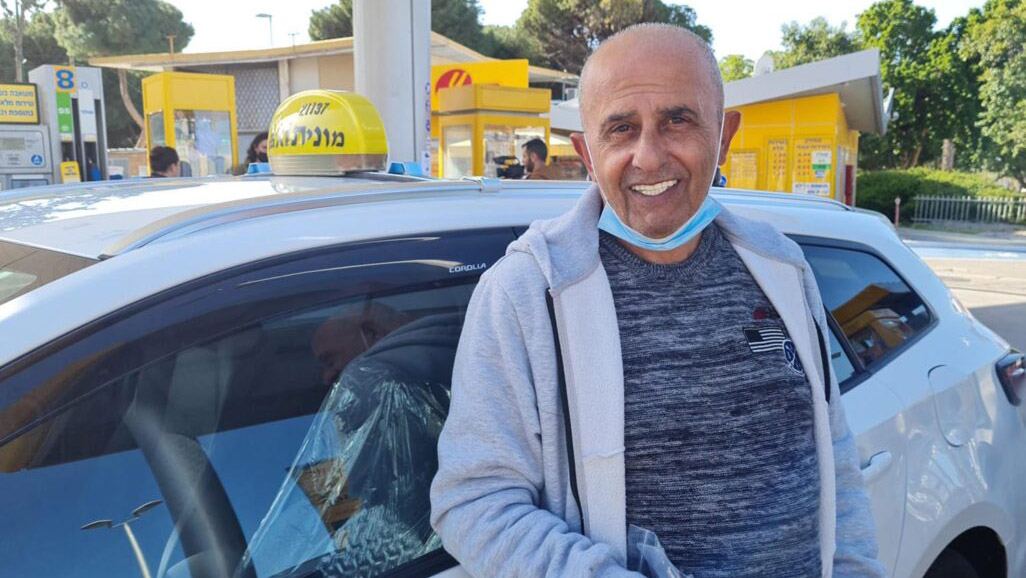
Ofri is a taxi driver and has been working since 1968. He recently bought a new taxi so he could continue working. After the purchase, he learned of the fuel price increases, which would cost him thousands of additional shekels a month.
“Rising fuel prices are affecting us taxi drivers, very much,” Ofri says. “I cannot raise my rates, so I end up working at a loss. It’s everywhere: the supermarkets, the electricity, and for me, the gas station, which is the most important thing. This is a big problem.”
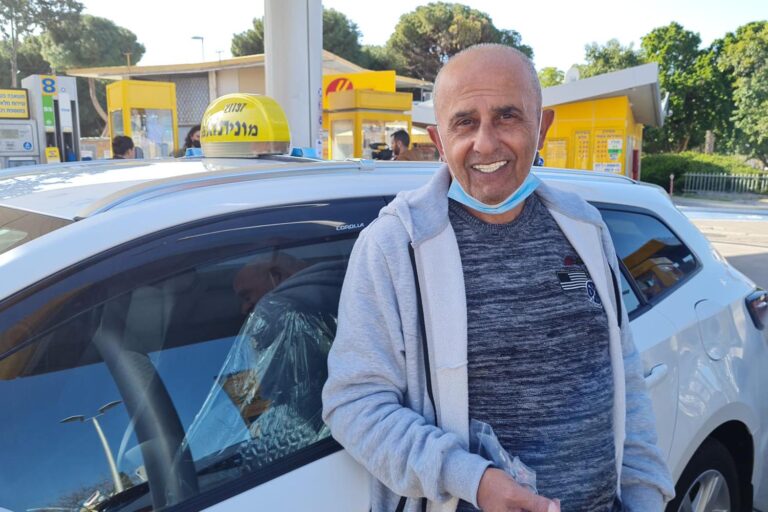
Ofri would like for the government to lower taxes.
“Once you lower the tax on products, everything goes down, and life is cheaper. I understand that everything has a cost, but the government needs to do something to make it easier, and they can. In fuel for example, 60% goes to tax. If they lower the tax by 40%, they will cover the increase.
“If you directly cut taxes, the ones who benefit are the corporations. But when taxing products like fuel and food products, the weak are the ones who bear the brunt of the cost.”
Shauli Aviv (51), bus company owner: “I never thought before leaving Israel before, and now I’m seriously contemplating it”
Avivi is the owner of the “Avivi Ovadya” transportation company, which has been operating in the tourist industry for 57 years. His father Ovadya founded the company in 1965, and up until the pandemic, he employed 45 workers and owned 40 buses.
In the tourism industry, businesses have yet to start returning to regular work. With less tourists in Israel in general, busing companies in the industry are also forced to absorb massive increases in fuel prices on top of the work stoppages.
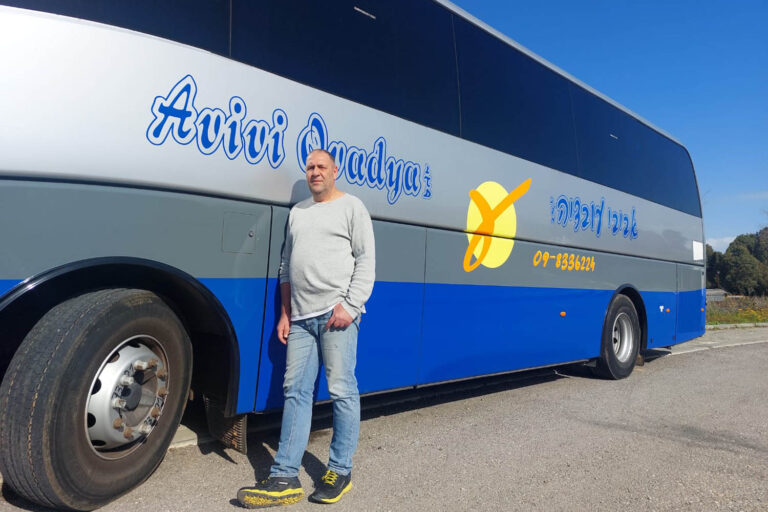
“The amount of tourist activity today is about 10-15% that of a normal cycle,” he says. “We have ten workers and 25 buses left with us, of which ten are usually in use.
“Before the Omicron wave began, there was somewhat of a revival happening in tourism. We already had confirmed bookings, both from tourists from abroad and from Israelis, and then with the government imposing travel restrictions, people canceled.”
The rising prices of fuel greatly affects Avivi’s business, but he cannot raise prices.
“Diesel fuel has gone up close to an additional 40 agorot per liter, making each trip cost much more. Insurance has also risen, and drivers’ wages too. I cannot raise my prices for our customers because then there will be no work.
“We have been struggling with this for two years, and all the companies will jump [to book] every trip, even if it’s at a loss. I have no chance; I have no customers to raise the price for.”
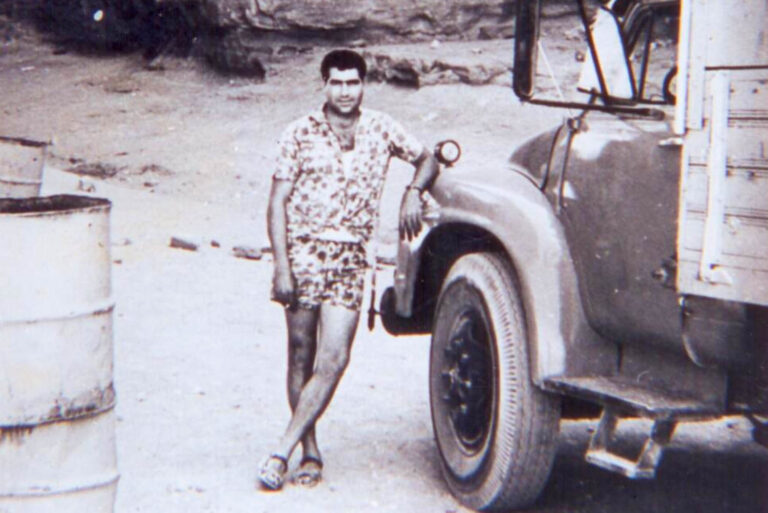
The rising prices also affect Avivi on a personal level.
“I can’t let my kids get snacks anymore when we go to the supermarket, “ he says sadly. “We have already taken out our savings – we have no money left. This month will be critical, I’m afraid to think about the end of the month. I only think about the 10th of the month [when Israelis are paid] and about my employees.”
Avivi believes that the government needs to see who is really being hurt by the price raises and offer help.
“I expected economic relief from the government – help with property taxes, help for businesses to recover, help with taxes in general. But they come and act as if nothing had happened. Instead the prices go up.
“This government, which was elected to make a change and placed livelihoods at the forefront of its agenda, is unwilling to look beyond the reports. If the situation here is so good, why do I worry every night?”
“My tears have dried up and my heart closed, I have become apathetic. I am so disappointed that I have no words,” he continues, angrily.
“I am Zionist in every inch of my body: I serve in the IDF reserves, and I love this country. My father is already 82 years old, he comes to work here every day. He sees his life’s work going down the drain. I feel so abandoned, so empty. I never thought about leaving Israel before, but now it’s a thought I’m seriously contemplating.”
This article was translated from Hebrew by Zak Newbart.