
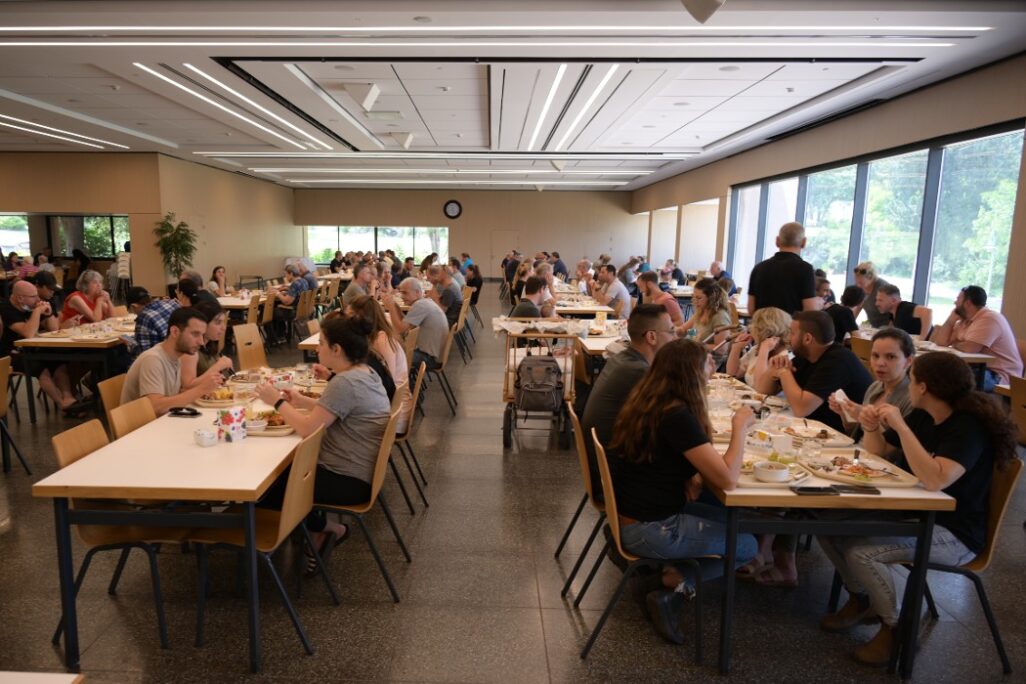
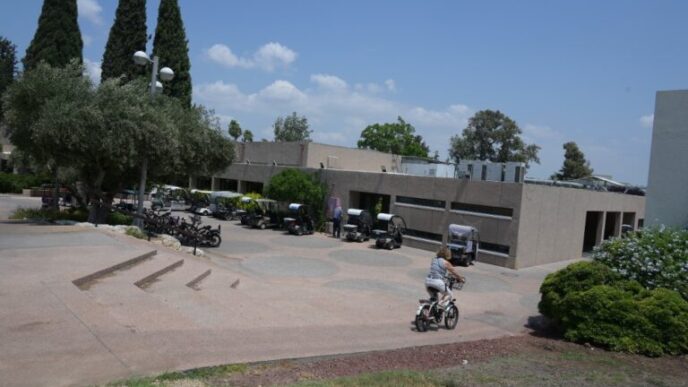
The large grassy lawn in front of the dining hall is empty. The blazing sun keeps the children from romping through the square that stands at the heart of the kibbutz. Inside, hundreds of people fill the long dining hall tables. They are enjoying a hearty lunch, sipping soda water from their glasses, and chatting about current affairs: agriculture, new technologies, gossip, and politics. A routine lunch on a summer day in the dining hall of Kibbutz Mishmar HaEmek.
The tables are filled by young and old, workers on their lunch break, children and pensioners. Some are dressed in t-shirts and jeans, others in blue work shirts or button-downs. Everyone lines up with their tray. The kibbutz children sit around a few tables at the end of the large dining room, together with their counselors rather than next to their parents. It could be a picture of the kibbutz seventy years ago, or fifty years ago, or thirty. But it’s not. It’s the kibbutz in 2022.
Working for passion, not profit
At Mishmar HaEmek, in northern Israel, the experimental model of collective living known as the kibbutz has been successful. One hundred years after the kibbutz was founded, its members get up every morning and choose to live their lives in full financial cooperation. Apart from the technology, it seems that very little has changed in the hundred years of the kibbutz. It still has a vibrant communal culture that reaches its peak during the high holidays, but is also felt in everyday life. People still wear plain clothes while going around the kibbutz on their bicycles and scooters. And it all still rests upon the foundation of a shared value of labor. Here, work is done for creative expression and personal satisfaction, with no expectation of payment.
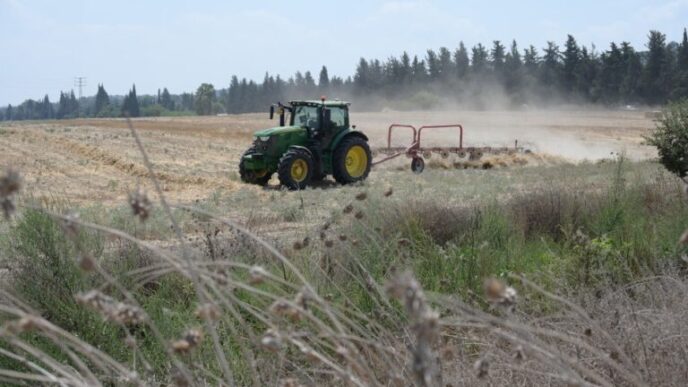
The grain fields around the kibbutz highlight the changing seasons. New neighborhoods are being built one after another, a testament to the number of young people who grew up on the kibbutz and wish to continue living there. The director of the factory earns the same salary as the laundry workers. The manager of the kibbutz’s fleet of cars has to deal with dozens of problems that arise every day. The two secretaries of the kibbutz run from meeting to meeting, and everyone is very proud of their home.
"Even when there was no food, they invested their energy in singing together and putting on plays"
Over the years, Mishmar HaEmek has become one of the largest and richest of Israel’s kibbutzim. In January 1922, a group of graduates of HaShomer HaTzair, the world’s first (and at the time, only) Zionist youth movement, met as construction workers while paving the new highway from Haifa to Neve She’anan. They decided to establish a new kibbutz, and to fulfill the youthful dreams they had woven together in their Hashomer Hatzair days. "They wanted to establish a new society, a better and more just society than the one they left in Europe," says Amram Gordon, 88. "Zionism, socialism, and the brotherhood of nations – this was not said with cynicism but with complete faith. They were people of great vision, with a deep willingness to sacrifice. Humble people, who were ready for the hardest jobs imaginable, and most importantly – people of culture."
")
From the very beginning, when they were still living in tents in Haifa, the kibbutz had a drama club that put on several plays each year, a glee club, an orchestra, and a weekly newsletter. "Culture has always been a very central thing in this kibbutz," Gordon says with great pride, "even when there was no bread, they invested their energies in singing together and putting on plays."
")
On January 21, 1922, the group of youth movement graduates formally established their kibbutz under the temporary moniker of Kibbutz Bet (Bet being the second letter of the Hebrew alphabet, with Aleph having already been taken by a different kibbutz a few months before). They were young people who immigrated to Israel between 1920 and 1921, most of them graduates of HaShomer HaTzair who grew up in the same families, in the same movement branches, and in the same small towns in Galicia (now part of Poland).
"The world around us has changed, but the basic forms of the kibbutz remain the same"
"The members of the kibbutz, who lived in Neve She’anan, worked as contractors paving roads," says Gordon, who was the director of the Poalim Library until its merger with the publishing house of the United Kibbutz. This year Gordon published the book “Early Beginnings,” telling the story of the beginnings of Kibbutz Mishmar HaEmek. "They wanted to live in a kibbutz, but they didn't know how to do it, or in the accepted term at the time – the 'kibbutz image' was missing, and on the subject of the desired kibbutz image there were discussions every evening. It was not clear how to turn the desire to live together in a society based on sharing and equality into the language of action. Organizational tools were missing."
The kibbutz initially had 85 members, more men than women, and one baby. The first institutions that were established were the 'Sidur Avodah,' the distribution of jobs among the kibbutz members, and the 'Kupa Meshutefet,' the shared economy. After a few weeks some of the members decided to share their clothes and thus the communal laundry service was established. Later, the kibbutz members turned a dilapidated shack into the communal dining hall.
"What's amazing is that these institutions are still operating today even after a century has passed," says Gordon. "The whole world around us has changed, world wars, the establishment of the State of Israel, technological changes, but the basic forms of this kibbutz remain intact, and those who run them are the grandchildren and greatgrandchildren of the founders." Four of his five children are kibbutz members, as well as some of his 15 grandchildren.
"The kibbutz meetings used to deal with Communist China, today they’re more practical"
After half a year in Haifa, the kibbutz moved to the agricultural settlement of Nahalal, where the members worked as contractors draining swamps. "On January 21, 1923, the first anniversary of the foundation of the kibbutz was celebrated," wrote Gideon Menor, who joined the kibbutz in the early Nahalal days. "The entire public gathered in the dining hall. The members sat in a circle in silence, and in the middle of the dining hall was a box of oranges, an extravagant refreshment. Then Baruch stood up and said a few words. Although I already understood a little Hebrew, I did not understand his words. I saw that everyone was silent and lowered their heads. Is he saying something serious or sad? Then everyone danced on the floor, which was covered with a thick layer of mud. The next day, Yehoshua explained to me that here it is not customary to make speeches at celebrations. The main thing we want is for everyone to feel the joy of the holiday. The conversations also carried the same character. I remember one conversation, this time they all sat quietly, lowered their heads and waited, then one girl stood up and said something, and then there was general silence again. Then they said that this girl's name was Yitka, and that she announced that she was pregnant."
The kibbutz-wide meetings are one of Mishmar HaEmek’s most prominent institutions. "Nowadays, kibbutz meetings are held about once every two weeks. This week there were two meetings," says Gordon, who stopped participating in the meetings after celebrating his 80th birthday. "I decided it was time to let the young people run the kibbutz. I trust them."
Over the years, the kibbutz meetings have changed their character. At first, they took the form of individual confessions in which one member at a time would share with the public. "You have to remember that they were 17-25 year old boys in those days." Later, the meetings took on a more practical tone. Initially, decisions were made only by unanimous consensus, which demanded that long hours be spent on every minor issue. Unanimous consensus was later replaced by simple majority: first by show of hands, and later by ballot. In some of the meetings fateful decisions were made, while others were reserved for updates on the business activity within the kibbutz economy or on the various political arenas, as well as for the development of an ideology. "Nowadays there are no more ideological conversations, only practical ones," says Gordon. "I remember, for example, meetings we held in the 1950s about our relations with Communist China. Three meetings in a row with the aim of reaching a common understanding. In my opinion, this is missing today."
")
One of the changes Gordon made when he served as the kibbutz secretary in the 1990s was to videotape and broadcast live the kibbutz meetings to the members' houses. "There were those who objected because they said that the members would stop participating in the meetings, but that didn't happen. On the contrary – it allowed even those whose health prevented them from attending to feel that they took part in the conversation." During the Covid-19 pandemic the kibbutz meetings were moved to Zoom, and since then they have been held in person with the option of participating via Zoom. "I think we should stop broadcasting on Zoom. There is something meaningful in a face-to-face meeting," opines Gordon.
The Jerusalem of HaShomer HaTzair
After a period of about two years in Nahalal, in the fall of 1924, Kibbutz Bet moved to the city of Afula, where members built the city’s first houses, as well as the campus of the Emek Hospital, which still operates today. In the summer of 1926, the kibbutz united with Kibbutz Dalet of HaShomer HaTzair, in a ceremony held like a wedding with a ketubah (ceremonial Jewish wedding contract) stating : "The five-year-old groom Kibbutz Bet said to the beautiful and graceful virgin Ms. Kibbutz Dalet, one year old: Be unto me a wife according to the religion of Moses in Israel…" It was agreed that together they would establish a medium sized kibbutz. "120 members is ideal," they said.
")
Land acquisition began in 1926, but for several years only some of the kibbutz members were allowed to reside on the land, cultivate the fields, and start building the kibbutz. At the same time, several other kibbutzim had already been established by immigrants who grew up in the branches of HaShomer HaTzair in Eastern Europe and sought to establish an independent kibbutz movement in Israel. Thus, in 1927, the “national kibbutz” of HaShomer HaTzair was established, with Mishmar HaEmek becoming its capital over the years. The rapidly growing kibbutz was nicknamed "the Jerusalem of HaShomer HaTzair," and some of its members were among the leaders of the national movement.
Attacks on the kibbutz only strengthened its spirit
During the 1929 Arab riots, the isolated settlement was attacked by a mob of rioters. The attack was repulsed by the kibbutz members, but then, at the request of the British police, the members evacuated the settlement until the situation calmed down. When they returned after ten days, they found their fields and huts destroyed and burned. “Instead of breaking their spirit, it only strengthened them," says Gordon. "They decided to build positions and fortifications, and that the entire kibbutz would move to live in the new settlement.” In 1930, all of the members moved, along with their children, to the new settlement. Menachem Ussishkin, an early Zionist leader and then-president of the Jewish National Fund, gave the kibbutz the name Mishmar HaEmek – Guard of the Valley. "It was an isolated spot at the southwestern end of the Jezreel Valley. There were only Arab villages around. Some were hostile, but others were friendly. We used to play with them, and even celebrate holidays together – Jews and Arabs," says Gordon, who was born after the relocation of the kibbutz as its 36th child.
"It was an isolated spot at the southwestern end of the Jezreel Valley. There were only Arab villages around. Some were hostile, but others were friendly. We used to play with them, and even celebrate holidays together – Jews and Arabs"
With the outbreak of the 1936 Arab revolt, the kibbutz was attacked with gunfire. The members of the kibbutz rushed to take positions and return fire. The next day, the poet Uri Zvi Greenberg arrived at the kibbutz. "He arrived shortly after a fire broke out in the forest planted by members of the kibbutz on the slopes of Ramot Menashe," says Gordon. "He asked one of the women in the kibbutz yard where all the men were. She told him that they had run to put out the fire, and suggested that he also help. Zvi Greenberg turned around and disappeared." The next day, a poem called “Abandonment of the Valley” appeared in the Daily Mail newspaper, in which Zvi Greenberg cursed the members of the kibbutz, inspired by the biblical curse delivered by David on Mount Gilboa: No dew on the mountain, no tree and no grass. "Instead of helping to put out a fire he went to write a poem full of intense hatred, during the outbreak of the Arab Revolt. These are the seeds that were planted for the intense hatred that has developed in right-wing circles against HaShomer HaTzair," says Gordon.
A kibbutz where people live on spirit, not money
Over the years, the kibbutz grew and several of its members and children became public figures, including members of the Knesset and government ministers. Shomriya, the educational institution established in Mishmar HaEmek in 1931, became a model for the educational institutions of the national kibbutz that were established one after the other after the state was founded. Mishmar HaEmek served as the lively capital of HaShomer HaTzair, but it struggled economically.
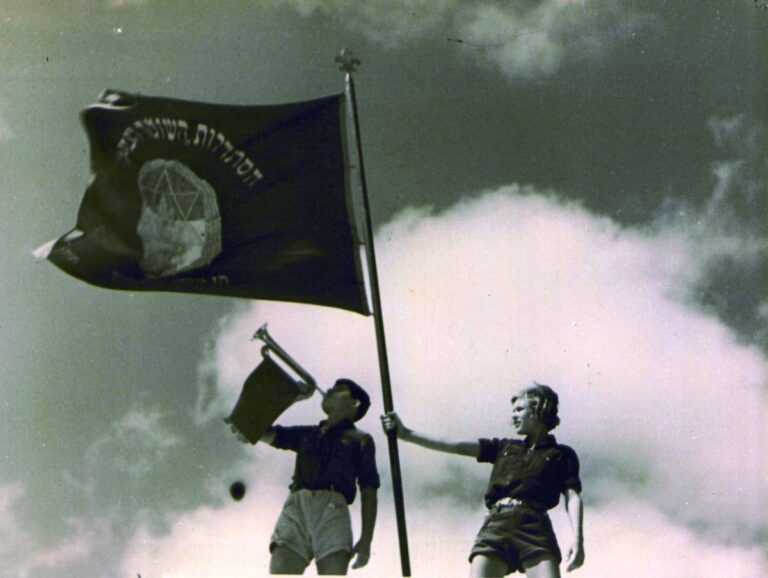
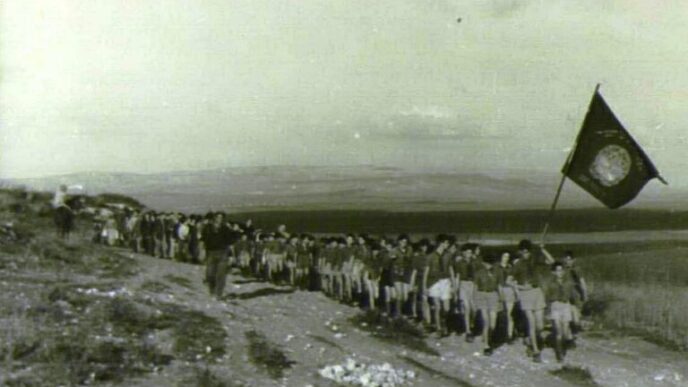
"We tried to do everything you can imagine to earn a living," says Ran Golan, who grew up on the kibbutz. "In the beginning, we concentrated on agriculture, and there was a large variety of agricultural work here. In the 1950s, we moved into industry. They said that the factory was built so that the founders, who had already begun to age and couldn’t handle manual labor, would have a place to work. We tried to produce all kinds of things – sockets, electrical components, light bulbs, and it doesn't end there: many other initiatives and businesses were founded here. I, for example, established a dairy, and learned to make cheese on my own." Over the years Mishmar HaEmek was seen as a spiritual kibbutz, a kibbutz with a lot of ideology, where the people live from spirit and not from money.
")
“Who would’ve thought that a net factory would become a huge success?”
In the 1980s the kibbutz went into debt. "We used to get a single package of chocolate once a week for all of the children to share," says Yael Mas, who defines those days as "a period of severe poverty." At the height of the kibbutz movement’s crisis, when most kibbutzim switched from the traditional method of a collective monthly budget to individual salaries and attached prices to the various services provided to members, Mishmar HaEmek went through a reverse process. "There was a process of closing ranks here," says Mas. "The feeling was that especially in times of crisis, we had to get through it together. We voted on decisions and regulations that solidified economic cooperation. Who could’ve known then that out of all of our countless attempts to find a steady source of income, it would be the net factory, which at the time was not very successful, that would become a huge success?"
")
The factory at Mishmar HaEmek produces nets for use in packaging, agriculture, and sun protection. Almost all of its output is exported, and it has subsidiary factories in Brazil, Vietnam and Italy. Its success brought financial security to the approximately 600 members of Mishmar HaEmek, and the kibbutz has grown richer over the past twenty years. "The collective economy and the equal value of labor were there before the net factory," says Golan, "and we hope they will remain after."
"One of our strongest principles is the equal value of labor," says Michal Shammai, one of the two kibbutz secretaries. "I think this is the most important innovation we have. It is a fact that even in difficult times, when we were really poor, this principle kept us going. Every member is required to work, and the kibbutz as a collective provides for all of their needs. This is the basis of our entire way of life and it’s what keeps us together even today."
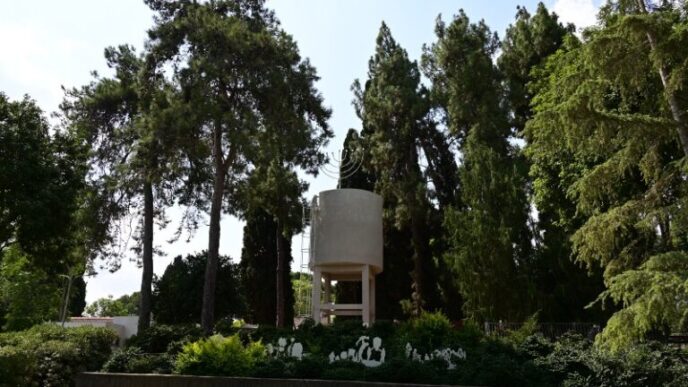

"I’m proud of what we managed to do here, I’m proud of the equal value of labor"
In the laundromat ('the commune', as the locals call it) the laundry workers fold the kibbutz members’ clothes. Most of the laundry workers today are hired workers who live outside the kibbutz and come to work there every day. One of them, who asked to remain anonymous, said that she has been working at the laundromat for 17 years, and for her it feels like home. "I know all the members of the kibbutz, great people! I am very happy to work here." Sapir Baldev, a kibbutz member, manages the laundromat. "They asked me to come work here," she says, "and it suited me. Service work means working with people, it requires patience. Sometimes there are complaints, but overall the atmosphere is positive."
")
In the 1950s there were bitter debates in the kibbutz about the introduction of hired workers, but today most of the service workers at the kibbutz are hired. "It's no secret that it's a complicated thing to manage a kibbutz," says Mas, who works in the human resources department. "Most members would prefer a career outside the kibbutz, management jobs, or work in a factory or in education. It’s difficult for us to find members who will work as service providers in the laundromat and in the dining hall. We make an effort to have kibbutz members working there as well as hired workers, and we also have kibbutz children as young as 13 start working there part time. I’m proud of what we’ve managed to do here, I’m proud of the equal value of labor. The employees receive excellent conditions here, and we’re not embarrassed to employ them."
Three kibbutz members work in the sewing workshop. During the lunch break, they drink wine and eat fruit. "Take a picture," says Mariana Milstein, "a picture is worth a thousand words." They laugh. Sasha Shohat, the oldest of them, immigrated to Israel from Paris in 1952 as a child, along with her twin sister, straight to Mishmar HaEmek. "The author Ayin Hillel met my parents in Paris, and advised them to send their daughters to Mishmar HaEmek. He told them it was the best place in the world to live, and here I am, 70 years later."
, Sasha Shohat and Mariana Milstein. Shochat: "Ayin Hillel advised my parents in Paris to send their daughters to Mishmar HaEmek, and here I am, 70 years later" (Photo: Uriel Levy)")
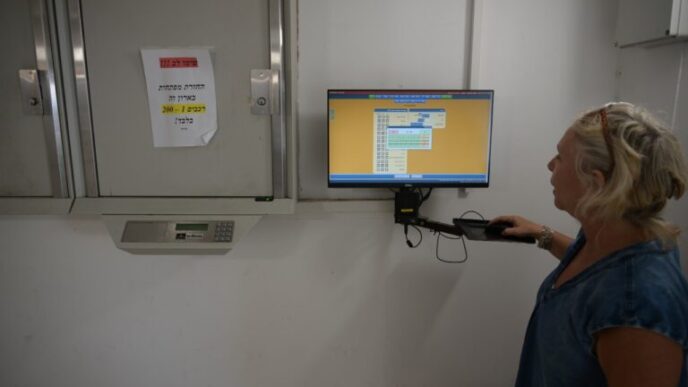
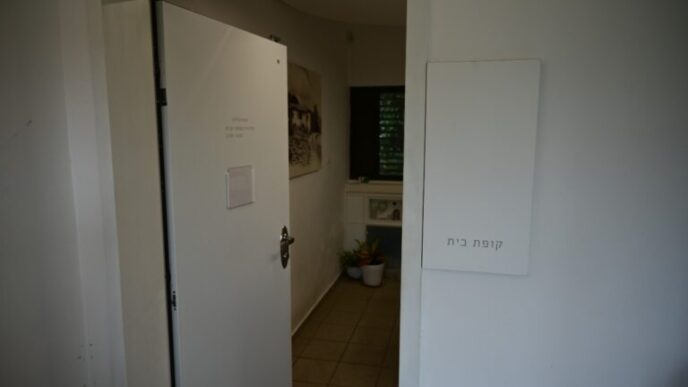
When the 'Big House' was built, in the 1930s, it was the largest building in the Jezreel Valley. For decades it was used by the Shomriya educational institution. Generations of kibbutz members grew up and were educated there. The house was bombarded by cannons in the War of Independence, and played a large part in the mythology of the Jezreel Valley. Today, the building serves as the secretariat, library and archive of Mishmar HaEmek. The bedrooms of the Shomriya students were converted into offices for the kibbutz administration. At the cashier’s office, members withdraw cash before they leave the kibbutz (you can also withdraw dollars, but only by pre-order). Although the kibbutz provides for most of the members' needs, people still come in and out on a daily basis, as evidenced by the large fleet of cars at the disposal of the vehicle manager. About a quarter of the kibbutz members work outside the kibbutz, and their salary is transferred to the kibbutz.
"First and foremost, I take care of the employees"
The dining room is managed by Shaul Eisenberg, a lawyer by trade who accepted the challenge to run "a restaurant that feeds a thousand diners every day, three meals a day, and each of them is also the owner." Eisenberg walks around with a mop in hand, scrubbing the food carts as he talks. "Most of the work, managing the kitchen and serving food, is done by a large group of paid employees: Arabs, Druze, religious Jews, Bedouins, the entirety of Israeli society. My job is first and foremost to take care of them. When kibbutz members praise the food, I tell them to go into the kitchen and praise the workers. Complaints should all come to me, and compliments should all go to the workers. The workers here are like my children. I care, hug, help, and also get a little angry sometimes, but in my heart I love them."
")
In the kibbutz meeting held this week at Mishmar Ha’emek, a proposal was made to impose a price on the meals in the dining hall. "Not so that the members who eat there will lose something," explains M., a member of the kibbutz, "but so that those who do not wish to eat there will receive a credit that will allow them to cover the expenses associated with cooking at home." But it seems that most members of the kibbutz do not support any move that smacks of privatization. "They;ve already tried to privatize the dining hall several times in the past year," says Gordon. "Most members are opposed."
The secret to success: good relationships
Though many children who grow up on the kibbutz return to live there as adults, they do not necessarily do so out of a deep ideological commitment. "I came back here after a seven year tour of Israel," says Tom Shapira, 30, who works as a tractor operator in the fields. "Nowadays, people without financial help cannot afford to buy a house. The conditions outside are difficult. Here in the kibbutz, on the other hand, it’s quite comfortable. I like to work in agriculture, and I also study at the Weizmann Institute, and kibbutz life is quite comfortable for me."

")
Perhaps this is Mishmar HaEmek’s greatest success: despite all the difficulties they faced along the way, the visionary pioneers managed to create a prosperous life in the kibbutz with a rich culture and a sense of financial security. "The secret of success is that we have always maintained good relations between us," says Golan. "The economic hardships affect the behavior of the members – it brings trouble, and the trust between the members decreases. But with us, even on difficult days, there was an atmosphere here that we would get through it together. We fight together for our home. As we did in the days of the riots and in the War of Independence. Thankfully, in the end this spirit also manifested itself in economic prosperity."
The performance of the century: the children portray their pioneering grandparents
On the occasion of the kibbutz's 100th anniversary celebrations, the members put on a spectacular and elaborate show that featured the largest performance ever held in Mishmar HaEmek. In the War of Independence, Arab military commander Fawzi al-Qawuqji tried to conquer the kibbutz. His army shelled the homes of the kibbutz with artillery, in what is considered the first shelling of the War of Independence, and his soldiers tried to storm the kibbutz. Kibbutz member Amiram Azov published a research book on the campaign entitled 'Mishmar HaEmek Will Not Fall!: A turning point in 1948' (Dvir Press, 2013).
")
About two months ago, more than 100 kibbutz members of all ages participated in a massive production that attempted to recreate the campaign, as well as the mindset of the kibbutz in those days. A few years ago, a new amphitheater was built in the kibbutz, and an old cannon was placed in one corner. The show included an impressive pyrotechnic display, but the highlight was when the children who were evacuated from the kibbutz asked to return and help their parents defend it. After their parents refused, the children came on their own initiative from the surrounding areas and proved that the pioneers’ willingness to sacrifice flows in Mishmar HaEmek's blood, and is passed down from generation to generation. The children of today's Mishmar HaEmek played the children of 1948 – their grandparents – who indeed returned on foot to the kibbutz to participate in the campaign.
In conversations with members of the kibbutz for the purpose of preparing this article, I tried to solicit criticism from them as well. I asked “what would you do if tomorrow morning the net factory disappeared?” and “doesn't the kibbutz encourage idleness?” and other questions that kibbutz members are probably used to hearing. The members did not dismiss the criticism outright, nor did they get swept up in it. "The kibbutz is the worst existing method," said one of the members, "except for all the other methods that have ever been tried."
This article was translated from Hebrew by Matt Levy.