


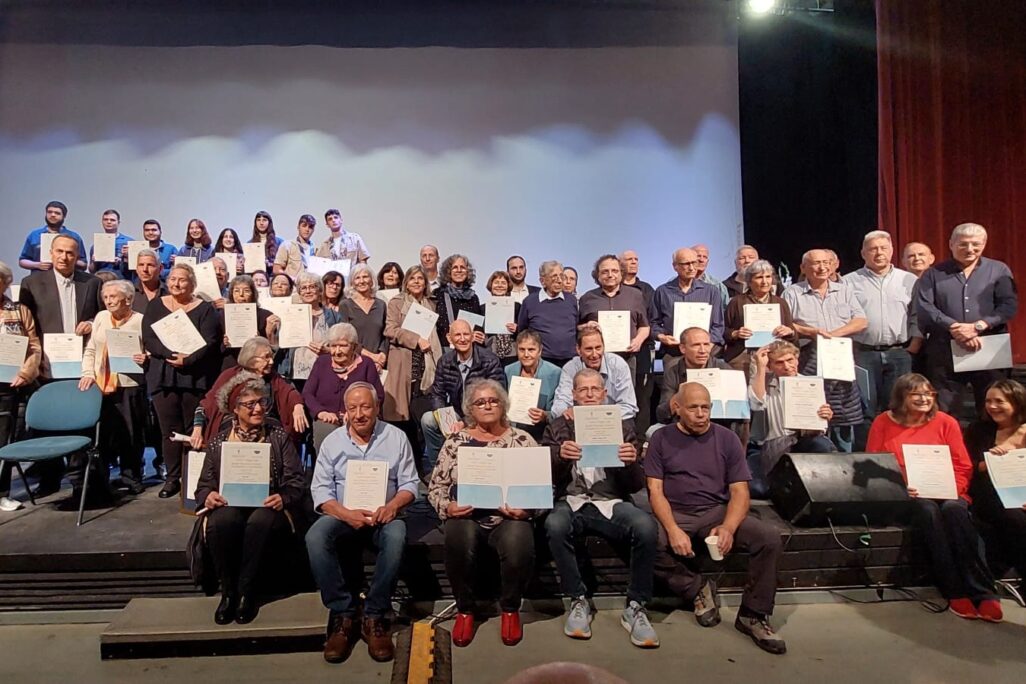
Bezalel Gross (98), Daisy Hefner (93) and Sarah Epstein (94) are three members of the underground Zionist youth movement which operated in Hungary in 1944-1945. During a December ceremony at Kibbutz Hazorea, they received the Jewish Savior Award for saving Jewish lives during the Holocaust, along with the families of 206 other rescuers who are not alive today. These new awardees will join 126 members of the underground who have already received the honors in the past.
The youth movement that operated a massive rescue mission
"Unfortunately, few have heard of the work of the underground, and I am one of the last operatives who are still alive," said David Gore (96), the chairman of the Association for the Study of Zionist Youth Movements in Hungary and the recipient of the award himself. At the age of 18, he opened and operated a laboratory which prepared fake certificates that were clandestinely distributed to tens of thousands of Jews by members of the youth movement.
"We sent 200 emissaries to over 300 communities in the regional towns, ghettos and forced labor camps to save lives. The emissaries carried money, identification certificates and safe addresses in Budapest," Gore said about the underground activity of Hungarian Jews during the Holocaust. "As part of Operation 'Tiyul,' we smuggled thousands of young Jews to Romania and saved them from certain death in Auschwitz. We established and operated 55 children's homes where another 6,000 people were saved."
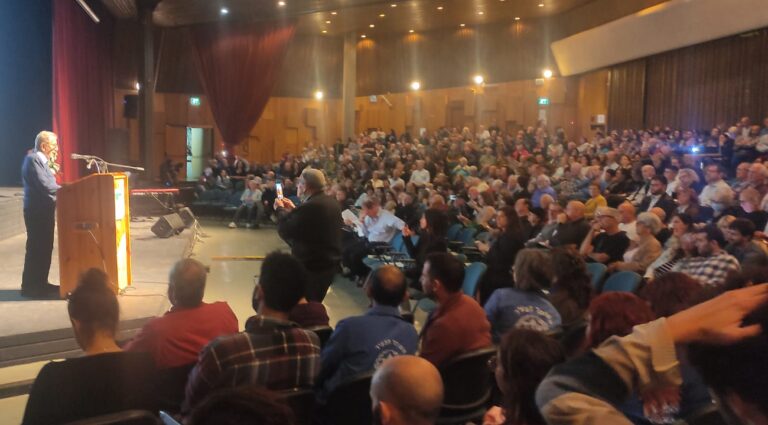
Along with saving Jewish lives, the underground also helped in the fight against the Nazis and aided Jews wherever possible.
"We distributed fake Swiss papers in the tens of thousands to anyone who needed them. We handed out food, means of heating and money to the children's homes, to shelters, and the ghetto in Budapest,” Gore said. “We also cooperated and helped the local non-Jewish anti-Nazi organizations. We were the only underground in all of occupied Europe where all the Zionist youth movements united."
Gore explained how the association now aids the study of Zionist youth movements in Hungary by making historical material about the underground accessible on its website.
A life measured by souls saved
"The members of the pioneering youth movements in Hungary consciously decided not to revolt. They knew that any attempt to start an armed uprising would surely mean the destruction of Budapest's Jews. They decided not to seize weapons when the Germans invaded Hungary, but rather to try and save their parents and family members," explained Yuval Alpan, the son of underground Hashomer Hatzair member Moshe Alpan.
“They risked their lives and went out night after night to find their brothers a hiding place, clothes, money and identity papers. They risked themselves hour after hour. Many of them were captured, tortured and murdered. None of them asked for recognition, they strived to save,” he continued.
“My father used to say: In the situation we were in, the moral equation had only one answer. The value of a life is equal to the number of souls you can save. He said: 'Salvation is a gray matter, while blood is red. And he would add – how many Jews should be saved in order to receive a line of honor in history?"
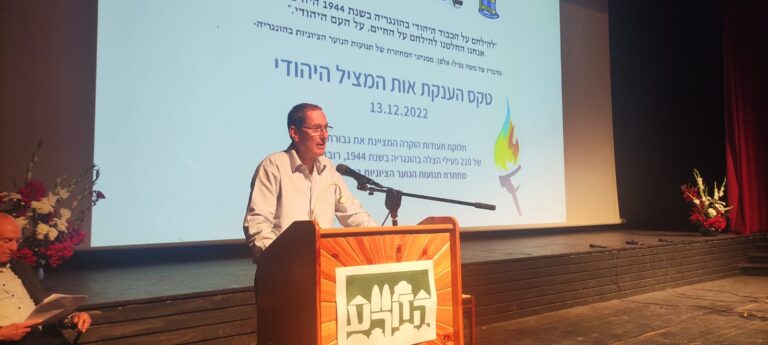
President Yitzhak Herzog gave his blessing to the rescuers and their families and said: "While the state recognized non-Jews who saved Jews – the Righteous Amongst The Nations – Jews who did so while risking their lives were almost forgotten from the pages of history.
“The underground youth movement in Hungary worked alongside other undergrounds with great courage and determination to save Jews,” he said. “Its members disguised themselves as members of the Red Cross and rescued Jews captured by the murderers. They brought the survivors to the Glass House [a rescue center in Budapest], provided food, forged documents, and smuggled refugees across the border at the risk of their lives. I would like to …commemorate this important rescue enterprise."
The event was also attended by the Hungarian ambassador to Israel, Levente Benko, who was shown an exhibition about the underground that the Dror Yisrael movement produced.
"We see the actions of the underground organizations and members of the movements as a role model. We seek to educate the youth on this history as an example of how young people should behave," said Naftali Deri, CEO of the Youth Movement Council who took part in organizing the ceremony.
"Many survivors themselves do not know exactly who risked themselves in order to save them"
The Jewish Savior Award is an enterprise promoted by the global Jewish service organization B’nai Brith, and the committee to honor the saviors’ heroism in the Holocaust was established by Haim Roth, a Holocaust survivor from the Netherlands. To date, 610 Jews who risked their lives to save others have received the award.
"This is a heroism that the people of Israel should be proud of," said attorney Alan Schneider, director of the B'nai Brith World Center in Jerusalem. “We are proud to take part in this important memorial and commemoration project. We pledge to continue working for the discovery of more Israeli heroes."
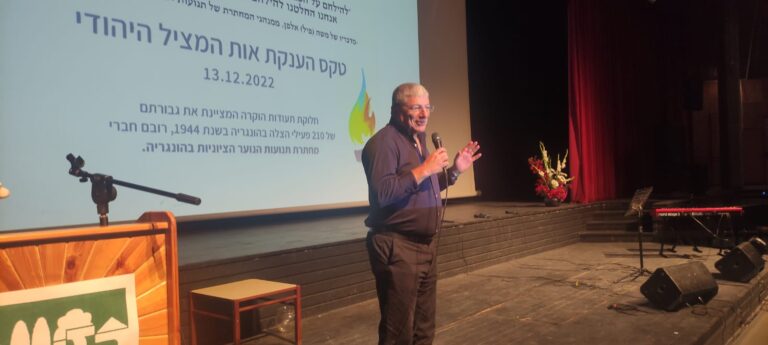
Major General Eliezer Shkedy, the former commander of the Air Force whose father, the late Moshe Mendel, was among the recipients of the signal, told about his father, who went out every day to hand out fake identity certificates to Jews.
"My father spent his entire adult life in education. He told me that there are two important things – security so that what happened there will not happen to us again, and education to preserve the human spirit," he said.
"When we first talked about this conference, I thought to myself that it would be possible to gather the families of the survivors and not the rescuers," said Aryeh Barnea, chairman of the committee to honor the heroism of the Jewish rescuers.
"The problem is that there is not a single hall in the entire Kibbutz Movement from north to south that has enough room for the families of the tens of thousands of Jews who were sheltered by the underground. Many of the families don't know how Grandpa was saved, and in fact – even many of the survivors themselves don't know exactly who acted and risked themselves in order to save them."
This article was translated from Hebrew by Hannah Blount.