


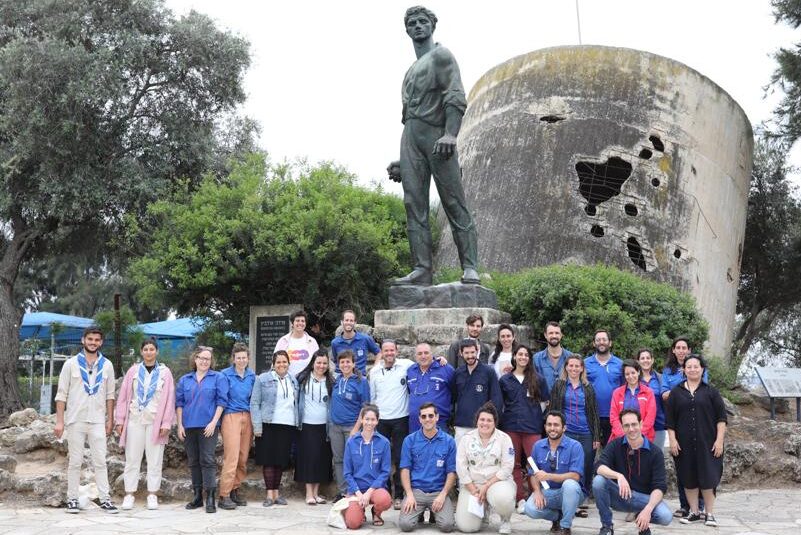
The leadership of 11 different youth movements participated in a shared journey between different parts of Israeli society last week. Amid the social crisis surrounding the proposed judiciary reform, the purpose of the trip was defined as “to strengthen the Zionist alliance and our ability to act together.” Together, the directors and other leadership team members are responsible for the educational activities of hundreds of thousands of Israeli youth.
The trip included a meeting with President Isaac Herzog, a meeting in Efrat with the surviving members of the Dee family, three members of which were killed in a terrorist attack last month, and a visit to the Ben-Gurion House in Tel Aviv, as well as tours of Beit Shemesh, Mount Herzl, the Gush Katif Museum and the Yad Mordechai Memorial. Some of the tours were guided by the youth movement directors themselves.
The youth movements that took part in the journey represented many different sectors of Israeli society. The religious and the secular, the urban and the rural, those living in the center and those in the periphery, all have a place in the movements that were present. Together the various youth movements traveled in a bus they nicknamed “the National Bus,” another nod to their intentions to represent all of Israeli society.
Present on the journey were the socialist Zionist youth movements HaNoar HaOved v’HaLomed, HaMahanot HaOlim, Hashomer Hatzair, and Hashomer Hatzair’s associated Nachshonim movement, the religious youth movements B’nei Akiva and Ariel, the revisionist Zionist youth movement Betar, as well as the non-partisan Hebrew Scouts, Tarbut, Maccabi Hatzair, and Agricultural Union youth movements.
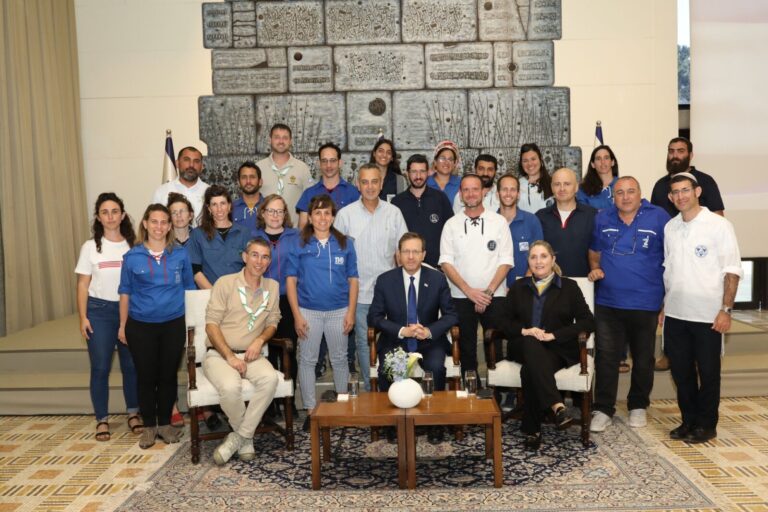
The trip was scheduled between Holocaust Remembrance Day, Memorial Day, and Independence Day in order to reflect on the history of Israel. Throughout the journey, the question of the role of youth movements during the controversy around the proposed judicial reforms hung in the air.
In a conversation that took place after visiting the Gush Katif Museum, a memorial museum for the former Jewish settlements in Gaza, Naftali Deri, executive director of the Youth Movements Council discussed the struggles faced by the youth movements during the disengagement from Gaza in 2005.
“Secession is a political issue and most of the time in the Youth Movements Council we choose not to intervene or take a position on political issues,” Deri said. “But we realized that this time there would be no choice but to do something, because the disengagement from Gaza would have consequences for the entire Israeli society. Both to those being evacuated and to those doing the evacuating.”
“Of course, the intensity of the event was different for the religious youth movements, who did not believe that the disengagement would happen until the last minute, and the other youth movements, for whom the disengagement was less of an emotional event,” he said. “Mainly what we decided we had to face the day after together: we convened the leaders of the youth movements at the time to a conference in Sderot [8 miles outside of Gaza] and we held tours of the blue shirt [socialist Zionist] youth movements of Gush Katif," the former Jewish settlements in Gaza.
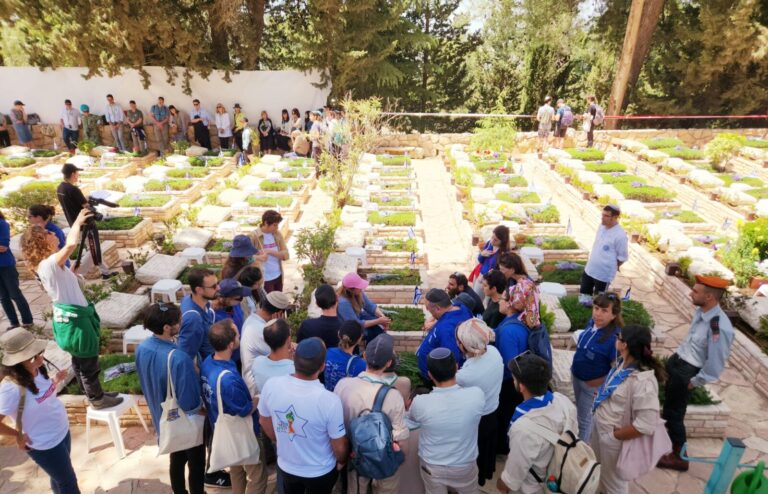
During the conversation, leadership of the youth movements emphasized the importance of the decision to preserve Israeli solidarity even in hard times. “I wonder about the ability of our society today, and I'm talking about the public as a whole, to maintain boundaries," said Maya Geva, director of HaNoar HaOved v’HaLomed. “It may be that the discourse on social media promotes extremism and makes it difficult to set these boundaries.”
“To achieve this, we need to educate about democracy in the essential sense. As in, to live with different people and to love diversity,” Eyal Cohen of Hashomer Hatzair said.
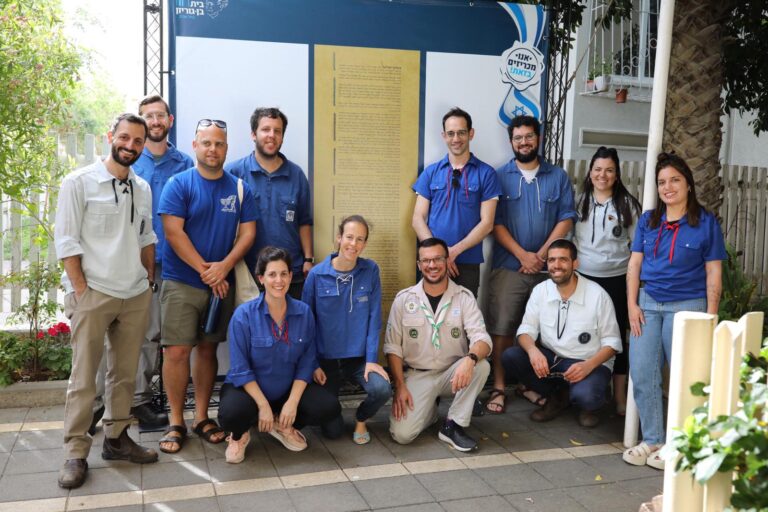
The participants talked about dilemmas in formulating educational positions in the current reality. "One of the phrases of the youth movement [during the Holocaust] was ‘the wisdom to see, the courage to want, the power to act,’” Neta Rodovitz from the Tarbut movement said. “These days, not just in Israel, it’s difficult if not impossible to have the wisdom to see.”
Shmuel Varon of Hashomer Hatzair expressed mixed feelings about the protests against the judicial reforms, in which his movement has been a leading force.
“I don't know if democracy is really going to end and we’re going to live in a dictatorship. Maybe I'm naive. At the demonstrations there’s a lot of respect for Hashomer Hatzair now, which is nice, because we’re often seen as a sectarian movement. But I walk around the demonstrations, and some of the signs make me cringe,” he said.
Gal Porat from HaNoar HaOved v’HaLomed wondered whether coming to a common stance among the different youth movements would be enough. “Suppose we find a common statement,” she said. “Does it matter if they follow us? Or is the mere fact that we found a direction we can agree on enough?”
The question about the role of the youth movements during a social crisis was also prevalent during the visit to Kibbutz Yad Mordechai, which included a tour of the museum focused on the youth movement rebellion in the Warsaw Ghetto.
For Ronit Shanir, director of Hashomer Hatzair, exploring the Warsaw Ghetto uprising provided inspiration for thinking about the current day.
“I think we have something to be inspired by in the story of the Jewish Combat Organization, which led the uprising in the ghetto,” she said. “It was a coalition of youth movements from different political extremes who worked together for a common goal.”
This article was translated from Hebrew by Etz Greenfield.