


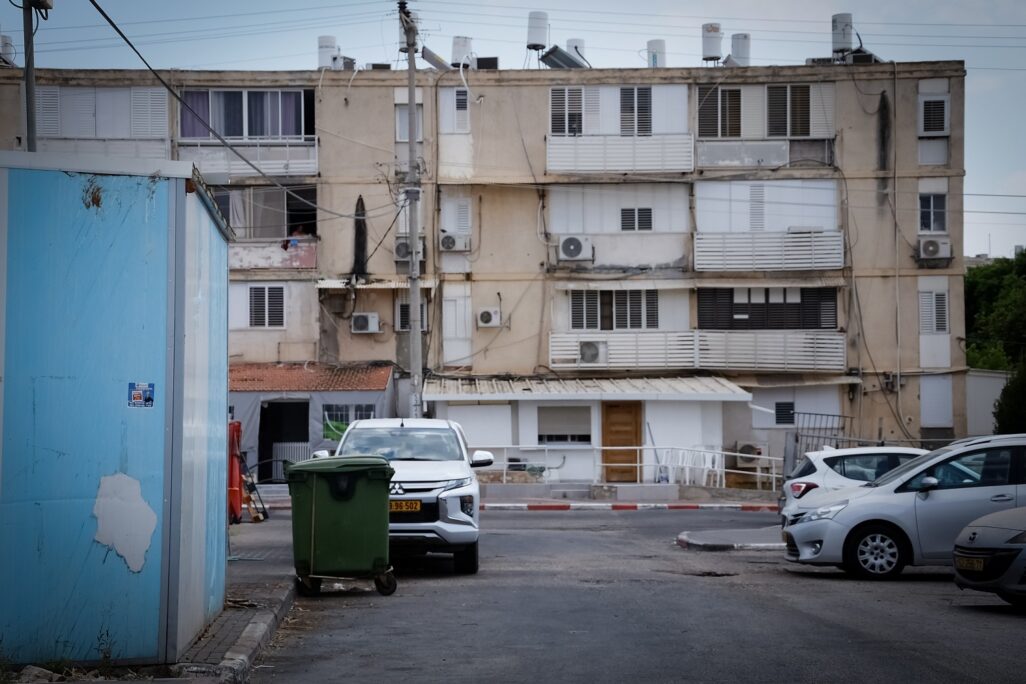
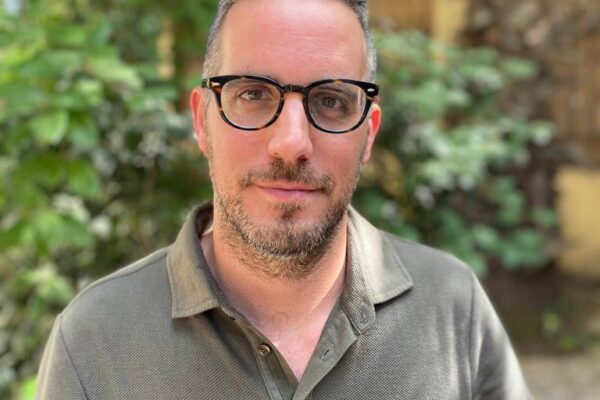
Dr. Guy Feldman, a lecturer and researcher from the School of Social Work at Tel Aviv University, has spent recent years traveling around the country, writing the stories of those without voices: the hundreds of thousands of poor families in Israel who are at risk of being evicted from their homes. These families compromise on space, safety, and basic conditions in exchange for a roof over their heads. Their stories appear in the media from time to time, but the Israeli research community has avoided touching them until now.
"Israel is one of the countries with the highest rates of poverty in the West; we have a lot of data on poverty but very little understanding of what that life is actually like," Feldman explained. He has been concerned with poverty throughout his academic life since he was active in the now-defunct Jerusalem Community Advocacy Network, which dealt with supporting families in the south of the city.
Feldman's research, the first of its kind in Israel, deals with mapping the human phenomenon of "housing insecurity," or simply, how the lack of a home affects all areas of life:
"Poor families in Israel spend over 40% of their income on rent, but we, as academics, do not know much about the reality of these families’ lives," he said. "The most thorough statistics in the world cannot tell me what the apartment and refrigerator of a family in poverty look like, or what it is like to grow up as a child and teenager in a neighborhood with high concentrations of poverty.”
Feldman’s study, whose initial findings will be published soon, traces the causes, manifestations, consequences, and ways of dealing with the phenomenon of housing insecurity. With the help of his academic skills and experience in the field, and in partnership with social workers throughout the country, Feldman reached 100 families living below the poverty line and renting apartments in the private market.
Feldman attempted to explain the lack of research on the topic, saying that Israel is “a small country with a limited amount of resources for academic research.”
“In addition, there is something unappealing about these studies,” he went on. “They contribute to the already-bad reputation of social work research. It's strange, most social workers help families living in poverty and deal with the consequences of poverty on a daily basis, but the field of academic study tries to escape it.”
According to Feldman, the housing crisis is defined in Israeli discourse as a problem exclusive to the middle class and young couples, but almost completely ignores the hundreds of thousands of poor people.
"From the first moment it was clear to me that the number one issue on the agenda of families in poverty is the lack of a home,” he said. “It is the axis around which everything revolves."
Feldman explained that there is popular disinterest in public housing in Israel, and many families in need do not even reach admission into the system because the waitlists are too long or the eligibility criteria are too tight. Many participants in Feldman’s research receive rent assistance but are still at risk of losing their home.
"Almost all of them describe living in a rental as a horrible and terrible experience, as something that causes them a lot of stress, worry and instability,” Feldman said. “Many of them told me that they know that someday the owner of the apartment will come and evict them. None of them own an apartment, but they all want to own one eventually. Ownership is represented as a space that gives you air to breathe, as an anchor of order and stability."
"People who live below the poverty line are not very different from the rest of the population,” he continued. “They also want the anchor and stability of a home. They do think about their future, contrary to the demonization done to them that they are 'money wasters' and that their welfare goes to alcohol and drugs. Many of them have the same dreams as the middle class."
One-bedroom apartments and dangerous electrical systems
The last two years have seen a significant increase in average rental prices. In his research, Feldman noted that poor families often use creativity to deal with the increasing distress. They may try to negotiate with the landlord, and for many, paying rent on time is of utmost importance. However, this is sometimes impossible.
"They do what they can,” Feldman said. “They deprive their children of many things just to pay rent, they go into debt, they avoid using electrical products to save money. It has a severe effect on the children. They don't bring friends home, children see their parents cry because of the situation, family vacations are nothing to write home about.”
Feldman explained that families living under housing insecurity may repeatedly move apartments, which takes its toll on the children and may lead to “severe behavior problems of crying and tantrums.”
“But it is important for me to say: these are active, creative people, who know how to fight for their own,” Feldman maintained. “And on the other side, many times the landlords understand them and meet them in the middle. I even heard of a landlord who agreed to lower the rent.”
Another interesting finding was how families are often willing to compromise on the quality and size of the apartment for the lower price.
“I heard a story about a family – two parents and five children – who rented an apartment with a bedroom and a living room,” Feldman said. “The parents live in the bedroom and the five children live in the living room. When you see it, you feel that you are watching a play that comes directly from the 19th century, but no. This is Israel in 2023.”
When he asked the father about the living arrangement, he answered simply: “2,700 shekels. If he takes another room, it will increase his rent by several hundred shekels – a few hundred shekels that he doesn't have," Feldman said.
Feldman recounted another story, about a single mother who knowingly rented an apartment with bad electrical infrastructure.
"She told me that one day she heard her daughter shouting that the lamp in her room was burning – because the electricity was not working, the lamp just caught fire,” he said. “Luckily she was able to get the fire under control. She consciously compromised on safety, because that's what she could afford."
Class solidarity can help the issue
"The state must bring back the public housing law," Feldman argued in relation to the attempts to renew the sales law, which allows public housing tenants to purchase their apartment at a discount. Attempts to create an effective supervision system for rental apartments was at the forefront of the demands of the 2011 social justice protests, but almost nothing of it has been implemented so far despite its apparent urgency.
“Light bulbs catching fire, exposed electricity, and peeling walls are things I have heard over and over again – people make money on these things and the state must take this into account," Feldman said.
He told Davar that most of the families he spoke with feel totally alone and do not see the state as a source of sufficient aid, despite some receiving rental assistance.
"It is interesting to see that in Arab villages, families told a slightly different story,” Feldman said. “The village helps, and they have their family to turn to. There is a community of neighbors. It is the same in ultra-Orthodox society, where there is more organized assistance.”
Feldman went on to say that stories of eviction and homelessness in Israel are still relatively rare.
"The answer I found to this is that the families simply survive,” he said. “Day by day, from moment to moment. They pick up the phone to the owner of the apartment, to their family, to a friend, to their employer. They go into more debt, with less food, no air conditioning. Just surviving.”
According to Feldman, the housing crisis is deeply urgent. He hopes that the ongoing protests against the legal reform will mobilize people into the streets for this issue.
“The public in Israel, according to surveys, is in favor of addressing poverty, in favor of increasing taxes, in favor of a welfare state,” he said. “In order to move forward in this struggle, the poor need the non-poor on their side. In the protests against the reform, you can see how powerful it is when a protest also consists of strong people. In this struggle, we need them with us."
This article was translated from Hebrew by Hannah Blount.