
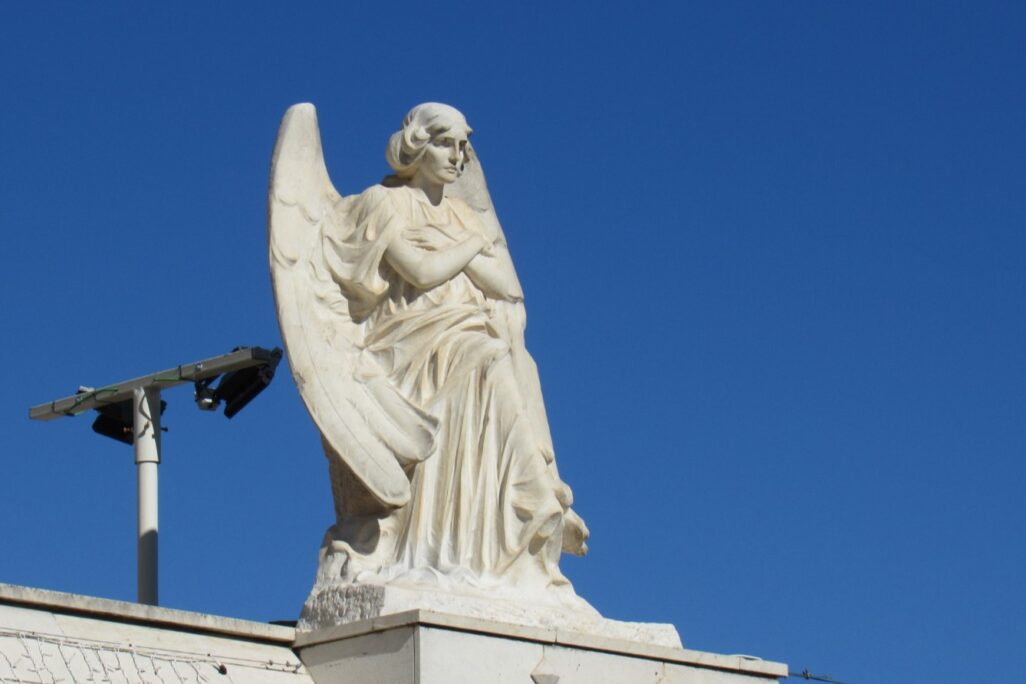
After months of violence, residents of the Arab village of Jish, less than two miles from the Lebanon border, are getting ready to celebrate Christmas. Around 65% of the 3,200 residents of Jish, also known as Gush Halav, are Christians, and the holiday celebration is both a marker of the return to normalcy and a constant reminder of the devastating effects of the war.
Residents describe Jish as a small, united, and peaceful community, one that has struggled economically and suffered from distance from employment hubs. About three-quarters of the village’s Christians are Maronites and the remainder are Catholics. Jish was not evacuated despite its proximity to Lebanon, and the constant bombardments up until the cease-fire had severely limited activities in the village.
“There were sirens all the time. Explosions every hour, every half hour. The cease-fire is truly a gift for the holiday,” local council head Sharif Nijeim said. “Over the weekend, the restaurants were full again, some with locals and some from outside. People just want to get out and see what happened in the north.”
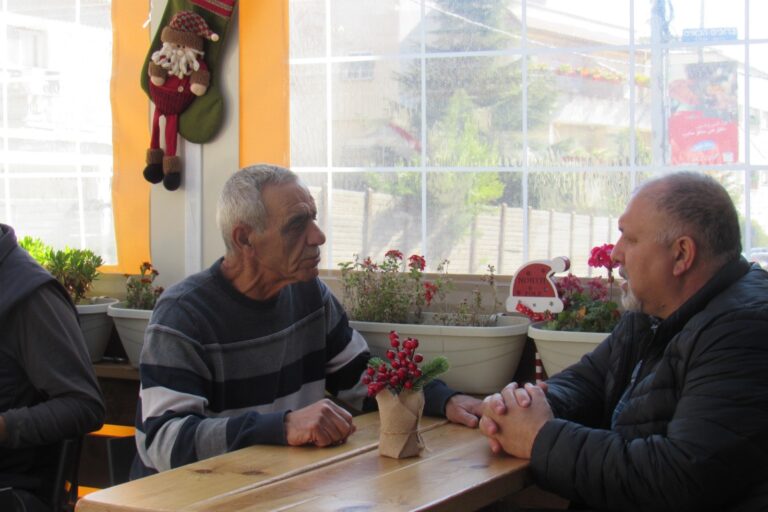
He described the overwhelming sentiment in the village during the conflict as despair. “It wasn’t fear, it was despair,” Nijeim, who started his tenure last year, said. “Sixty percent of them don’t have a bomb shelter. You can’t place anything here. It’s not easy to build a bomb shelter here, even financially.”
There’s no bomb shelter in the local high school, located adjacent to the Catholic church. Throughout the war, most students studied on Zoom. That was especially problematic for parents who didn’t receive financial compensation for missed work and had to stay home with their children, Nijeim said.
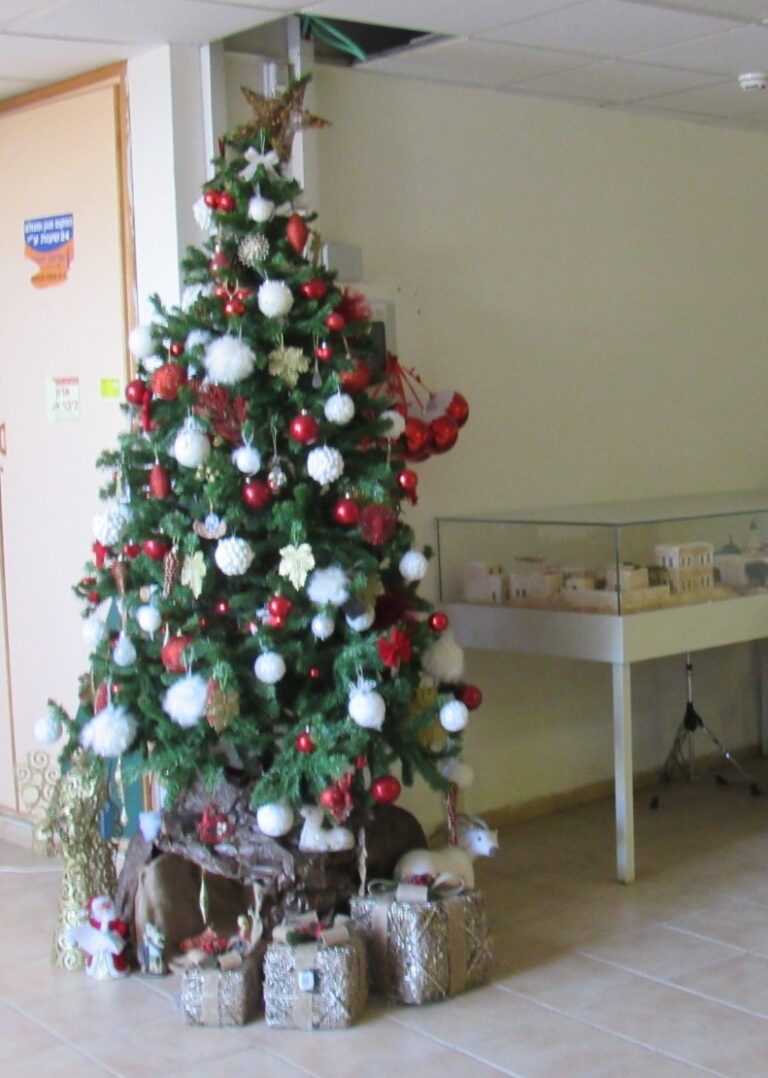
In an attempt to return to normalcy, the entire village is decorated for Christmas. A Christmas tree stands in the local cultural center, but there aren't many activities there. “There’s no bomb shelter here,” Nijeim explained. “Until recently, soldiers were hosted here.”
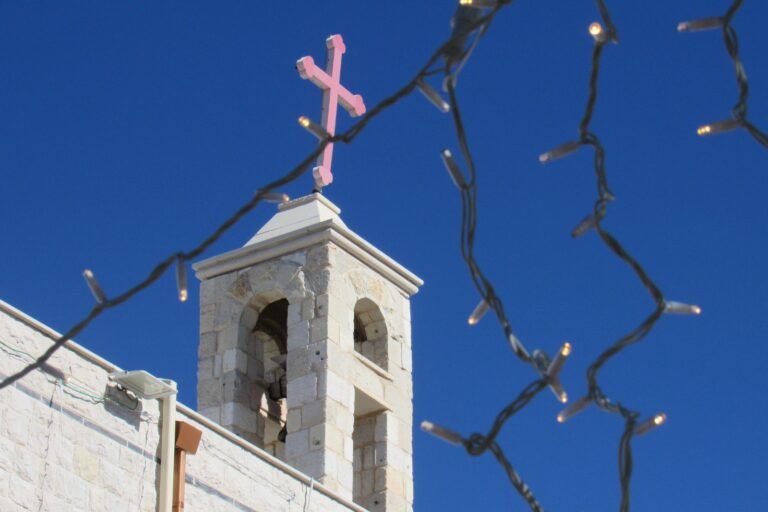
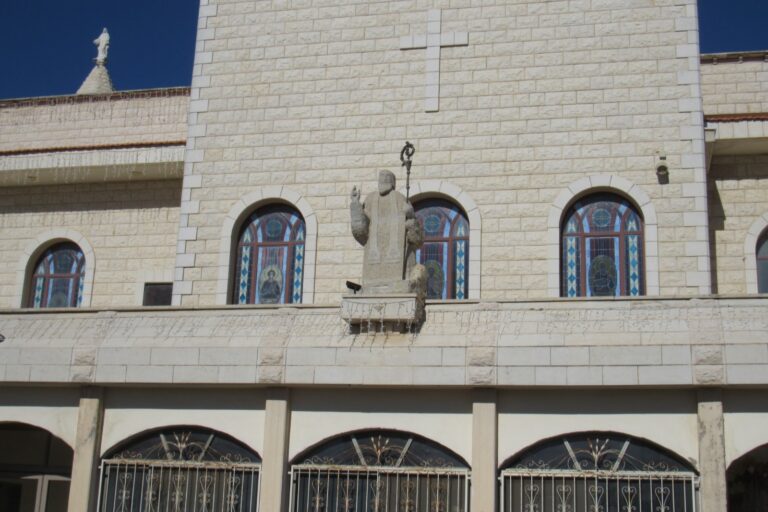
The new Maronite church, Mar Maroun, is also decorated for the holiday. “This is the center of life for the entire village,” says Nijeim. “It has one of the village’s shelters. It’s now a senior citizens’ club. The place provides services for everyone.”
Nijeim said he hopes to hold a small Christmas market in the days after Christmas. “It’s a bit problematic. At first, we had zero budget. Besides that, I don’t know what will happen. If I prepare everything and then the event gets canceled, I’ll have to bear the costs,” he said. “So we’re mainly decorating. There’s still a restriction on gatherings of 600 people.”
Jish is ranked 7 out of 10 in Israel’s ranking of localities’ socioeconomic status. Nijeim that the ranking doesn’t reflect the locality’s actual lack of resources.
“The council’s budget is about 30 million shekels [$8.2 million], and property tax collection is a maximum of 5 million shekels [$1.4 million]. The rise to ranking 7 placed a heavy burden on the budget because we are required to fund many things from the operating budget, and I can’t meet the matching requirements. They won’t fund me for a youth center because I’m ranked 7th,” he explained.
He said that many of the factors used to calculate a locality’s socioeconomic status—and, in effect, the amount of support provided by the government—are irrelevant to life in Jish. One factor is the number of vehicles per family, but Nijeim noted that relying on public transportation instead of private vehicle use is essentially untenable in a community so distant from major hubs.
Similarly, interpreting international vacations as a sign of wealth doesn’t take into account that many families in Jish vacation in Jordan rather than in Israel precisely because doing so is cheaper, he said.
The Israeli government has budgeted some $15 billion shekels ($4 billion) for rebuilding the north, but Jish was late in being included in the program. “No one in the government knows how to deal with us,” Nijeim said.
As it stands, the village is in a deficit, and the Ministry of Interior is strictly supervising the budget. That means that funds can’t be moved between internal budget lines. “People see the holiday decorations and say, ‘Forget the decorations, I don’t have a streetlight at the entrance to my house.’ They don’t understand that these are separate budgets,” Nijeim explained.
In addition to financial difficulties, Jish is also affected by the ongoing crime wave in Arab-Israeli society. Nijeim said that one man who opened an internet business in the village was harassed by members of an organized crime organization from a larger settlement.
“At first, it was cutting cables, then placing an explosive near his car. Recently, they shot at his house in the morning,” Nijeim said. “What would have happened if a child had been hit? The police do nothing. There’s a station here that serves the entire region. What can they do? This is the dilemma: to grow and develop and be exposed to crime, or to remain a small settlement far from their attention.”
An engineer by trade, Nijeim is concerned about the lack of a plan to address the fundamental issues of Israel’s Arab population. “I’m an engineer, used to working according to a plan, and if there are surprises, we change the plan. What’s your plan regarding the Arabs? For their future? Arab citizens can suffer from inequality, but where will this frustration lead? Every year, 200 are murdered. How can they not explode?”
“We need an action plan,” Nijeim continued. “What will make our lives better, more peaceful? What do we need for that?”
This article was translated from Hebrew by Leah Schwartz.