



During the war between Israel and Hezbollah, it became all too clear that many areas near the border with Lebanon lack adequate protection from shelling, especially in individual residences. Months after two ministerial agreements meant to increase the number of shelters, the rate of shelter construction in border communities has quadrupled, and it’s become clear that the most effective way to get more northern residents protected is to make the state responsible for all aspects of building new shelters—from funding to execution.
In early December, the Ministries of Defense and Finance signed two separate agreements with the Home Front Command to enhance protective measures in northern communities. The first plan called for the construction of 1,700 reinforced security rooms in 21 border-adjacent communities located less than 1 km from Lebanon by the end of the year, with full funding, planning, and execution handled by the state.
The second plan aimed to facilitate the construction of 10,000 reinforced security rooms in communities 1–5 km from the border, requiring homeowners to fund the construction themselves, partially offset by a government grant of up to 132,000 shekels (about $35,000) per shelter based on proximity to the border.
Protecting the Strongest or the Weakest?
The reason border-adjacent communities received full state-funded protection while others were required to fund 40–70% of the costs themselves likely stems from the military’s assessment that border communities faced a unique threat, especially after the discovery of crossborder tunnels into Israel in 2018. Following the tunnel discoveries, local government officials pressured the state to act.
But as the war has shown, the need for shelters is no different in the moshav of Goren, located just under 5 km from the border, than in Zar’it, where a tunnel was discovered. The state is obligated to protect all communities, just as it fortified Nir Oz, adjacent to the Gaza border, as well as Sderot, which lies 5 km away.
After Operation Protective Edge, a public outcry in the south led to state-funded sheltering in that region. In the north, however, due to historical underfunding and claims of more pressing needs elsewhere, tens of thousands of residents remain unprotected.
Whose Inefficiency Is It, Anyway?
Both plans are part of the Northern Shield project, a large-scale plan approved by the government in 2018 to enhance sheltering in communities up to 5 km from the border, at a cost of 5 billion shekels (about $1.35 billion). But despite the apparently large budget, less than 10% of the project was actually carried out before the war began.
Neither the growing threat posed by Hezbollah nor the slow pace of construction projects should have come as news to those responsible for the project. So why were so few shelters actually built?
The Israeli military argued that the Finance Ministry, for its own reasons, delayed funding for protective measures, which in turn severely hindered the military’s ability to sign large-scale contracts and maintain a reasonable construction pace. According to Col. Yaniv Wolfer, who is responsible for executing the Home Front Command’s northern rehabilitation program, these delays led to difficulties in issuing tenders, and in some cases, prevented tenders from being issued altogether, further delaying budget requests.
The Finance Ministry, on the other hand, claimed that the Home Front Command’s execution was inefficient from the outset. The Finance Ministry continuously pushed for privatization of the project, aiming to shift the responsibility of shelter construction onto communities and private households, even in border-adjacent areas.
After Six Years of Stagnation: Budgeting Yields Results
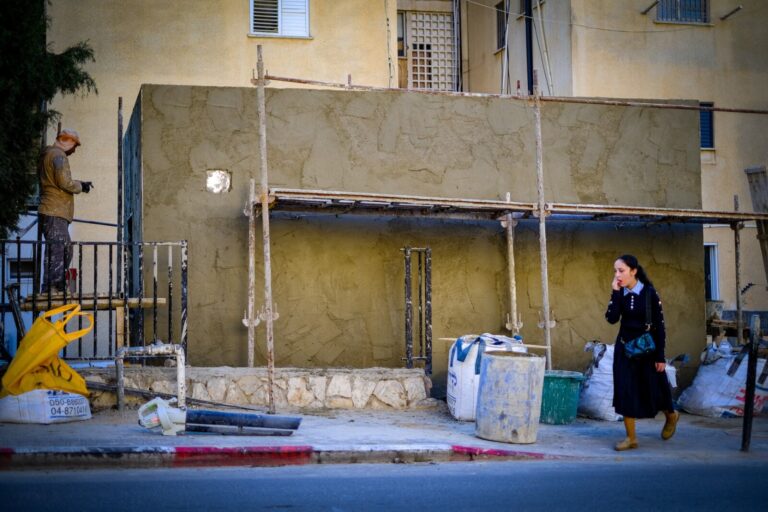
A publication by the Ministry of Defense and the Israeli military last month shed new light on the matter. Following the approval of northern defense budgets in early December, the state began installing 1,240 reinforced security rooms simultaneously in 17 of the 21 border communities. According to the military, a long-term agreement has been established for the first time, with eight contracting companies, and in the coming months, hundreds more units will be installed in these communities, in addition to the hundreds already built in recent months.
According to the Home Front Command, which oversees the sheltering initiative, the project is nearing completion in communities such as Rosh HaNikra (where 181 of 196 planned shelters have been installed) and Netu’a (52 out of 56 completed). Similar progress is being reported along the entire border.
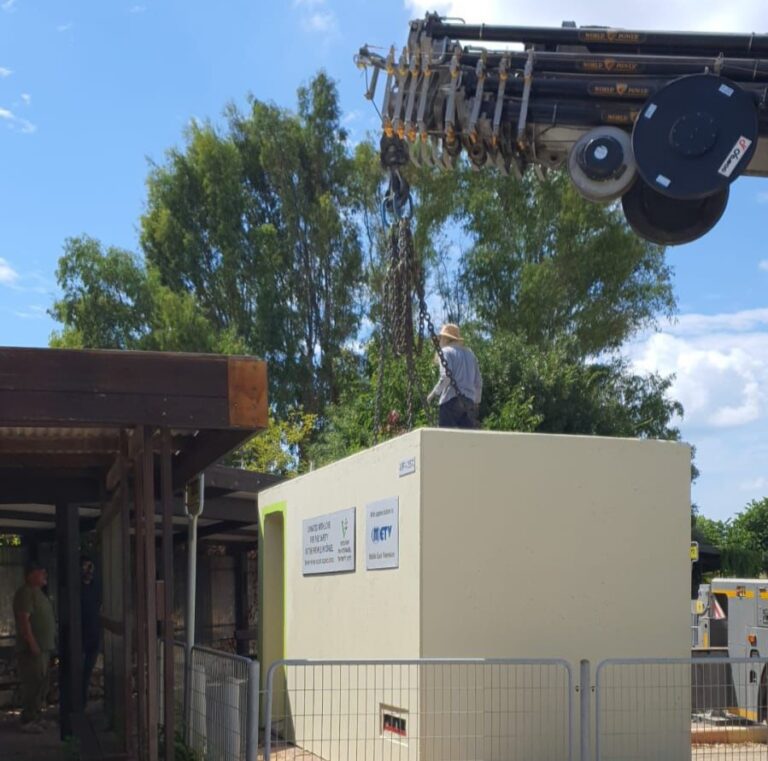
After years of stagnation, the Israeli military’s impressive achievements in shelter construction in such a short period call into question the Finance Ministry’s claims of military inefficiency. In the wake of the war and the government’s northern rehabilitation plan, approximately 1.4 billion shekels (about $380 million) have been allocated to the north in recent months, enabling the construction to begin. Statements from Home Front Command representatives in Knesset committees and conversations Davar has had with sources in the field, suggest that the Finance Ministry bears central responsibility for the previous slow construction pace. Only now, under the pressure of public and political scrutiny during wartime, six years after the initiative was launched, has the necessary budget been secured for the promised construction.
When the Money Arrives: From 300 Shelters Per Year to 1,200
The problem isn’t just funding, but also the mandate for implementation. A senior official involved in the sheltering initiative explained to Davar that the Israeli military’s centralized planning approach has a significant advantage over other sheltering programs reliant on the private market.
The Ministry of Defense is one of the largest entities in Israel when it comes to shelter construction, both as a planner and a client. Its Engineering and Construction Division has extensive experience managing large-scale protection projects, including long-term contracts with major shelter manufacturers, as well as expertise in construction management and working with contractors, architects, and engineers.
The administrative body established in 2019 was intended to apply military construction experience to the civilian sector, but from the outset, it encountered resistance from the Finance Ministry, apparently due to concerns that if the initiative succeeded, it would become the primary method for protecting all northern frontline communities, including larger cities like Kiryat Shmona and Shlomi, which have tens of thousands of residents. The Finance Ministry appears to favor private market solutions over public planning and is reluctant to bear the costs of fully government-funded sheltering for 10,000 homes, at an estimated cost of 200,000 shekels (about $54,000) per shelter, even at the risk of human lives.
According to Israeli military data, the number of shelters built under the initiative stood at fewer than 300 per year for years, with almost none constructed during the COVID-19 years. Now, construction has surged to 1,200 shelters in a single year. The Ministry of Defense and the Israeli military have demonstrated unprecedented efficiency, suggesting that the problem lies with the funding. Without financial backing, tenders, orders, and contracts cannot proceed.
This article was translated from Hebrew by Ronen Cohen.