
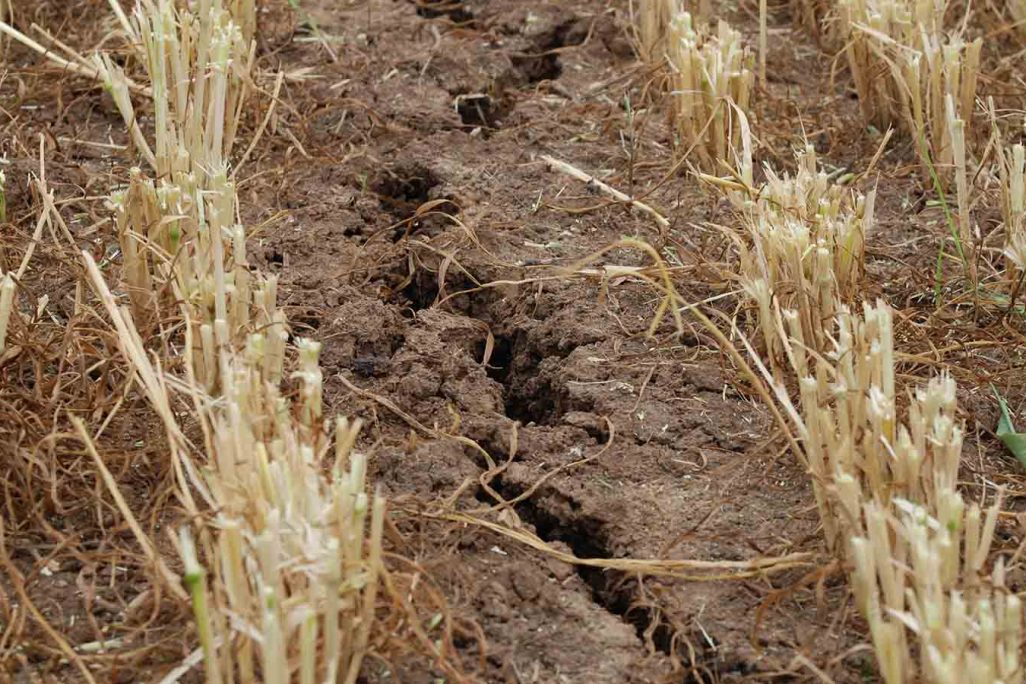
“The direct damage to farmers from the drought stands at 287 million shekels [$81 million] in 2025 and is expected to reach about 1.5 billion shekels [$420 million] over the next decade,” Yuval Lifkin, head of the Food Security Administration at the Ministry of Agriculture, told the Knesset’s Drought Committee last week. Following a particularly hot and dry winter, the committee recommended declaring large parts of the country eligible for compensation.
The ministry is requesting about 400 million shekels ($113 million) and hopes to reach an agreement soon with the Ministry of Finance to support farmers. The Minister of Agriculture approved the recommendation and forwarded it for the Finance Minister's approval.
Despite the extreme weather seen this year, the state has yet to officially declare a drought, and farmers are still uncertain whether they will be compensated for their losses. “Since the rainy season is over, there’s no reason to wait until the end of May to declare a drought,” Uri Dorman, Secretary-General of the Israel Farmers Federation, told Davar. “A drought should be declared immediately. There’s no disagreement about the scale of the event. There are things that must start now. As far as the state is concerned, nothing has happened yet—and farmers have no certainty.”
Typically, the Negev region is the only area eligible for drought compensation from the Property Tax Authority. This year, due to the severity of the situation, the committee recommended expanding compensation to the Judaean Foothills, the Upper Galilee, the Hula Valley, and the Jordan Valley. According to the Drought Law, the deadline for declaring a drought-affected area and determining affected farmers' eligibility for compensation is May 31.
The Drought Law, legislated in Israel in 1964, enables compensation for financial losses caused by drought, in order to prevent the collapse of farms and allow continued food production. The law distinguishes between a designated area in the Negev, where drought is common, and other regions. Under the law, in case of drought, farmers in the Negev are entitled to compensation for production expenses only, for all nonirrigated field crops like wheat, barley, and clover, according to a property tax calculation.
In the Shikma area of the Negev, drought compensation makes agriculture viable despite economic uncertainty. In other parts of the country, compensation eligibility is only partial, based on proven losses.
This winter season was one of the driest since rainfall measurements began over 100 years ago. According to the Israel Meteorological Service, only about 50% of the average rainfall was recorded in most areas of the country. Water flow in the streams that supply water to the Galilee panhandle, the Hula Valley, and the Golan Heights has decreased by 50%.
“There is real concern about damage to streams, particularly the Jordan River,” said Asaf Tsoar, an ecologist with the Israel Nature and Parks Authority. “It will cause ecological damage, pollution, and harm to tourism. If the drought continues, we could cause ecological collapse, and those considerations must be included. Farmers need help, but so does preserving the natural resources of the Upper Galilee.”
According to Marc Perel, head of agrometeorology at the Ministry of Agriculture and the ministry’s representative on the Drought Committee, rainfall in most regions was only 30–45% of the multiyear average. The water level in the Sea of Galilee rose only 18 centimeters last winter and began dropping as early as February—the lowest increase since records began. According to Water Authority forecasts, the level will drop to -213 meters by the end of the season.
“After five good consecutive years, in one year all our reservoirs and everything we had disappeared,” Perel said at a drought and compensation discussion in the Knesset Subcommittee for Growth Drivers in Agriculture.
According to Water Authority data, the northern region, which is not connected to the national water grid, is expected to face a cut of 22 million cubic meters this year. The actual shortage is estimated at 46.5 million cubic meters between June and September, when the region relies on river water accumulated from winter rains.
The Water Authority views the severe drought as a warning sign for future years. Danny Greenwald, deputy director of the Water Authority, predicts the shortage will be felt even more strongly in 2026.
“The national system can supply the required water quantities, but we’ll end the year at the red lines,” Greenwald said during a drought and water sector panel at the Kibbutz Agriculture Conference. “This year, we don’t want to encourage irresponsible water use. It’s important to maintain discipline. It’s clear 2026 will be harder because we’ll likely start it with empty reservoirs.” He noted the need to prioritize the Upper Galilee and the Golan, where freshwater is used for irrigation without reclaimed water alternatives.
The Drought Committee’s report, presented at the Knesset Subcommittee on Agriculture, revealed alarming data: about more than 9,000 acres of field crops are expected to dry up in the coming year, and around 14,000 acres of orchards will be damaged.
The Ministry of Agriculture anticipates severe harm to agriculture due to the significant lack of rainfall. The Water Authority reported a 10–15% increase in water usage during January–February compared to 2024, a trend likely to intensify next year. The direct damage to farmers forced to irrigate due to the lack of rain is estimated at 185 million shekels ($52 million), due to an additional 12.5% in water usage beyond their allocation, charged at the 2025 overuse rate.
Lifkin said that without government intervention, the damage to crop farming, the dairy industry, and food security in Israel will be severe. The effects on agricultural production will extend to the food industry, which will face shortages of raw materials from field crops. This includes 10,000 tons of silage corn (for cattle feed) that cannot be replaced by imports, and 6,800 tons of sweet corn and 11,600 tons of tomatoes for processing that will be replaced by imports.
As if that weren’t enough, fruit orchard yields are also expected to fall: about 84,000 tons of apples and 62,000 tons of summer fruit like cherries, peaches, nectarines, and apricots. The price will be felt not just by farmers, but also by consumers this summer.
According to data Lifkin presented to the committee, the central region, Judaean Foothills, mountain region, and parts of the Negev connected to the national water grid will receive at least partial support for their water needs. The main concern is for areas disconnected from the national grid or dependent on wells, like the Eilot region, the Arava, and Sodom Plain, where aging infrastructure poses additional supply and pumping challenges.
The lack of rainfall will also impact sheep and cattle grazing and beekeeping, which rely on natural pasture. The honey industry and pollination services face an existential challenge: the drought is expected to cause about 50% of bees to die, leading to a 30% reduction in crops that require pollination—vegetables and fruits—in 2026.
Lawmaker Alon Schuster from the National Unity Party is determined to advance plans to build freshwater infrastructure in the Upper Galilee. Schuster, who chairs the Subcommittee for Agricultural Growth Drivers, called on the Ministry of Agriculture and the Water Authority to find a rapid solution—within days or weeks—for approving exceptional water use for agriculture.
At the recent committee meeting, Schuster directed the Budget Department and Property Tax Authority to finalize the drought declaration with the Ministry of Agriculture. “We must ensure support for farmers affected by the loss of field crops and orchard damage,” he said. “We will request updates on the environmental implications of the decisions and their impact on food, beekeeping, and forage. The committee expects budgetary additions to the Drought Fund and discussion on incorporating drought coverage in the Agricultural Insurance Fund.”