
Reflecting on the story of Israel agriculture in 2024, Uri Zuk-Bar, head of the Division for Research, Economics, and Strategy at the Ministry of Agriculture and Food Security summed it up in a few words: “Nevertheless, against all odds.” Speaking to Davar after the publication of a Central Bureau of Statistics report on agriculture in 2024, Zuk-Bar said, “We managed to provide food to the public, the vast majority of it from local production, with only minor supplementation in specific sectors and at certain times. In most sectors, local production remained the primary and successful source.”
According to Zuk-Bar, the summary report reflects a “remarkable resilience” built on two pillars: a policy that places food security at the top of Israel’s priorities, and the deep dedication of the agricultural sector, whose workers and community members were on the frontlines and suffered devastating losses during the war with Hamas. “The fact that agricultural output dropped by only 4.2% in 2024—mainly in beef, vegetables, and field crops—is truly unbelievable,” he said. “Given the situation in the country, a much more significant decline in both output volume and production value could have been expected.”
The drop in marketed produce was especially noticeable in the citrus sector, which suffered a major blow: the war broke out precisely at the start of the harvest season, leading to a 20% decline in output as hundreds of acres of orchards couldn’t be harvested. “In some cases, the harvest was delayed, and the produce didn’t reach consumers but was diverted to industry—for juice,” Zuk-Bar said.
The vegetable sector experienced a roughly 10% decline, affecting specific crops and primarily during a short period at the beginning of the war. Onion crops, for example, dropped significantly—from 68,000 tons to 65,000 tons—but the shortage was filled by importing thousands of tons in January, February, and March 2024. Other crops that saw significant declines included persimmons and sweet potatoes, due mainly to labor shortages.
“To understand the scale of the achievement, you need to understand the scale of the damage,” Zuk-Bar said. One figure that he believes completes the picture is the total compensation paid to farmers by the Property Tax Fund in 2024, which doubled compared to the previous year: compensation for war-related damages totaled 912.8 million shekels ($271 million) in 2024, up from around 432 million shekels ($128 million) in 2023, most of which were advance payments related to the October 7 attack. Damages included the destruction of shade houses and greenhouses, looting of farming equipment and tractors, damage to tools and infrastructure such as water meters and irrigation systems, and even the burning and destruction of barns, milking parlors, and other agricultural structures. On top of that came crop loss and restrictions on access to farmland declared closed military zones. According to Zuk-Bar, this is just the tip of the iceberg: some compensation payments are still pending, so the total is expected to rise.
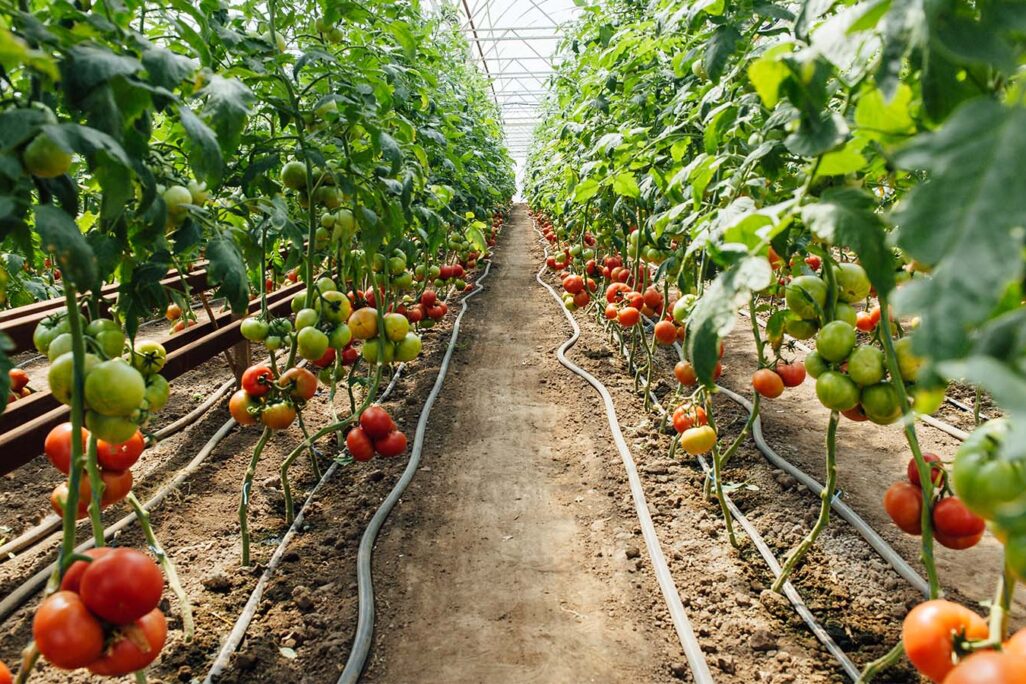
As if that weren’t enough, at the start of the war, 10,000 foreign workers left Israel, and the entry of around 10,000 Palestinian workers was halted. According to Zuk-Bar, that amounted to nearly half of the agricultural workforce. “Because of the labor shortage, entire greenhouses full of tomatoes, eggplants, and peppers weren’t harvested in October. They didn’t receive irrigation for two to three weeks, weren’t treated, and therefore suffered from disease and pests,” he said.
While the many volunteers who came to help were welcomed and strengthened morale, they didn’t solve the food supply challenge, Zuk-Bar explained: “In most cases, five volunteers equaled the output of one skilled worker. It was incredible help, and the farmers were deeply grateful. It also gave the public a chance to volunteer and participate in the war effort—but productivity suffered.”
“Given the harsh year we had—a year of war and evacuations, with many communities only now returning home—the fact that total agricultural output changed from 37.7 billion shekels [$11.2 billion] to 37.9 billion shekels [$11.3 billion] is phenomenal,” Zuk-Bar said. “That’s a decrease of less than 300 million shekels [$89 million]—under 1% of production value. The value of agricultural exports in 2024 also remained almost unchanged from 2023, totaling 4.8 billion shekels [$1.4 billion].”
Zuk-Bar said that the key factor that enabled supply to remain stable was that farmers quickly returned to their fields. “Even though tractors were stolen and many team members from field crop sectors were harmed, kidnapped, or killed, they quickly returned and resumed cultivating almost up to the fence line,” he said. “Wherever entry was permitted, plows and seeders went in and replanted potatoes, carrots, and cabbage, stabilizing supply. We can say with certainty that food supply to the public was hardly disrupted. Considering that the western Negev is Israel’s vegetable and grain basket, this was an enormous success.”
Even in the egg industry, most of which is located along the northern border that’s been under fire for a year and a half, production dipped only slightly due to damaged coops. “Around 5% of laying hens were affected, but still—there were no shortages,” Zuk-Bar said. “The key to steady egg supply throughout 2024 was the human factor—the farmers. Even though the communities were evacuated, the egg farmers came to the coops daily to care for the chickens and collect eggs. We saw them maneuver around road closures, waiting for military clearance. All of that just to ensure eggs reached the public. Supplemental imports made up only about 5–6%.”
“In terms of policy, the most decisive move led by [Agriculture Minister Avi] Dichter was to keep the shelves full—to avoid any shortages,” Zul-Bar continued. “I think we fully achieved that mission. Shortages were minimal, mostly early in the war, in a few specific products, and even there, we ensured supply. Fortunately, farmers kept producing everywhere—even in evacuated or damaged areas—and the ports stayed open throughout, enabling essential imports.”
He added that stabilization was aided by ministry initiatives to support production. For example, the ministry offered aid and grants to convert greenhouses to tomato production for the local market in different regions and supported moving potato and carrot cultivation away from the Gaza border to safer areas. “These steps allowed farmers to add more growing cycles and restore volumes. Despite everything, farmers in the Gaza periphery repaired greenhouses and resumed growing. By summer, there was surplus, and tomato prices dropped,” he said.
At the same time, the ministry focused on increasing the number of foreign workers. They led an initiative to allow up to 70,000 foreign workers into Israel. Today, around 55,000 are employed in agriculture, helping compensate for the loss of Palestinian workers.
In addition to the war, the Israeli agricultural sector also faced drought in 2024, particularly affecting field crops. According to Zuk-Bar, wheat grain output fell from 136,000 tons to 90,000. In 2025, an even steeper drop is expected: the annual yield will be only 20,000–30,000 tons.
The main vulnerability in the system that’s been revealed, according to Zuk-Bar, is the availability of workers. “We’ve learned two things: we need workforce availability from more than one source, and we need long-term solutions to reduce labor dependency. Labor shortages affected the sector even before the war,” he said. “In the short term, we addressed the gaps. Crop farming is seasonal. I don’t know what will happen with Palestinian workers going forward, but it’s clear that harvest seasons require many temporary workers. Unlike dairy farms that need a stable workforce year-round, orchards and vegetable farms don’t, so it’s not economically viable to employ large staff year-round, especially during low-demand months. Hiring workers, paying fees, and covering housing is very costly.”
In the long term, the solution is more automation and technology to reduce reliance on manual labor. “We need much more automation, smarter use of AI for precise work, and the development of climate-resilient varieties. Many tasks once done by hand are already automated. Israel has strong agri-tech, and we must invest heavily in R&D and advanced technologies to reduce our labor dependency. This is our challenge for the next decade,” he said.
He noted that the most resilient agricultural sectors were those with better irrigation and monitoring systems and those tied to regional infrastructure, such as regional packing houses, coordinated marketing, and joint pest control.
For example, coordinated pest control plans in the north enabled aerial spraying even during fighting. “When you work regionally and not individually, you can plan better, see the big picture, and reduce costs and bureaucracy,” Zuk-Bar said. “Instead of each farmer needing military approval, coordinating with authorities, and sending up a single plane, joint operations handled planning, coordination, and execution more efficiently. The security forces even cleared time between barrages to allow spraying—both in the north and the south—mainly over large field crop areas.”
Despite the many successes of the past year, Zuk-Bar predicted that some challenges will persist. “The real challenges are the same ones we faced before the war: dependence on labor—especially in greenhouse vegetable crops—and climate damage. The solution to both is high-end technology that increases productivity and efficiency,” he said. “That’s also how local production can stay competitive against imports and thrive in export sectors like avocado and carrots. The best way forward is investment—capital, research, development, and prioritization that ensures continuous supply, primarily through local production wherever possible.”
Looking north, Zuk-Bar sees rehabilitating orchards along the Lebanese and Syrian borders as a near-term challenge. “Despite the damage, we still marketed apples, pears, cherries, and summer fruits. Unfortunately, those sectors saw more imports, which drove up prices. That’s not good news for consumers, but if we want farmers to keep growing local produce and gradually expand, they need certainty,” he said.
In order to create that certainty, Zuk-Bar emphasized the need for stability in policy, production resources, and R&D. Alongside insurance and capital investment support, he also stressed the need for geopolitical stability.
“Once farmers have certainty, they’ll invest and develop the fruit sectors where we still need to grow,” he said. “If imports from Turkey resume, it’ll be much harder to compete. We must invest and support crops much more. We’re working to secure budgets through the northern recovery authority and to provide stability via trade agreements—to develop, sustain, and strengthen these sectors. That means making orchards in the north more intensive to yield more per dunam and developing varieties for higher quality and lower waste. That will increase consumer benefit and producers’ value and competitiveness. But for that, we need peace and focus—by the farmers especially, and by the state overall.”