

In recent months, Major General (res.) David Zini has found himself, unwillingly, at the center of a political storm following Prime Minister Benjamin Netanyahu’s decision to appoint him as head of the Shin Bet. After the appointment was approved by the Senior Appointments Committee and by the government, Zini officially assumed his position this week, replacing the acting head of the service,“Shin,” who had held the role since last June, following the resignation of former Shin Bet chief Ronen Bar.
Zini has experience in counterterrorism and in working with the Shin Bet, but he lacks direct experience with the service’s internal operations and areas of activity. Therefore, he will work closely with “Shin” over the coming months for training and familiarization with the role. The last time a head of the Shin Bet was appointed from the ranks of the IDF was in 1996, when Major General (res.) Ami Ayalon took office shortly after the assassination of Yitzhak Rabin – an event that led to the resignation of many service members and left the agency struggling with a problematic public image due to its alleged involvement in handling informants connected to Rabin’s assassin, Yigal Amir.
In recent years, the organization has found itself at the center of political, legal, and social controversies regarding the extent of its use of spyware and other surveillance tools at its disposal, as well as around one of its most sensitive divisions — the Division on the Prevention of Jewish Terrorism. In addition, due to the changing nature of terrorist activity in recent years and the current government’s policies, the Shin Bet has repeatedly faced questions concerning the use of its authority, questions that will now land on the desk of the new head of the service, David Zini.
Qatar-gate Investigations
The Shin Bet is involved in investigations concerning members of the Prime Minister’s Office — one of the main arguments raised against Zini’s appointment. The investigation involves the Counterintelligence Division and the Technology and Cyber Division, as well as the agency’s headquarters, due to the sensitive nature of the case. Netanyahu has clarified that Zini will not be personally involved in the investigations, and in the coming months, “Shin” will work alongside him and be responsible for managing the investigation on behalf of the agency’s headquarters.
Opponents of the appointment fear that the new head of the Shin Bet might halt the investigations, give them low priority, or move to issue lenient assessments regarding the suspicions or charges against members of the Prime Minister’s Office and his associates. As of the time he assumed office, Zini is not directly involved in the investigations.
Crime in Arab Society
Since the current government took office, National Security Minister Itamar Ben-Gvir has proposed involving the Shin Bet in combating crime and violence in Arab society. The Shin Bet rejected the idea and clarified that while they already assist the police with criminal offenses related to security offenses, such as smuggling or stockpiling weapons, they do not wish to serve as a policing force in the Arab sector, partly out of concern that their methods of operation would be exposed.
Despite recommendations from the Shin Bet and the judicial system to strengthen the police as a solution to crime in the sector, the number of murders has risen sharply since Ben-Gvir assumed office, standing at over 660 victims since the beginning of 2023, more than double compared to the preceding two and a half years.
In light of the increase in weapons smuggling from Egypt and Jordan, the stockpiling of weapons in some communities, and the rise in the number of murders, the Shin Bet is expected to be called upon to address the issue again — and Zini will be the one who must decide how to proceed.
Countering Palestinian Terrorism
In recent years, Palestinian terrorism in the West Bank has become more sophisticated, as have the enforcement efforts of the Shin Bet and the IDF. When tunnels, rocket production workshops, or bomb-making workshops are discovered, the security forces are usually able to thwart the execution of attacks, primarily thanks to the Shin Bet’s high-quality intelligence.
But every change is an opportunity for terrorism to strike with greater intensity, according to Vietnamese General Võ Nguyên Giáp, one of the fathers of the revolutionary warfare doctrine, who also trained PLO operatives in the 1970s. Zini’s assumption of office represents such a change, but the greater challenge may come from a peace agreement, the release of hostages, and, according to one clause, the unification of the West Bank and Gaza Strip under the Palestinian Authority. The new head of the Shin Bet will need to further refine the agency’s intelligence gathering and counterterrorism methods to address the emerging challenges.
Countering Jewish Terrorism
This may be the elephant in the room. Zini is known to share political views with some members of the current government, especially ministers from its right wing. Although his associates describe him as a statesmanlike, balanced, and professional person, the security establishment does not hide its concern about political pressures that could damage the independence of the Division for the Prevention of Jewish Terror, one of the most sensitive and volatile divisions in the service.
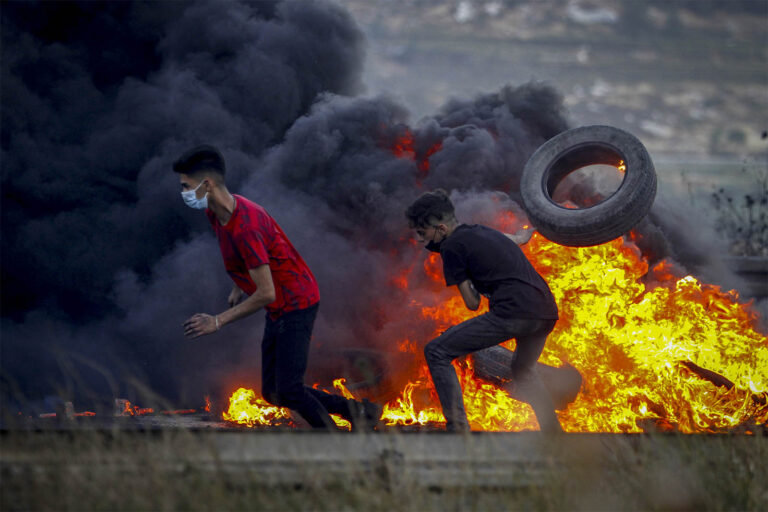
In recent years, there has been a sharp increase in acts of violence by Jewish extremists against Palestinians in the West Bank: assaults, large-scale arson, and “price tag” attacks, which in some cases have claimed human lives. Security forces warn that some of the perpetrators operate within well-organized groups, with access to weapons and logistical support. At the same time, enforcement policies by the police and the army have remained lax, creating a de facto sense of impunity.
Meanwhile, voices within the far-right and on Channel 14 have called for the closure of the Division for the Prevention of Jewish Terror, arguing that it operates “against their fellow settlers.” Calls to limit its authority have also been heard within the Knesset. If these trends continue, it will be difficult for the Shin Bet to operate in this field without being perceived as a political body.
Zini will be required to deploy not only the organisation’s strength but also discretion and public confidence, in order to preserve the division’s independence and ensure that the fight against terrorism, of every kind, remains free of political considerations. Often this involves self-defence or preventing Palestinian violence, but one cannot ignore the recurring harms to residents who do not receive backing from the army or other security systems.
Personal Security
The issue should be divided into two parts; protecting individuals in Israel according to requirements, and protecting the family members of senior officials abroad. In recent years, demonstrations for and against the government have become intense and at times even violent. Associates of ministers have repeatedly called for restrictions on protesters’ actions, claiming they could harm public officials.
The second part concerns the protection of senior officials’ family members, primarily Yair Netanyahu, the Prime Minister’s son, who resides in Miami. His annual security costs amount to between 4 and 6 million shekels.
Translated by Nancye Kochen