
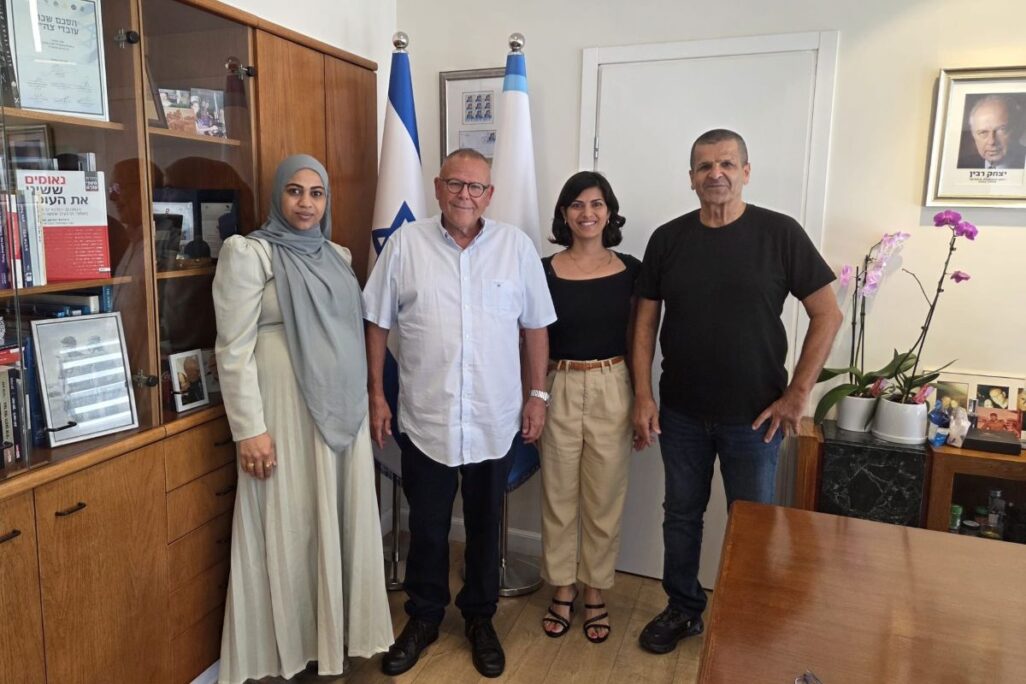
Two-hundred or so workers of the Amal cleaning cooperative have joined the Histadrut, connecting the worked-owned organization to the hundreds of thousands of other Israeli workers organized within the Histadrut.
The Amal cooperative, established in 2017, is mostly made up of workers from Israel’s Arab society. Its profits are distributed among the workers and are also used to promote professional training and welfare activities.
“As a cooperative that presents an innovative model of cooperation among populations from backgrounds of exclusion and poverty, the Histadrut seems like a natural home,” Uriya Caspi, the worker-elected head of the cooperative, told Davar. “To our delight, the Histadrut chairman, Arnon Bar-David, agreed to meet with us, and we found in him an attentive ear, interest, and partnership. He suggested connecting us with the different divisions of the Histadrut to deepen the relationship and maximize the ability of this partnership to strengthen and develop the workers, the cooperative, and the Histadrut.”
Caspi said that the connection between the cooperative and the Histadrut has significant potential for mutual enrichment. “We are proud to join and be part of the home of Israel’s working men and women,” she said. “Even in 2025, cooperation is a highly relevant tool for strengthening workers and shaping the labor market. We hope that together with the Histadrut we will continue developing this model, along with training programs that promote mobility and welfare activities for the workers.”
Even before joining the Histadrut, the cooperative offered its members a variety of courses based on needs identified in surveys, including Hebrew language courses, computer skills, and the prevention of domestic violence. Workshops related to exercising rights, reading pay slips, and resolving workplace conflicts were also offered.
The cooperative’s meeting with the Histadrut chairman last week followed a joint process with the Histadrut’s Union of Cleaning, Security, and Nursing Workers, headed by Yossi Barabi. As part of the process, the cooperative held a large membership event for its workers in July, and a joint welfare day for workers and their children, which also included a lecture by a parenting instructor.
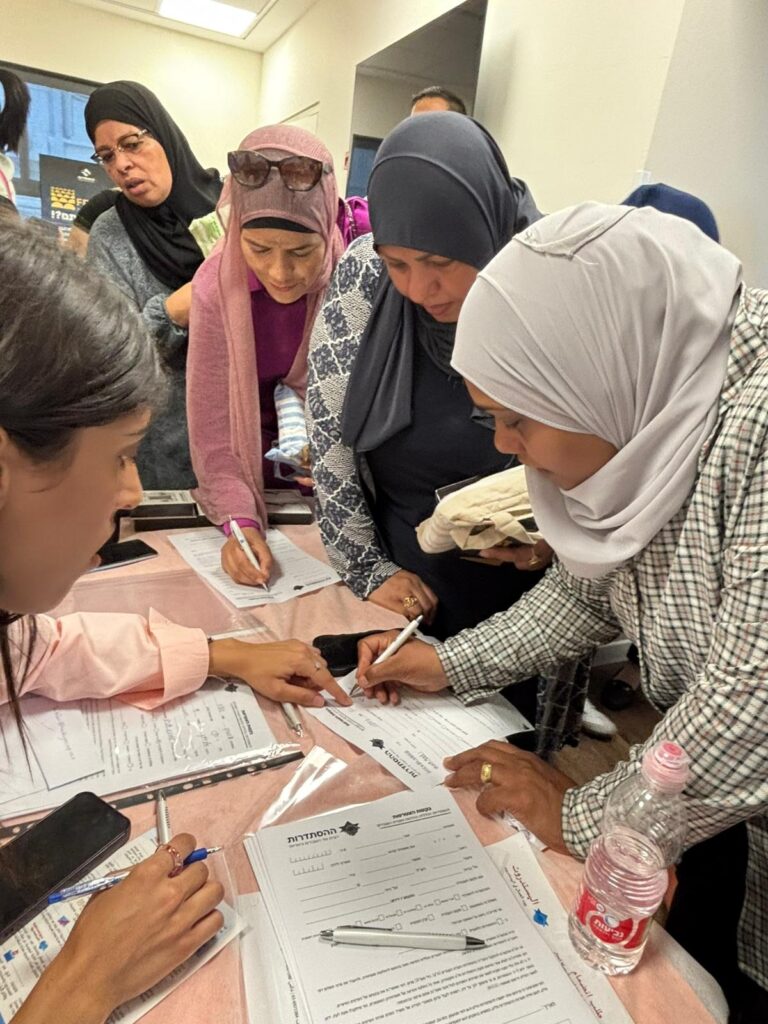
“Yossi Barabi accompanied our joining process and opened the door for us,” Caspi said. She added that the union does extensive work to strengthen the employment conditions of women workers in the sector through the collective agreement and extension order, as well as through minimum wage regulations enacted in the past year that are intended to combat the phenomenon of tenders that harm workers’ rights.
Yusur Amash, a cooperative member from the northern Arab town of Jisr az-Zarqa, told Davar, “I started at the cooperative six years ago as a cleaning worker, advanced to a supervisory position, took a Hebrew course at the cooperative, and today I’m an operations manager who has completed a payroll accounting course.”
Amash said that the Histadrut event informed workers about such benefits as the Histadrut’s reduced-price online supermarket and its consumers’ club. “We felt that we had reached a place that truly cares about the workers,” she said.
Today, the Amal cooperative includes workers from Jisr az-Zarqa operating in central-northern Israel and workers from East Jerusalem operating in Jerusalem and the surrounding areas. It is currently opening a new center in the Negev with a pioneering group of women from the Bedouin community.
“Following October 7 and the war, we felt there was a need to expand into the Negev, and that there’s potential there to strengthen Jewish-Bedouin relations in the area and help integrate Bedouin women into the labor market,” Caspi said, adding that the fact that the cooperative is run by women—and that the managers in the Negev come from the community itself—helps break traditional barriers that exist in Bedouin society regarding women entering the workforce. “We’re working to expand the number of member workers and to grow significantly. Of course, we want our workers in the future to also be part of the Histadrut.”
Barabi, chair of the Histadrut’s Cleaning, Security, and Nursing Workers Union, voiced his enthusiasm for the Amal workers’ decision to join the Histadrut. “This is an important development for the workers and a precedent in the field of cooperatives in Israel and within the Histadrut,” he said. “These days we are in advanced negotiations for a collective agreement that will enshrine the workers’ rights and provide a welfare package and a broad range of services from the Histadrut. Together with Uriya Caspi, the cooperative’s head, and Amani Kaadan, the VP of training, and with Benny Eini, head of the Histadrut’s Cooperation Division—under the leadership of Histadrut chairman Arnon Bar-David—we are making history for the benefit of cleaning workers in the cooperative.”