

A report by the organization Kav LaOved (Workers Hotline), presented last week to the Committee on Foreign Workers, reveals data collected over roughly a year and a half of handling complaints from migrant workers who arrived in Israel during the war. The findings show an increase in incidents of illegal brokerage fees, wage withholding, and substandard housing conditions.
The report notes that before the war, government policy aimed to encourage the employment of Israelis and to promote regulation that supported this goal. However, since the war began, the government decided to triple the number of foreign workers in Israel, from 110,000 to 330,000, while simultaneously reducing regulation, including measures designed to protect both migrant and Israeli workers.
Kav LaOved emphasized that the new policy of expanding foreign worker quotas was characterized by a lack of preparation for the absorption of hundreds of thousands of impoverished men and women expected to relocate their lives to Israel for several years. The decision was made by a committee of director generals without proper consultation with labor unions or human rights organizations, but with ongoing dialogue with employer organizations that exerted pressure. For example, no formal government discussion was held on the issue of worker housing (except for a decision that increased permissible deductions from wages for housing costs), and the impact on the housing market was not examined. In addition, a previous requirement that workers in certain sectors must know English was canceled and turned into a mere recommendation, without examining how basic services like healthcare would be made accessible to them.
As part of the removal of barriers to bringing in foreign workers, Israel, for the first time in a decade, abandoned its policy of bilateral agreements that supervised the recruitment process, and instead allowed private recruitment. This move exposed workers to exploitation and illegal brokerage fees.
Indian workers reported paying between 6,000 and 9,000 USD for agricultural jobs, and 4,000 to 7,000 USD for construction work. Sri Lankan workers in construction and industry reported fees of 12,000–16,000 shekels; Nepali agricultural workers reported paying 9,000–9,500 USD; and Thai workers brought in privately said they were charged 4,000–5,000 USD for agricultural work and 7,000 USD for construction. In most cases, these enormous sums, equivalent to many months of work in their home countries, were financed through loans from relatives, sometimes with double-digit interest rates.
For example, a Sri Lankan construction worker who paid 12,000 USD to work in Israel said that after being injured on the job, he was afraid to report it to his employer for fear of losing his job or being deported before repaying his debts. He continued working despite the pain until he could no longer do so and was fired. Another Sri Lankan worker said she paid 15,000 USD to work in a factory but was instead sent to live in the company CEO’s home and employed as a cleaner for less pay than promised. After she complained, she was deported back to her country.
Agricultural workers from Malawi reported being forced to open bank accounts in their home country, into which their wages were transferred in order to repay the “loans” they had received, meaning their salaries in Israel were almost entirely withheld, in violation of the law.
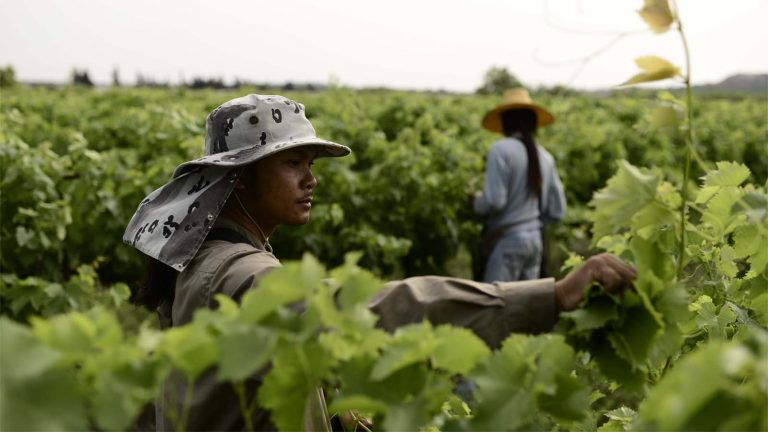
During 2024, Kav LaOved reported a significant expansion of the phenomenon of unpaid wages, which has become a “collective phenomenon” affecting entire groups of migrant workers. In the construction industry, this was characteristic of workers from India and Sri Lanka who were brought to Israel by manpower corporations but were not actually placed with contractors. As a result, they were forced to wait in their accommodations, sometimes for months, without pay. According to the organization, manpower agencies are legally required to pay workers even when there is no work available, but many of them falsely reported the workers as having “abandoned” their jobs in order to circumvent the law.
In the industrial sector, workers from South America reported not receiving their wages even months after returning to their home countries. In agriculture, Indian workers reported being transferred frequently between employers, sometimes outside the farming season, and not being paid at all or receiving lower wages than promised.
In terms of housing, workers in the agriculture and construction sectors reported poor living conditions: cramped rooms without beds or closets, insufficient kitchen equipment and appliances, and a lack of hot water. Some were required to share rooms with workers from other countries, with whom they did not share a common language.
During the war, the Home Front Command permitted agricultural and construction work even in areas near the border, where there was often no protective infrastructure. Many workers, who had never experienced war before, did not know how to respond during rocket sirens or shooting. Since October 8, 2023, eleven agricultural workers have been killed by rocket fire, eight of them migrant workers, and another nineteen were injured. In the construction sector, one Israeli worker was killed and eight were injured, including three migrant workers.
In 2024, the Population and Immigration Authority committed to the governments of India and Thailand that agricultural migrant workers would not be employed in border areas. However, a representative of the Ministry of Agriculture claimed in the Knesset that this decision caused a severe labor shortage, and called for the reopening of private recruitment channels. Two months later, the state approved this request.
Despite the dramatic increase in the number of foreign workers, the planned expansion of inspection and enforcement positions in the Ministry of Labor and the Population Authority was not implemented. As a result, oversight of employment conditions has weakened.
Kav LaOved called on the state to formulate a coherent policy for bringing migrant workers to Israel, based on data and research, and to develop solutions that would allow the employment of Israelis instead of relying on foreign labor. The organization also called for halting unregulated private recruitment processes, expanding bilateral agreements, setting a requirement for proficiency in at least one language, creating organized placement mechanisms, and strengthening enforcement systems and surprise inspections by the Population Authority and the Ministry of Labor.
Translated by Matt Levy