
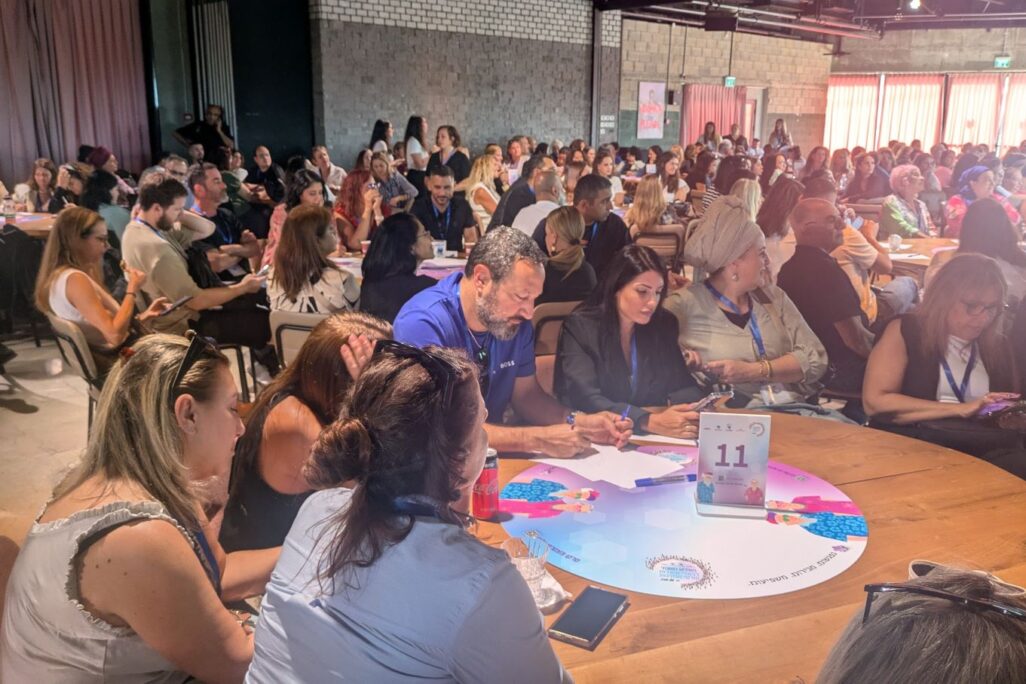
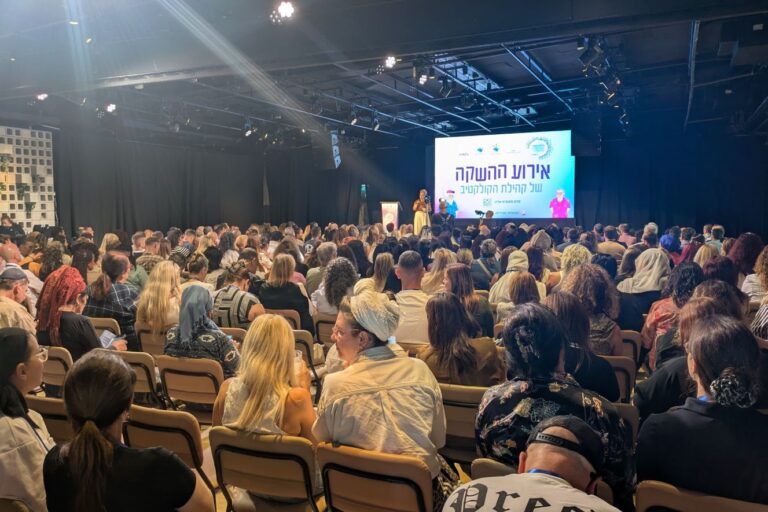
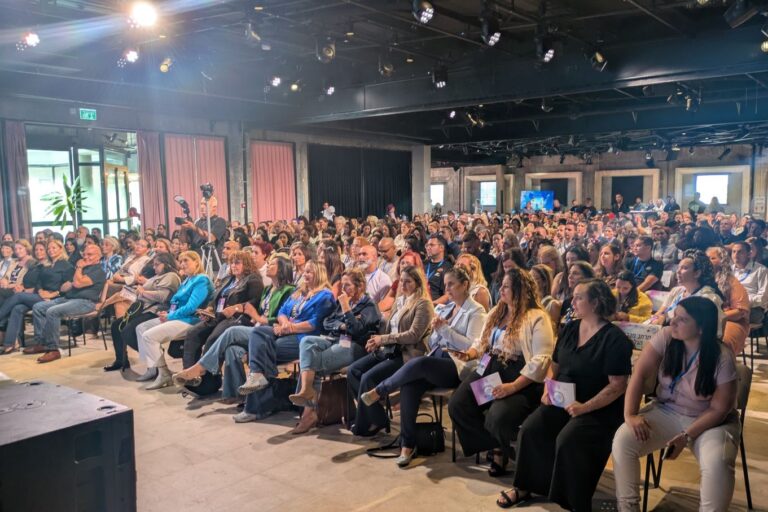
The Histadrut’s Young Leadership Division launched yesterday “The Collective” — a network for graduates of the organization’s various leadership programs, including programs for young leadership within workers’ committees, regional leadership, and young women’s leadership.
Ofir Mizrahi (27), a government employee, participated in theYoung Leadership Course and in a delegation to Germany for meetings with local trade unions. He is now part of “The Collective Stars”; the founding and leading group of the new community.
“The course focused not only on professional development,” he said, “but mainly on bringing together young people from different organizations within the Histadrut around issues of leadership and social change. Our goal in The Collective is to identify problems in Israeli society, highlight different social gaps, and harness our collective power as young people, with the support of the Histadrut, to find solutions.”
“On a personal level, it opened a new way of looking at myself and what I’m capable of doing,” said Dalit, also a government employee who took part in both the workplace representatives’ training and the leadership course. “It was an opportunity to learn from others how to lead change, both within organizations and in society as a whole. Before the course, I only thought about how to make change in my immediate surroundings; now I’m looking to broaden my horizons and think about the wider impact I can make. It allowed me to think bigger.”
Dalit emphasized the importance she sees in the work of the Young Workers and Leadership Division, led by Pini Kabalo, in developing the next generation of leadership within the labor movement.
“The Histadrut was founded 105 years ago and, in today’s terms, it was a kind of social start-up that aimed to give every worker the conditions needed to build a society and a state,” said Noa Amir Ankonina, head of the division. “Even today, it remains Israel’s largest and most influential social organization. Over the past two years of war, it has mobilized to support the families of hostages, evacuees, reservists, and families facing financial hardship. Now, in the process of rebuilding and renewing Israeli society, the Histadrut is once again expected to play a central role.”
“Each and every one of you can lead, dream, and put forward ideas, and we’ll be there to connect, support, and help make them a reality,” said Meitar David Cohen, coordinator for youth and students in the division, and Keren Tamari Rotberg, director of The Collective. They added that The Collective will serve both as an internal community, connecting young workers to the Histadrut and its activities, and as an external community working to promote social change in workplaces and in the wider community.
Pini Kabalo, head of the Young and Leadership Division and deputy chair of the Histadrut, thanked Histadrut chairman Arnon Bar-David, Na’amat (an Israeli and International women’s organisation) chairwoman Hagit Pe’er, head of the Regional Divisions Avi Yehezkel, and the regional leaders for their cooperation and support in organizing the leadership courses and establishing the graduates’ network.
Referring to the recent arrests within the Histadrut, Kabalo expressed hope that the suspicions would be disproved and that the facts would soon be clarified, emphasizing the presumption of innocence for all those involved.
“The Histadrut has always belonged to the workers,” Kabalo added. “That is the source of its strength, and I hope and believe it will remain that way — a strong and influential body that protects workers in Israel.”