

The Ministry of Transport has given the green light to advance Uber’s entry into the Israeli market, according to a report on Thursday last week by channel N12. The report states that the ministry has already begun preparations for the American company’s launch in 2026, with the assistance of an external consulting firm. It also notes that, in light of the expected opposition from taxi drivers, the ministry discussed a compensation framework for drivers who wish to retire, amounting to approximately 200,000 NIS per driver.
Uber, which is considered popular in the Western world, operates on a platform economy model. It is a digital platform where independent drivers can work as they choose, somewhat similar to the Israeli company Gett. However, unlike Gett, where every driver must be a licensed taxi driver, Uber does not require significant training or oversight to become a driver.

The model is based on each driver’s ability to pick up other passengers during trips, thereby creating a relatively high availability of drivers and, in theory, lower prices. According to the proposed framework, Israeli law is expected to require only minimal registration, such as submitting a certificate of good conduct and verifying personal details, but it will not mandate a licensing process similar to that of taxi drivers.
Price Reductions May Be Temporary
Several discussions have previously been held regarding Uber’s adaptation to the local market, and they have drawn criticism from multiple directions. Some of the criticism, of course, comes from taxi drivers, who see the move as one that could effectively destroy their profession, as has indeed happened in many Western countries. Critics argue that while taxi drivers are subject to regulations that ensure higher standards of reliability and safety, Uber drivers are largely unregulated (apart from the minimal requirement to submit a certificate of good conduct) and may drive unsafely, use unfit vehicles, harass passengers, and more.
Criticism also comes from the economic sector: similar to Gett, which just last week faced a complaint filed with the Competition Authority seeking to define it as a monopoly, platform-based economies tend to quickly become monopolies and then raise prices. This happened, for example, with Wolt, which was previously fined 8.5 million NIS by the state for harming competition.
Often, the model relies on very low prices initially, which, as in Wolt’s case, rise significantly over time; at the same time, very attractive conditions are offered to workers, who are disadvantaged once the competition disappears.
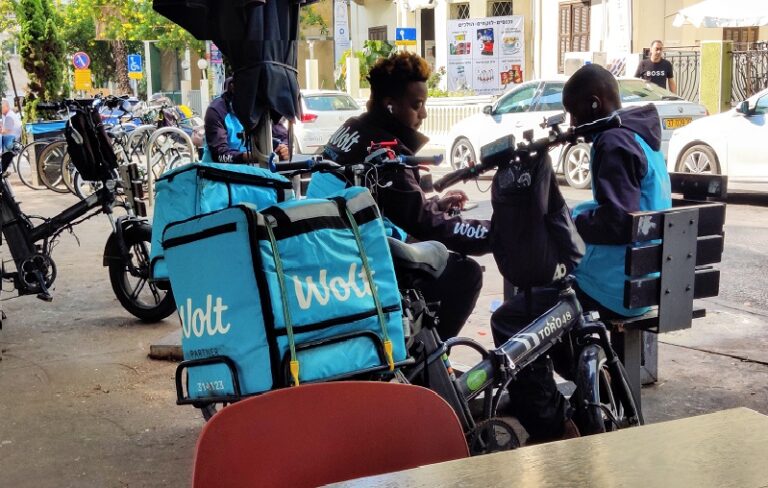
Although the Ministry of Transport explicitly talks about allowing additional companies to compete with Uber, experience shows that such models usually result in a monopoly. This is a phenomenon familiar to every Israeli; when one app becomes a cultural trend, it outcompetes all its rivals. The very use of the name “Uber” by the Ministry of Transport, as a code for introducing the model, reflects this reality.
Another area of criticism concerns the responsibility of platform companies toward their workers. In most cases, platform companies do not consider platform workers as their employees and are not responsible for their employment conditions, such as pensions, insurance, and other social rights. Additionally, because these workers are not recognized as employees, they are unable to unionize and therefore cannot effectively fight against potential violations of their working conditions.
Who Stands to Benefit?
Generally, Uber’s entry into the market is accompanied by lower prices, although these reductions do not always hold up over time. Additionally, for many young drivers seeking part-time work or supplemental income, it represents an attractive business opportunity.
Moreover, those expected to particularly benefit from this development are illegal drivers, especially common in the Haredi sector. According to past discussions in the Knesset, this population numbers in the thousands and provides a significant means of transportation within the Haredi community.