
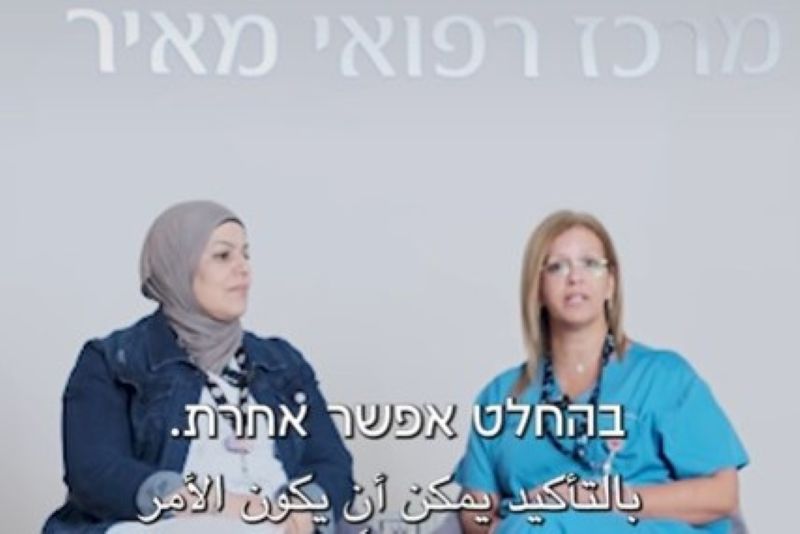
The Histadrut has recently launched a series of films aimed at promoting partnership and tolerance in the workplace. “Working Together – Living Together” – a documentary web series that presents the stories of Arab and Jewish workers in their workplaces, working side by side in their daily routines, facing challenges, supporting one another, and together building social bridges.
“In the first days of the war, right after October 7, I saw the number of inquiries from workers who didn’t feel comfortable in their workplaces, who felt the atmosphere was tense,” says Aziz Basyoni, head of the Histadrut’s Equality Promotion Department. “Unfortunately, we are constantly experiencing times of crisis in this country, and with every crisis you feel the tension and discomfort in workplaces. The question that occupied us was: what is the role of workers’ committees? How do we build resilience among workers during routine times, before another disaster or another war happens? We want to build that resilience so that not every crisis affects workers and their relationships. Israeli society needs rehabilitation after everything we’ve been through. Part of that rehabilitation is repairing relationships, building them on mutual responsibility and genuine partnership.”
Despite his convictions, Basyoni says he was surprised by the level of partnership he encountered. “At first I was looking for a single story of partnership, but we found that in every workplace there are success stories of genuine shared living.” He recalls his first workplace: “I worked at the oil refineries. An Arab, a Russian, a Haredi, and a secular Jew worked together in the same room. We came from different backgrounds. Over time, we realized we were able to build trust in one another and cooperation. I shared personal things with them and sought their advice. We supported one another. I spent six years with them in the same office, and I don’t even know their political views. We simply ate together, sat together, and supported each other. I think that’s the natural way.”
Basyoni does not dwell on the past. “I feel we need to focus on bus drivers who experience daily violence. We need rehabilitation—to work on changing the image of these people, who give their all, who provide their service from the heart to transport us from place to place.”
He emphasizes the cooperation on the ground, with workers, employers, and the Histadrut’s regional divisions. “Without the support of the regions and of Avi Yehezkel, head of the Regions Division, we would not have been able to get this project off the ground.”
For Basyoni, the videos are only one stop along the way. “We’re also thinking about a mediation course for workers’ committees, to train them to deal with tensions and conflicts on a national basis, arising from war or times of crisis in the country.”
Itamar Abitan, head of the Histadrut’s Strategy and Innovation Division, partnered with Basyoni in creating the videos. He too is confident in the role of workers’ committees during times of crisis. “Over the past two years, in the wake of the war, Jewish–Arab partnership has been harmed. It wasn’t particularly strong to begin with, but the war certainly dealt it a severe blow. I argue that we nevertheless see a clear Jewish–Arab partnership in workplaces, on an everyday, day-to-day level.”
“The Histadrut in general, and the individual workers’ committees in particular, have a role in highlighting what is shared, while also easing tensions in the workplace. When people arrive at work, everyone forgets what was written on social media and looks at the person for who they are. From this, I learn that just as we know how to work together, we also need to know how to live together.” says Abitan
“People work together, what does a last name or background matter? There are working hours and there is life outside working hours. What happens during working hours should also be reflected outside of them.”
“Because tens of thousands of workers in Israel are employed in workplaces shared by both communities, it is possible to restore faith in, and strengthen, Jewish–Arab partnership. That means starting from a place of trust and a shared sense of purpose, and from there perhaps we can bring about the change we hope for.”
The first season of the series will include six to eight episodes, each three to five minutes long, with each episode focusing on a different workplace.