


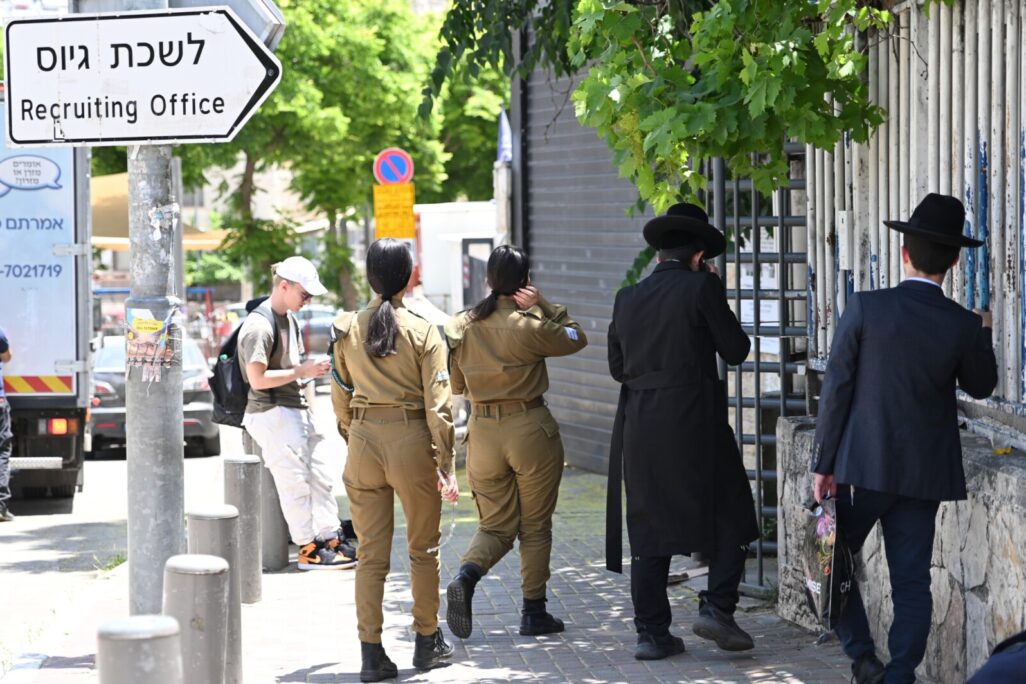
Earlier this week, the IDF Spokesperson published information about the days of enlisting the Ultra-Orthodox, describing them as “the largest-ever enlistment to Haredi tracks in the IDF” and reporting that 537 Haredim had enlisted. However, a closer examination of the data presents a more complex picture, indicating that no more than about 400 were fully enlisted, and that the number of Haredi recruits remains far from the annual target the IDF has set for itself: 4,800 Haredim. To meet this goal, the army would need to enlist nearly 3,000 additional Haredi soldiers within roughly half a year.
On Monday, the IDF Spokesperson released a statement saying that on Sunday and Monday, 537 soldiers joined the service, 230 combat soldiers and 307 combat-support personnel, while framing the enlistment as taking place on “one day.” In practice, this figure represents the total number of recruits to Haredi tracks over two enlistment days, within a full enlistment cycle that began in October and runs through December; for the centralized Haredi enlistment day, however, the cycle was extended into January.
The review shows that close to 100 of those counted were inducted on the enlistment day earlier this week but did not don uniforms and immediately returned to their yeshivot under the “student-for-life” arrangement. Under this arrangement, those recruits will enter full military service only after two years of study in yeshiva. In addition, about 50 of those included in the count are recruits who had enlisted in the past and, according to the IDF, came to “regularize their status.” The IDF also included them in the tally in order to reach the figure of 537.
The number of combat soldiers enlisted also remains relatively low, at about 210 combatants out of the 537. In the previous enlistment cycle for the 2025 draft year (July 2025–June 2026), a total of 538 Haredim were enlisted, of whom only 198 were recruited to combat tracks. Thus, out of a combined total of at most 1,075 recruits to Haredi tracks across the two cycles, no more than about 410 were enlisted as combat soldiers. Only one enlistment cycle remains in the current draft year, during which the IDF will be required to recruit a significant number of Haredim in order to demonstrate its ability to meet its targets.
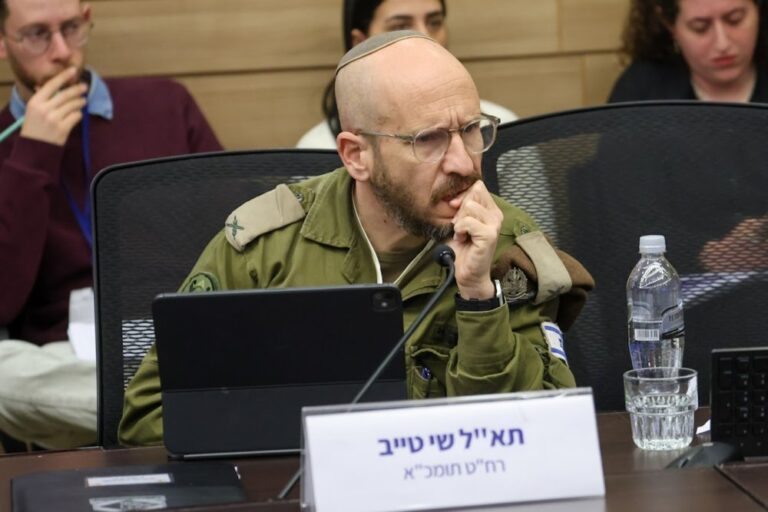
Today, the IDF and the security establishment operate 42 different tracks tailored for Haredi recruits. Most are intended for combat-support roles, in order to enable broad enlistment while preserving religious lifestyles, alongside several combat tracks.
However, not everything depends on the IDF. The Bismuth outline, a proposed compromise framework for Haredi enlistment that sets low and gradual recruitmnets targets, and is currently being discussed in the Knesset’s Foreign Affairs and Defense Committee, does not provide a clear response to the army’s manpower needs in terms of enlistment numbers, and in practice is expected to result in the addition of only a few hundred soldiers from the Haredi public. Even their identification as Haredi is in question, due to particularly broad definitions of who qualifies as Haredi.
In addition, the leadership of the Haredi community continues to place obstacles in the way of young people who wish to enlist. This week, former Chief Rabbi and leading halachic authority Rabbi Yitzhak Yosef boasted that he instructed his grandson to tear up the enlistment order he received and throw it into the toilet. This statement joins previous remarks by him and other senior rabbis, who have threatened to prevent the enlistment of Haredim into the army by any means, even of those who are not studying in yeshivot.
A painful reminder of the deep rift that the dispute over enlistment is sowing in Israeli society came earlier this week, when during a violent protest by extremist factions within the Haredi community, 14-year-old Yosef Isental z”l was run over and killed after attempting to block the road together with other youths. At the same time, reminders of the heavy burden placed on reserve soldiers appear almost weekly, as older reservists are forced to fill the gaps, allowing those who have already served hundreds of days since the start of the war to return, even briefly, to civilian life.