


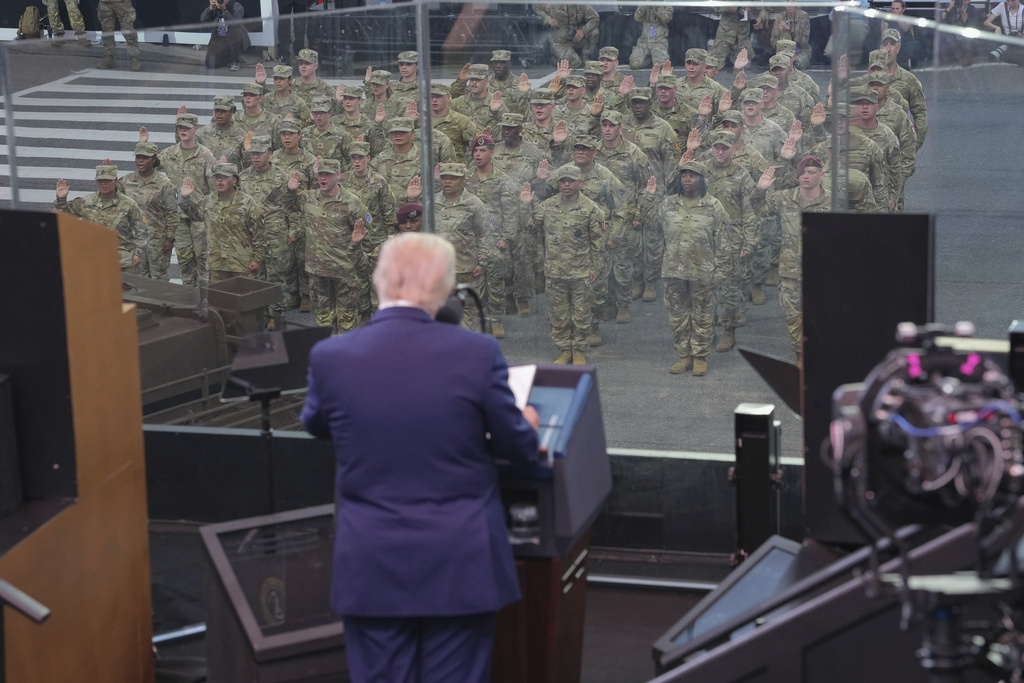
In his second term at the White House, the central goal of U.S. President Donald Trump is clear: a Nobel Peace Prize and, more broadly, a place in the history books. Although the isolationist voice within his party is growing stronger, Trump’s version of "Making America Great Again" involves an active approach to foreign relations: dismantling the institutions and arrangements established since World War II, strengthening utilitarian alliances, and closing the American umbrella for traditional allies. Trump’s world is more realistic, more dynamic, more forceful, and, in his view, more peaceful.
After a year in Trump’s world, it is still difficult to judge his path by its results. Alongside a series of relatively fragile agreements, the bloodiest war of the 21st century, between Russia and Ukraine, is still raging. What happens in the coming years will determine Trump’s legacy: Will he become the "Peace President" he hopes to be, or the harbinger of a particularly violent and dark era?
Strikes in Venezuela and Iran: From Sanctions to Direct Force
Over the past year, Trump’s America has shifted from a long-standing policy of sanctions and diplomatic pressure to a policy of using lethal military force against two hostile nations: Iran and Venezuela.
Since the Islamic Revolution in Iran (1979) and Hugo Chávez’s rise to power in Venezuela (1999), these two oil-and-drug powers have been on a collision course with the United States. Yet for decades, Americans managed this escalating conflict against them without declaring war.
During his first term, Trump took a surprising step by ordering the assassination of Qasem Soleimani, head of the IRGC Quds Force (2020), during his visit to Baghdad. That term also saw the severing of ties between the U.S. and Venezuela, the closure of the American embassy in Caracas, and U.S. recognition of the opposition leader as Venezuela’s president.
In Joe Biden’s four years at the White House, no significant change was evident in Washington’s murky relations with Tehran and Caracas. President Biden spoke out unequivocally against the dictatorial regimes of Venezuela and Iran, but it remained just words. Since Trump’s return to the throne, it is evident he has decided to act in the spirit of the adage "Shoot, don't talk," and to declare war where his predecessors chose threats and other measures.
A Naval Blockade on Venezuela
In August 2025, the United States launched a massive military operation codenamed 'Southern Spear', with the declared aim of eradicating drug cartels referred to by the Trump administration as "narco-terrorists." The operation began after the President signed executive orders designating certain cartels, including the 'Cartel of the Suns,' identified with senior officials of the Maduro regime, as foreign terrorist organizations. This allowed the U.S. military to shift from policing and enforcement to direct, lethal strikes in the Caribbean and the Pacific.
As part of the operation, the United States deployed massive forces around Venezuela, a move perceived as a tangible threat of invasion. The aircraft carrier USS Gerald R. Ford positioned itself in the region, flanked by its full strike group. Alongside it, destroyers, submarines, and B-1 and B-52 bombers were stationed near Venezuela, conducting deterrence missions near the coast.
As of the end of 2025, reports indicate the U.S. military has carried out approximately 30 strikes against drug smuggling vessels in the Caribbean and Pacific, resulting in over 100 deaths. In addition to offensive operations, the Administration has imposed a naval blockade on oil tankers from Venezuela, arguing that oil profits are used to finance terror, drug trafficking, and human trafficking.
Bombing Iran
In June 2025, during the '12-Day War' between Israel and Iran, the United States launched 'Operation Midnight Hammer.' This was an aerial assault on three central nuclear facilities in Iran: Fordow, Natanz, and Isfahan; the first U.S. military action on Iranian soil since the 1980s.
The operation was executed using B-2 bombers dropping massive ordnance penetrators (GBU-57) and Tomahawk missiles launched from submarines. It resulted in heavy damage to Uranium enrichment infrastructure and, according to President Trump, set the Iranian nuclear program back by at least two years. The strike was carried out as part of the Israeli campaign against Iran, designed to destroy targets Israel struggled to hit alone. At its conclusion, the Trump administration presented Iran with a stark ultimatum: "Zero enrichment," or face the total destruction of remaining regime assets.
Changing Approach to Europe: "They Must Manage Alone"
The year 2025 will be remembered in NATO history as a turning point: the Americans are no longer willing to defend the Europeans by themselves. In his speech at the Davos Forum, held days after his return to the White House, Trump hastened to clarify that the era in which the U.S. subsidizes the security of the world’s wealthiest continent is over: "It is time for Europe to stop relying on the American taxpayer."
Vice President J.D. Vance declared in his speech at the Munich Security Conference (February 2025) that the U.S. "cannot continue to supply ammunition and protection to Europe at the same intensity," and that Europeans "must manage alone" regarding conflicts on their own continent.
Trump's demands of the Europeans came with a heavy price tag. Trump arrived at the NATO summit in The Hague in June with an ambitious demand: raising the defense spending target for all alliance members to 5% of GDP. The previous target, set by Trump in his first term, stood at only 2%.
After tough negotiations, which included threats of tariffs on countries that failed to meet targets, European leaders agreed to increase defense spending goals. The new target is 3.5% of GDP for military procurement, much of which will be U.S.-made, and another 1.5% for developing security infrastructure. For many European nations, this means doubling, or more, their defense budgets.
Alongside the budget demands, Trump promoted a policy of "Burden Shifting" this year. Under this doctrine, Europe bears the primary responsibility for building a conventional military force capable of deterring Russia. Discussions and planning began in Washington for the withdrawal of American forces from Europe, with the clarification that the Pentagon will focus its resources on the Far East in the coming years.
The message to Europeans is sharp and clear: The U.S. will provide the nuclear umbrella, but you must provide the "boots on the ground" and the ammunition yourselves.
Annexing Greenland?
Alongside the budget disputes with NATO, Trump reignited one of the most explosive and bizarre diplomatic spats in the history of U.S.-European relations: Greenland.
The massive, sparsely populated island (home to fewer than 60,000 people) is currently defined as an autonomous territory within the Kingdom of Denmark. Trump is actively working to annex the island to the U.S., a move that infuriated and alarmed Europeans.
The peak of the confrontation was recorded recently (December 2025), after the President appointed Louisiana Governor Jeff Landry as a Special Envoy entrusted with "making Greenland part of the USA." It is hard to ignore the symbolism of the move: 'French Louisiana', whose territory was larger than that of Greenland, was purchased by the United States in 1803 for $11 million. Over time, no less than 13 American states were founded on its soil.
The European response was swift. The Prime Ministers of Denmark and Greenland issued a rare joint statement clarifying that "one cannot annex another country, not even under the argument of national security," receiving full backing from the European Union. Denmark, a historic ally of the United States, which invited it during World War II to establish military bases in Greenland, defined Washington for the first time in history as a "potential security risk factor."
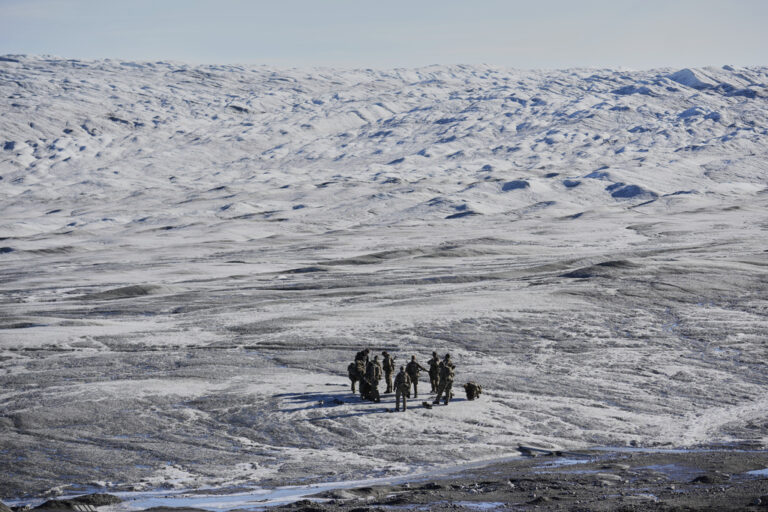
Trump presented the move as a security necessity in the face of the growing presence of Russian and Chinese ships and submarines in the Arctic region. He promised the residents of Greenland the preservation of cultural autonomy; massive infrastructure investments; and the implementation of the 'Alaska Model', according to which part of the revenues from resource extraction on the island would be distributed in an annual check to every Greenlandic citizen. Trump argued that this would instantly turn every family on the island, where most residents suffer from poverty, into a wealthy one.
No Agreement in Ukraine
In the war in Ukraine, the Trump administration presented a doctrine completely different from that of its predecessor, Joe Biden. Instead of a "blank check" for Kyiv's security, alongside strict limitations regarding Ukrainian attacks on the Russian rear, the administration in Washington shifted to a doctrine of "closing the deal" quickly, even at the cost of major concessions to Moscow.
At least for now, it doesn't seem to be working. Alongside exhausting negotiations leading to a dead end, Washington continues to arm Ukraine, but now it demands a return.
Trump appointed retired General Keith Kellogg upon entering office as a Special Envoy tasked with ending the war in Ukraine within 100 days. The first significant move was the freezing of security and intelligence aid to Ukraine in March 2025, a step designed to force President Zelensky to the negotiating table. Following this, a "technical ceasefire" was declared for 30 days, though in practice, the fire did not cease. During that period, direct talks began between Russian and Ukrainian representatives with American mediation in Riyadh and Geneva.
In November 2025, Trump's "28-Point Plan" was revealed, formulated in collaboration with Vice President J.D. Vance and Secretary of State Marco Rubio. The plan includes painful compromises for Ukraine: de facto recognition of Russian control over Donbas and Crimea, limiting the size of the army, and a constitutional commitment not to join NATO. In return, Trump offered Ukraine an unprecedented American security guarantee, stating that the U.S. would intervene militarily if Russia violated the agreement and attacked again.
Unlike the "20-Point Plan" for the Gaza Strip, this plan has not yet been implemented.
The personal meetings Trump held with the leaders were tense and dramatic. At the Anchorage Summit in August 2025, Trump met with Putin for the first time since the war broke out, offering to lift some sanctions in exchange for a partial withdrawal of Russian forces. He encountered a rigid Russian stance, which demanded further territorial concessions from the Ukrainians. The meeting ended without any progress and was perceived as a diplomatic achievement for Putin.
Trump’s meeting with Zelensky at the White House in October 2025 was defined as "difficult," after Trump refused the Ukrainians' request to supply them with long-range Tomahawk missiles, and demanded they "stop where they are." Meaning, to give up the extensive territories occupied by the Russians, comprising about a fifth of Ukraine's territory.
In addition to the military aspect, Trump introduced his preferred economic component to the equation: rare minerals. In April 2025, the Resources Agreement was signed between the U.S. and Ukraine, granting American companies preferential access to lithium and rare metal mines in Ukraine. Trump presented this as a way for Kyiv to "pay" for its defense and future reconstruction, declaring that part of the reconstruction fund's profits would be directed to cover U.S. debts.
As of December 2025, the war is far from over. The gaps between the sides regarding agreements remain enormous, and the situation at the front is stable: the Russian army is managing to advance slowly, but at a negligible rate and at a tremendous cost in human life which it hides from the public. The attacks on the home front of both sides have escalated in recent months into waves of hundreds of missiles and UAVs every night.
While Zelensky agreed to give up the Ukrainian dream of joining NATO, waiving extensive territories of Ukraine occupied by the Russians does not seem to be on the horizon. On the other hand, Putin is not expected to withdraw his forces from areas occupied, most of which have already been defined as annexed to Russia.
Mediator in East Asia: Between Tariffs and Weapons
While demanding Europe pay up, in Asia Trump attempts to position himself as the responsible adult, the super-mediator, combining heavy economic pressure in the form of tariffs with direct personal diplomacy.
Fragile Ceasefire in Thailand-Cambodia
The most surprising event of the year was the outbreak of war between Thailand and Cambodia in July 2025. After several days of fierce battles involving artillery shelling and airstrikes, Trump entered the picture and declared a ceasefire, which was broken and reinstated several times.
The leaders of the two Southeast Asian kingdoms signed the "Kuala Lumpur Peace Agreement" in October 2025, in a ceremony held with their Malaysian counterpart and led by the American President. Trump presented the agreement as a personal victory, which included the withdrawal of forces from both sides from disputed territories around the Preah Vihear Temple. However, the reality on the ground remains fragile: fighting has renewed in the region in recent weeks, the Thai army is releasing belligerent statements, and Trump has found himself struggling to preserve the achievement.
"Balancing" China-Taiwan
In the central arena against China, Trump adopted a "Risk Splitting" policy during 2025. First, he escalated the trade war against China, ordering draconian tariffs against it; and simultaneously expressed doubt regarding Washington's willingness to defend Taiwan from China if it does not "pay for protection."
This double move shocked both Beijing and Taipei, creating a certain "balance" by turning the "America First" approach toward both sides.
In the second stage, the American President generated policy reversals. He reached understandings regarding tariffs with Chinese President Xi Jinping at the Busan Summit (November 2025), and the two created a "temporary ceasefire" in the trade war and renewed the supply of rare minerals from China to the United States.
On the other hand, a month later, the administration in Washington approved the largest arms package in history for Taiwan, amounting to approximately $11.1 billion.
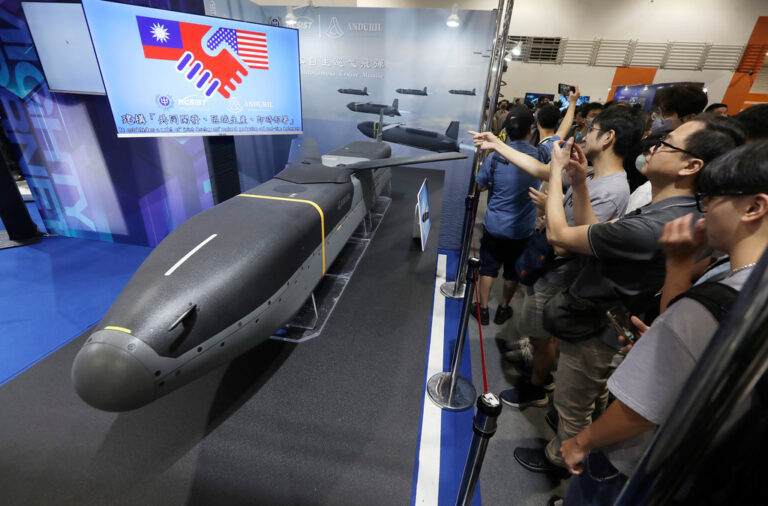
Trump offered the Taiwanese an unprecedented security guarantee including 82 HIMARS artillery systems, hundreds of ATACMS surface-to-surface missiles, UAVs, and advanced systems designed to turn Taiwan into an impenetrable "Steel Porcupine." However, the aid came with a price tag: Trump clarified that he expects Taipei to raise its defense budget within a decade to 5% of GDP (and even hinted at a target of 10%), while continuing to treat the island's security as a strategic bargaining chip.
Relations between Japan and China also plunged into crisis in recent months, after the new Japanese Prime Minister, Sanae Takaichi, stated that Japan might provide military support to Taiwan in "extreme cases" such as a Chinese attack on the democratic island. A Chinese Defense Ministry spokesman said in response that they are capable of "defeating any invading enemy," and that "if the Japanese side dares to cross the line even by one step, it will bring trouble upon itself."
Trump did not rush to back Japan, which was perceived as an attempt to maintain economic stability with China. Chinese media even claimed that Trump called Japanese PM Takaichi and asked her "not to anger" Beijing, a report denied in Tokyo and Washington. Either way, Tokyo decided to accelerate its independent armament, a move Trump encouraged as part of sharing the defense burden.
Nuclear Core in Korea
In the Korean Peninsula, Trump tried to recreate the "magic" from his first term. He opened a direct diplomatic channel with Kim Jong Un, calling North Korea a "nuclear power," a statement perceived as de facto recognition of its status. Despite attempts for another summit in October 2025, Kim refused to meet the American President without an American commitment to lift sanctions. Simultaneously, Trump surprised by giving a "green light" to South Korea to develop nuclear submarines, a step also intended to reduce dependence on American forces in the region.
Only in Pakistan did they thank him
One of the most severe security crises in the war-torn year that passed occurred in South Asia. India and Pakistan, two nuclear powers together housing about 21% of all humanity, reignited the long-standing conflict between them.
What ignited the fire was a deadly attack on April 22 in the resort town of Pahalgam in Indian Kashmir, where 26 people were murdered. India blamed Pakistan for involvement, and in response launched Operation "Sindoor" on May 6—an extensive missile and UAV attack on targets deep inside Pakistan, hitting areas near the capital Islamabad. Pakistan responded with a counter-operation involving heavy artillery fire and airstrikes, claiming to have downed five Indian fighter jets. The tension peaked when the nuclear weapons systems of both countries were placed on high alert.
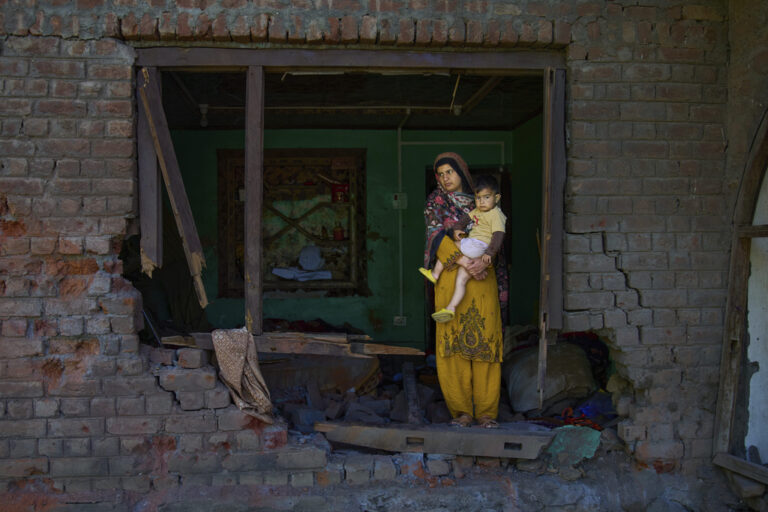
At this point, President Trump and his administration entered into aggressive mediation between the sides, or so at least was claimed in Washington and Islamabad. On May 10, 2025, after a night of intensive talks led by Secretary of State Marco Rubio, Trump announced that a full and immediate ceasefire had been achieved, proudly declaring that the U.S. prevented a "nuclear catastrophe."
A battle of narratives emerged around Trump's involvement. Pakistan rushed to verify the American narrative, and its Foreign Minister thanked Trump for his mediation, expressing hope that under his auspices the issue of the Kashmir region would also be resolved. But India presented the opposite position. Prime Minister Modi clarified in a tense phone call to Trump (June 2025) that India never accepted and will never accept third-party mediation in the conflict. According to the Indian version, the ceasefire was achieved through direct channels between Delhi and Islamabad, unrelated to American pressure.
Trump, for his part, was undeterred by the Indian denials and continued to claim that his threat to cease trade with both countries was what brought them to the table. He even promised that if quiet is maintained, he would act to increase trade with both "significantly." This dispute became a symbol of Trump's foreign policy in 2025: a combination of brutal economic pressure, declarations of personal victories in achieving "peace deals," and challenging ancient diplomatic conventions.
Africa on the Map: "We Get a Lot of Minerals"
Another impact of Trump involves transforming the war in the eastern Democratic Republic of Congo (DRC), which has raged continuously for over thirty years, from a conflict largely ignored by the world into a central focus of interest. Trump’s interest lies mainly in the rare minerals in the region.
The war in eastern Congo rarely reaches global headlines, usually only after brutal massacres with hundreds or thousands of victims. It is a war that few outside Africa cared about, even though one of its main causes is the wealth of precious minerals in the country: gold, oil, uranium, diamonds, and rare earth metals.
Washington had avoided real intervention in this complex war for decades. Instead, they legislated restrictions and oversight on conflict minerals to prevent them from entering American industry. However, these minerals did not stay in the Congolese mud. They flowed at comfortable prices to China, and likely, through various channels, continued to reach the West as well.
The beginning of the year was particularly bloody. M23 rebels, supported by Rwanda, launched a blitz in January, capturing the strategic cities of Goma and Bukavu. In their campaign of conquest, they massacred thousands and displaced hundreds of thousands more.
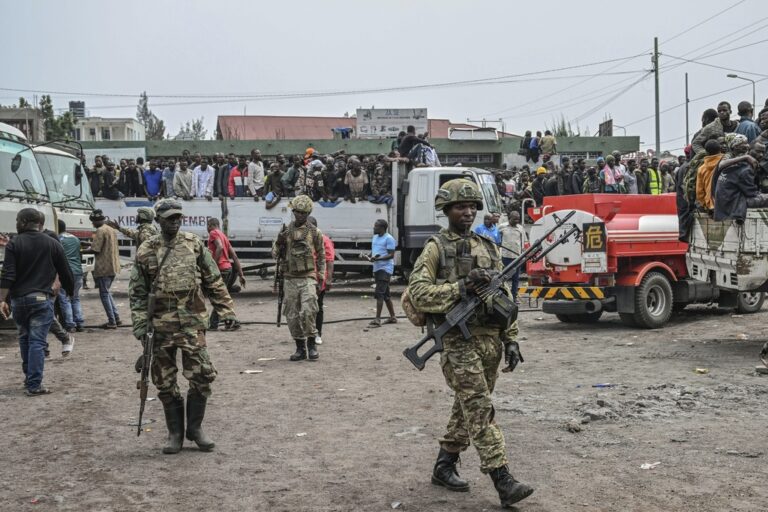
The Congolese government, desperate from military losses, offered the U.S. preferential access to its minerals (cobalt, lithium, and rare earth metals) in exchange for security guarantees and pressure on Rwanda. Trump, identifying the economic potential and the opportunity to weaken Chinese influence in Congo’s mines, entered the picture under the banner of "Peace for Prosperity."
Earlier in December 2025, President Trump hosted Congolese President Félix Tshisekedi and Rwandan President Paul Kagame at the White House. In a festive ceremony, the three signed the "Washington Accords for Peace and Prosperity"— a historic peace agreement after three decades of war. The new deal includes a Rwandan commitment to withdraw forces from eastern Congo within 90 days, and the retreat of the M23 militia to areas near the Rwandan border where it operates as part of the local Tutsi population that makes up its fighters.
In return, the U.S. and Congo agreed to establish the "Regional Economic Integration Framework" (REIF)— an American investment plan worth billions in infrastructure and mines that will serve both nations.
In his speech at the signing ceremony, Trump did not hesitate to boast that he secured mining rights for American companies as part of the peace deal, saying: "We get a lot of the mineral rights for the U.S. as part of this." This statement drew criticism from global entities claiming the U.S. is "trading peace for resources."
Leaders of Congo and Rwanda presented narratives close to Trump's: President Tshisekedi thanked Trump for the "determined leadership," and President Kagame said the agreement was achieved thanks to economic incentives that no one but Trump could generate.
Despite the festivities in Washington, the reality on the ground remained volatile. Just days after the signing, on December 10, 2025, reports emerged of a renewed offensive by M23, which captured the city of Uvira in South Kivu province. While Trump insisted that the agreement remains in effect and dismissed the violence as the conflict's "death throes," his critics argued that a deal built primarily on the economic interests of a foreign power, without addressing the deep-seated ethnic and security root causes on the ground, is liable to collapse like a house of cards.
Charting Agreements in the Middle East: "I Achieved Historic Peace"
The Trump administration's greatest achievement of the past year was announced by the President dozens of times: "I achieved historic peace in the Middle East." Trump boasted that he managed to end wars lasting thousands of years, typically exaggerated rhetoric, yet the moves he led will indeed shape the Middle East in the coming years.
The Gaza Strip
In October 2025, the "Trump Agreement to End the War in Gaza" was signed. Three months later, its implementation on the ground can be summarized:
- 1. Hostages: All hostages, living and dead, have been returned to Israel, except for the body of Ran Goili which has not yet been located.
- 2. Territory: The IDF has withdrawn to the 'Yellow Line', permanently holding 53% of the Strip's territory. The area under Israeli control includes several strategic zones, within which operate several anti-Hamas militias supported by Israel.
- 3. Hamas Status: Hamas has not disarmed, despite this being stipulated in the agreement. On the contrary, Hamas has returned to full control in all territory west of the Yellow Line (47% of the Gaza Strip).
- 4. International Force: An international force to oversee security in the Strip and Hamas's demilitarization has not yet been established, as required by the agreement.
- 5. Combat Status: Intense fighting in the Gaza Strip has ceased. Pinpoint incidents continue to erupt.
-
Lebanon
A tense ceasefire prevails on Israel's northern border, effectively a continuation of the understandings between Israel and Lebanon from November 2024. Israel conducts frequent attacks to thwart Hezbollah's attempts to rehabilitate south of the Litani River. The United States set a deadline of the end of 2025 for the Lebanese Army to complete the disarmament of Hezbollah in the country's south, a goal Lebanese leaders claim to have achieved.
Meanwhile, Hezbollah Secretary-General Naim Qassem refuses the call to disarm, and Israel threatens to expand the campaign if the agreement is not fully enforced. The coming weeks will reveal where things are headed in Lebanon.
The Houthis
In May 2025, Trump announced a ceasefire between the U.S. and the Houthis in Yemen, following Operation 'Rough Rider'. The Houthis agreed to stop attacking American ships, yet continued attacks against vessels they claim are affiliated with Israel, and launched missiles and UAVs toward Israel. The ceasefire in Gaza led the Houthis to declare a temporary ceasefire against Israel, but tensions are rising again following Israeli recognition of the sovereignty of Somaliland, located near Houthi-controlled territory.
Translated by Josh Traurig