
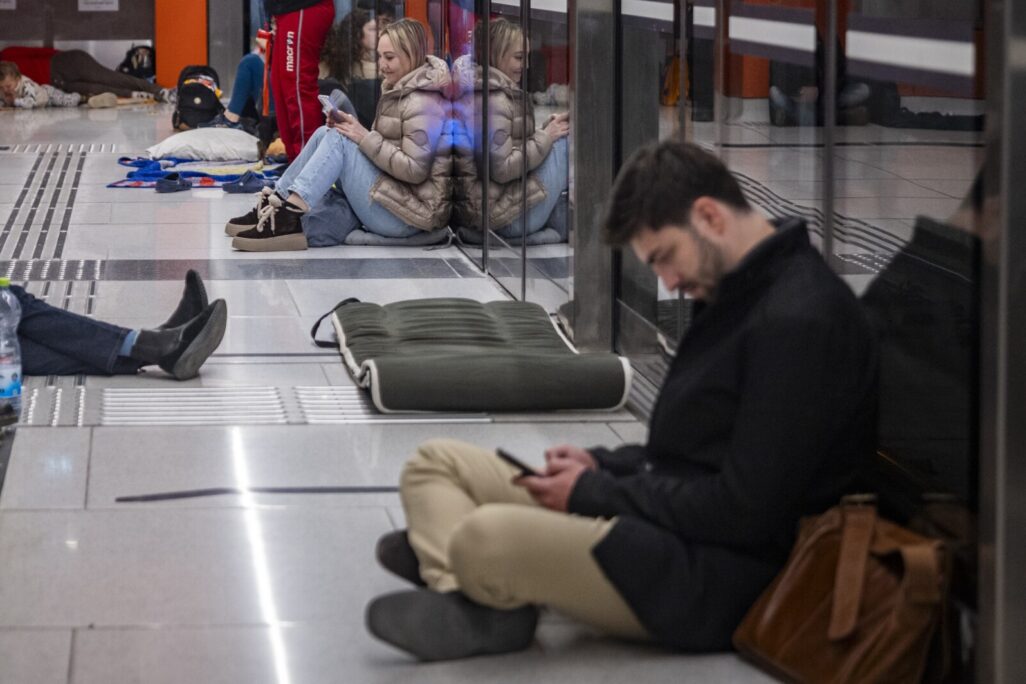
People read on their phones while in the light rail in Tel Aviv, a protected space. The people photographed are not related to the article (Photo: Haim Goldberg/Flash 90)
By Yahel Farag
Last Update: 03/03/2026 | 15:50
The Israel Internet Association published tips for responsible consumption of reliable information during an emergency:
- 1. Prefer official sources – It is important to prioritize official and authorized sources for life-saving decisions, and not rely on everything said around us in the shelter or immediate surroundings.
- 2. Telegram or WhatsApp are not news sources – Anonymous channels flood users with updates, images, and videos that are not verified. It is advisable to prefer reputable news websites, where it is clear who the writers and editors are.
- 3. Not every fake is AI-based – Most fake content during emergencies consists of real images or videos that have been reshared from a different time or place. A video that looks authentic does not guarantee it is from the time and location being claimed.
- 4. Beware of screen fatigue and news overload – Prolonged time in a safe room in front of screens can cause fatigue and a decline in mood, and constant connection to the news can create a sense of overwhelm. It is advisable to talk with others, move your body, and avoid spending long hours in front of screens.
- 5. Check before sharing – Most fake content is spread by ordinary citizens. A short pause, verifying against official sources, and asking whether it is appropriate to share can prevent harm during a sensitive and difficult time.