
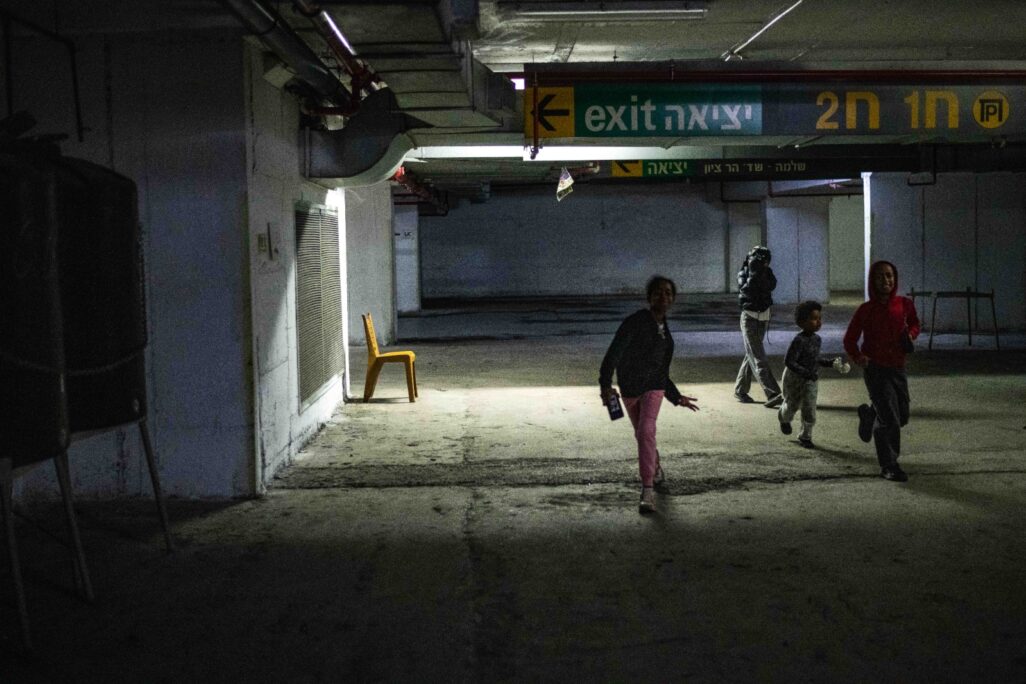
On one of the walls in the bomb shelter at the Central Bus Station in Tel Aviv, someone sprayed in green the words “It’s allowed to be happy”. The underground space in the lowest place in Tel Aviv, which can accommodate tens of thousands of people if necessary, has since the last war with Iran in June 2025, served as a protected place for hundreds of residents of the nearby neighborhoods of Neve Sha’anan and Shapira. Among migrant workers, refugees, and undocumented migrants, in a range of languages and cultures, it seems that the existential threat allows for a shared existence with islands of compassion. At least for now.
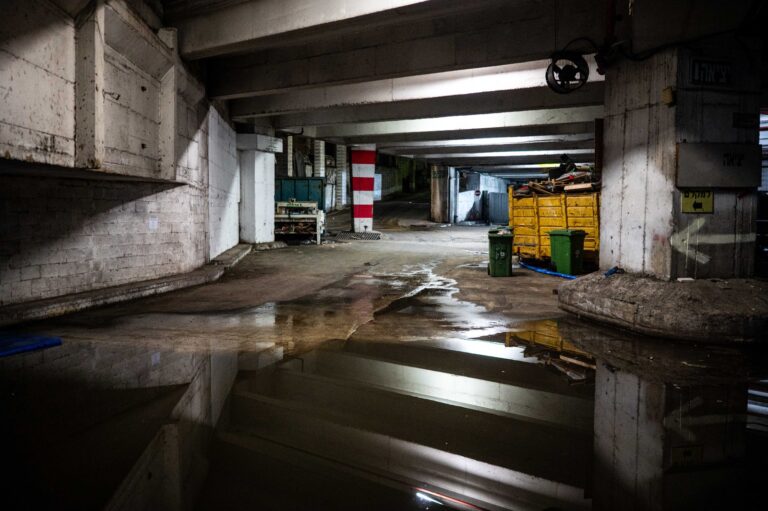
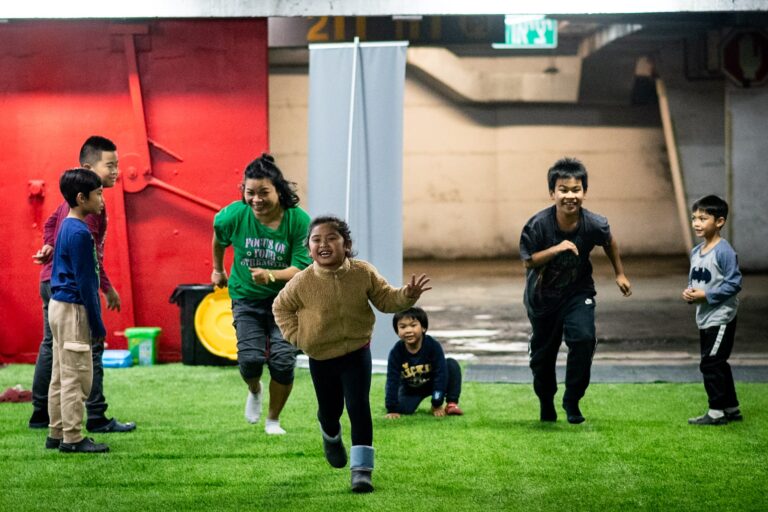
At the beginning of the previous campaign against Iran, the shelter and its surroundings were completely neglected, until the municipality and Brothers in Arms stepped in, making the place usable: they drained the standing water, laid synthetic grass, brought mattresses, and fixed the lighting.
Eight months have passed since then. The condition of the public shelter, used by hundreds of people who have no safer space, is better, but still needs improvement. The families, mainly mothers and children, who have put down stakes and pitched tents, are trying to create a daily routine and stability within the chaos. At night, when 200 people who do not know one another sleep in the same space, it is not simple.
")
The mother from Eritrea: “The girls ask how long the war will last”
“During the day we’re here, and at night we sleep in the shelter in the Shapira neighborhood,” says Alem (38), the mother of Selihen (6) and Arsemia (4.3), after the siren on Saturday afternoon. She arrived in Israel from Eritrea 15 years ago, and a year ago she lost her husband, the girls’ father, so now it’s just the three of them.
“They keep asking all the time how long the war will last,” she says as the girls urge her to go up above ground to get some sun.
“I miss school, but it’s fun being in the shelter, we play and sleep,” Selihen says with a smile.
“I can’t manage to sleep at night; with children it’s frightening.”
The sisters from Colombia: “There is a lot of stress”
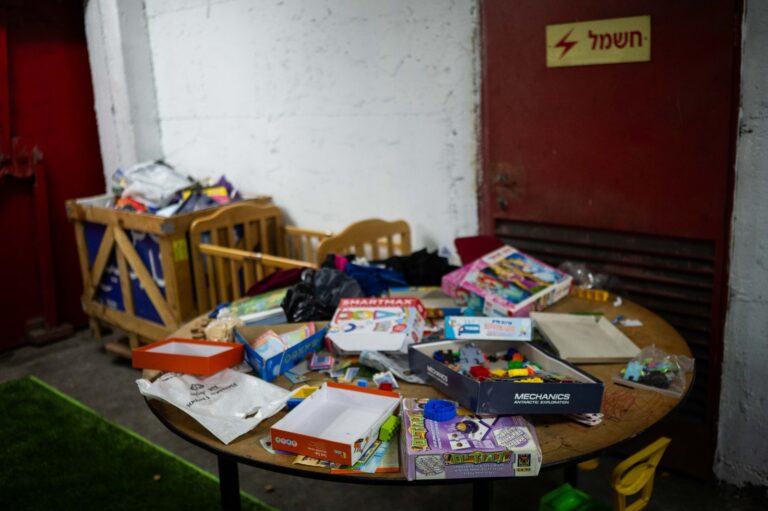
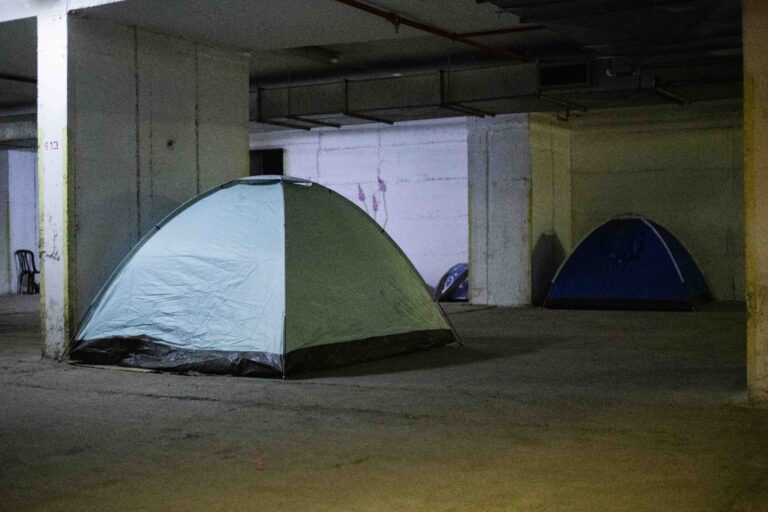
The sisters Sandra and Gloria Arce sit by a plastic table in one of the alcoves in the shelter, with the tents they set up already on the first day of the attack behind them, trying to catch up on the news on their phones using the small amount of internet that reaches deep into the underground shelter.
With them at the table is Noam, Gloria’s son, for whom Hebrew is a native language. “When we came on Saturday, it was very dirty,” Gloria says. “A lot of dust and mosquitoes. On Tuesday people from the municipality came to clean, and they brought mattresses and games for the children.”
When Sandra arrived in Israel from Colombia 29 years ago to work, she did not imagine that her sister would join her six years later. Since then, they have lived in south Tel Aviv, in an old building that has no protected space.
“There is a lot of stress, every siren I’m afraid,” says Gloria. “But because there’s no internet reception here, we only know something is happening when people from outside come in.” She works as a kindergarten assistant, and her son is not with her because he works from home and needs a computer and internet. She worries about him, and until some sign from him penetrates the bubble she has been living in over the past week, three floors underground, it takes time.
")
Noam goes out from time to time to cook at home and returns as quickly as he can. He is 16 and studies in the city center. “I can’t go too far outside the neighborhood because of the sirens, and I don’t have friends here, so it’s hard, but you have to deal with it and wait,” he says, his head held high.
Most of his classmates have a mamad (a reinforced safe room) at home, and this built-in gap in life experience seems invisible to him. “Some of them are interested and ask what it’s like here,” he says with a shrug, but they haven’t come to visit yet.
The encounter with the temporary neighbors is challenging; the young children play constantly, even at night. Because the walls of the home are a thin sheet of plastic, suspicion grows. The sisters talk about thieves wandering among the tents, and the guard the municipality placed for a few hours a day cannot cover the entire space.
A few days ago, someone opened a fire hydrant on the floor above, and water dripped, something that didn’t bother the rats, and perhaps even encouraged them to come out of the walls. Despite everything, and perhaps because of everything, it is important for her to emphasize: “We love Israel. Very much.”
The women from the Philippines: “We cook together and share the food”
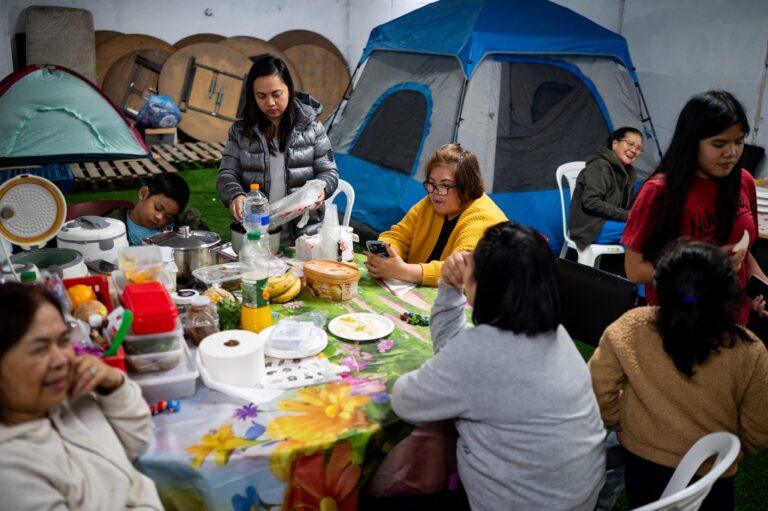
Across from the shelter sits Irene Sismeta (25 years in Israel), Glory Peh Sisenta (20 years in the country), Rose Ambiye (16 years), Jenny Bautista (28 years), and Lyn Sisenta (21 years), with their toddlers and infants eating, playing cards, and with a ball.
They are friends and neighbors, some of them relatives, and they describe themselves as a kind of small village. “Bayanihan is a word in our language in the Philippines; it means cooking together and sharing the food, drinks, and even big things,” Ambiye explains.
On Saturday it was very frightening, so on Sunday they began to arrive and found each other. Their children are between 3 and 13 years old, and they keep each other busy.
“We prioritize the safety of the children; here you don’t hear the bombings. Many people come in when there’s a siren but leave fairly quickly, and we sleep here,” Ambiye explains simply. On their table, the best dishes are kept in plastic containers. Whoever cooks shares with everyone.
The young men from India: “We feel safe”
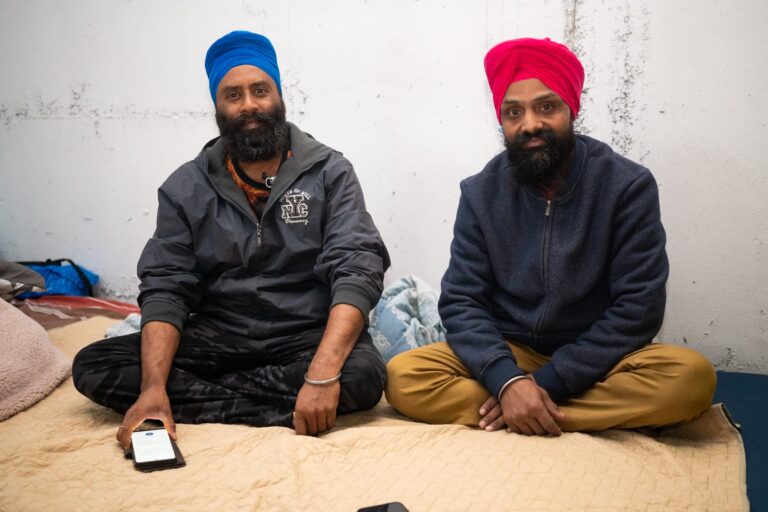
Sitting cross-legged on mattresses and blankets are Gorpal Singh (46) and Singh Hadandar (36), who arrived from India two years ago to work in construction. Thanks to technology, it’s possible to have a conversation between people without understanding each other’s language, perhaps if there had been Google Translate in Babel, the tower would still be standing.
The rest of their friends went out to eat and refresh themselves, while they stayed behind to watch over their belongings. During the day, they go out to work on construction sites, and at night they come here to sleep.
Two weeks ago, Indian Prime Minister Modi visited Israel, and they are still excited about that visit, even though a war has started since then. “We’ve seen many wars over the past two years,” they say, “but we are very satisfied. We trust Israel’s defense capabilities and feel very safe.”
")
The mother from Uganda: “I learned that everyone cares about each other”
At the far end of the tent area stands Emilia Colin (28) with her daughters Miracle, 1, and Robina Neria, 3. She has been living in Israel for the past four years, and her homeland of Uganda now feels very far away.
At the start of the war, she went to another shelter, where she was photographed without her permission and negative things about Israel were written, so she is wary of cameras, but she wants to say what she has to say:
“It’s safer here. We’re not running up and down; we can sleep properly. There’s no panic.”
")
“The girls are playing. Robina couldn’t sleep the first few nights, but here she plays and forgets everything.” The older girls around help her with her little ones, she trusts them even though she hadn’t met them before. “We’re in this together,” she repeats, “everyone’s in this together.”
But there are people who have a mamad and don’t have to live in a shelter with people they don’t know. “The pressure I’m under, everyone experiences it; everyone is stressed, not knowing how their friends are or what’s happening in the country. Life is affected by the war, but life is the most important thing. Other things are less important. Right now, the first thing is safety.”
“I learned that everyone cares about each other. You can’t know what people are going through, but people are there for one another.”