

The Labor and Welfare Committee approved for second and third reading a temporary order that will prohibit the dismissal of an employee who was absent from work due to damage to their home caused by the war, or due to supervising their child because their spouse was serving in the security forces or in an essential facility during Operation Roaring Lion.
According to the amendment, an employee who is absent from work or unable to perform their duties due to evacuation will be protected from dismissal for three months from the day of evacuation. The amendment also prohibits the dismissal of an employee who is absent or unable to perform their work during the war, in order to supervise their child because the employee’s spouse or other parent of the child is serving in the security forces on active or permanent duty, or because the spouse is working in an essential facility.
Similar to the arrangement approved during Operation Am Klavi in 2025, the amendment applies retroactively from the start of the current campaign, February 28, 2026, in civil terms—but not regarding criminal enforcement against the employer, which will apply only from the date the law is published.
During the discussion, employer representatives argued that retroactive application, even without criminal penalties, is unfair to employers who have already completed the dismissal process. Attorney Maayan Amir from the Manufacturers’ Association said: “Applying the amendment retroactively is neither correct nor legally fair. This protection adds to many other safeguards against dismissal, and the burden falls on the employers.”
Attorney Dikla Horesh from the Ministry of Labor responded: “In such circumstances, when the law is already known and there were previous provisions, there is already an expectation that the employer will provide the protection. Additionally, even before this amendment, the employer is still subject today to protections in civil circumstances.”
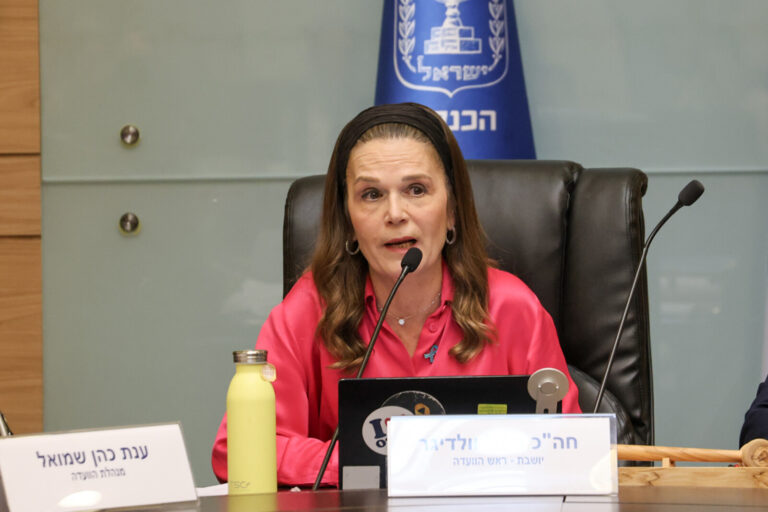
The committee chair, MK Michal Waldiger, addressed the issue in the context of approving the provisions as a temporary order, saying: “I don’t understand why we need this process over and over again, and then the challenges and discussion about retroactive application arise again. These provisions should be established as a permanent order that applies whenever a state of emergency is declared, not each time as a temporary measure. If there are specific provisions for a particular period, that can be added separately. It’s a waste of time and resources to repeatedly address issues that are expected to be regulated each time.”
During the discussion, it was emphasized that the amendment protects against dismissal but does not address employee wages. Attorney Miri Gross from the Employee Rights Clinic at Tel Aviv University said: “The separation between dismissal and wages is artificial and does not exist in other protection laws. It’s a fiction that creates problems on the ground every round. The result is that, on paper, employees are apparently not dismissed, but the central meaning of work, the right to pay, is missing.”
On the other hand, attorney Maayan Amir from the Manufacturers’ Association said: “It is possible to discuss compensation on the part of the state, but when an employee does not come to work, they should not receive payment from the employer’s pocket.”
Waldiger noted in response that there is logic in the separation and that it is important to prevent dismissals for the sake of employees’ job stability, even independently of the wage issue. Attorney Dikla Horesh from the Ministry of Labor added: “Certainty for employees and employers is important. Along the way, there are agreements on compensation arrangements regarding wages, but this is budgetary and usually regulated separately.”
Representatives of reservists and their spouses requested to raise in the discussion several gaps that currently exist, according to them, in protections for service members. Ayelet Iron from the Forum of Reservist Wives said that in the past three months there have been dozens of complaints regarding dismissals of spouses or reservists themselves, since the expiration of the expansion order to the collective agreement signed by the Histadrut and employers at the end of 2025. Committee Chair MK Michal Waldiger asked the Ministry of Defense representative to examine the claims raised during the discussion and provide a response to the committee so that it can be addressed further.