


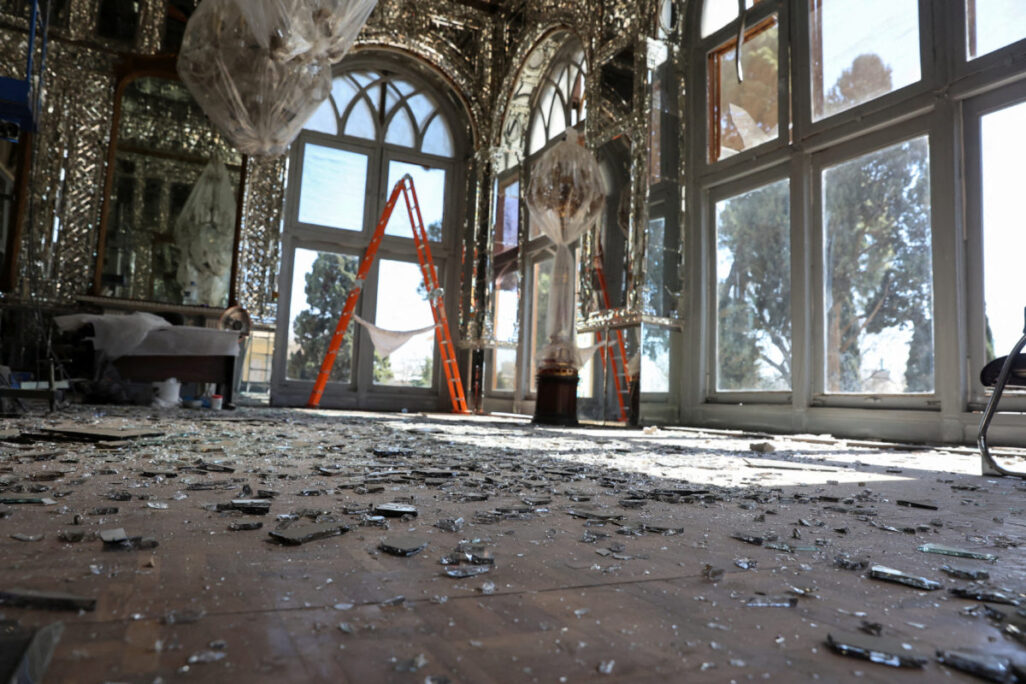
The strikes by Israel and the U.S. in Iran caused heavy damage to dozens of World Heritage sites built centuries ago, which constitute a symbol for the Iranian people, even among those who oppose the Ayatollah regime. Even if this was not the goal of the strikes, the damage to the buildings violates international conventions for the protection of cultural heritage assets, to which Israel and the U.S. are signatories, which may harm them in the global arena.
"Pro-war advocates say that what is destroyed will later be built better," Iran researcher Mojtaba Najafi, who lives in Paris and opposes the Iranian regime wrote on X. "Okay, we will build a new Ali Qapu, Chehel Sotoun, and Golestan Palace. For me, ancient monuments are as important as human lives. Because they connect me to my past. And their destruction means my memory is destroyed. The lost life of a citizen cannot be rebuilt."
In Najafi's eyes, the damage caused is not just related to stones, however ancient and magnificent they may be, but to a profound loss of his human identity as an Iranian, and of the Iranian people as a whole. These cultural heritage sites represent the pre-Islamic, Islamic, and modern history of the country and its people, and according to him, they must be treated as national and global treasures, not as legitimate targets for strikes during a war, justified or not.
Najafi's 'eulogy' highlights not only the powerful emotional connection many Iranians have to their unique history but also the deeper and broader impact on humanity of harming symbols of history and culture, wherever they are caught up in modern conflicts.
In declaring war on Iran, it is reasonable to assume that Israel, and probably the U.S. as well, did not plan to cause this kind of destruction. However, as of mid-March 2026, reports in Iran indicate that several cultural and historical sites—some included in UNESCO's World Heritage list and supposed to be protected during wars—were significantly damaged in the aerial attacks of the two countries on the Islamic Republic.
The Casualty List: Cultural Gems
The Iranian Red Crescent recently reported that since the beginning of the war on February 28, some 10,000 civilian buildings were destroyed or damaged in aerial strikes. Of these, 7,493 were residential buildings; 1,617 commercial, 32 medical, 65 schools, and 13 Red Crescent buildings.
The list includes several cultural gems: Naqsh-e Jahan Square, known as Meydan-e Emam; Masjed-e Jāmé, a complex built, expanded, and renovated over centuries, from the 8th to the 20th century; Ali Qapu Palace and Chehel Sotoun Palace built in the 17th century—all three in the city of Isfahan; Golestan Palace, dating to the 16th century, in the capital Tehran; and the Falak-ol-Aflak citadel in the city of Khorramabad, built in the Sassanid era about 1,800 years ago, and considered one of the most important architectural creations in Iran.
Official Iranian media reported that in the Israeli and American strikes on Tehran, damage was caused to another heritage site, the Sa'dabad Palace, built at the end of the 19th century by the Qajar royal family and also used by the Pahlavi dynasty, which has served as a museum since the Islamic Revolution in 1979.
The aerial strikes and their consequences for these priceless cultural sites have sparked international concern and led to warnings from experts about the destruction of a culture with thousands of years of history. UNESCO released a statement the same day confirming that the palace indeed sustained damage in an airstrike, and expressed concern over the lack of protection for cultural heritage sites "against the backdrop of escalating violence in the Middle East."
The organization noted that it is closely monitoring the many heritage sites located in the region, and had conveyed to all parties involved the geographical locations of those included on the World Heritage List, and other sites of national importance, "to prevent potential damage." UN Secretary-General Antonio Guterres also condemned the strikes by the U.S. and Israel.
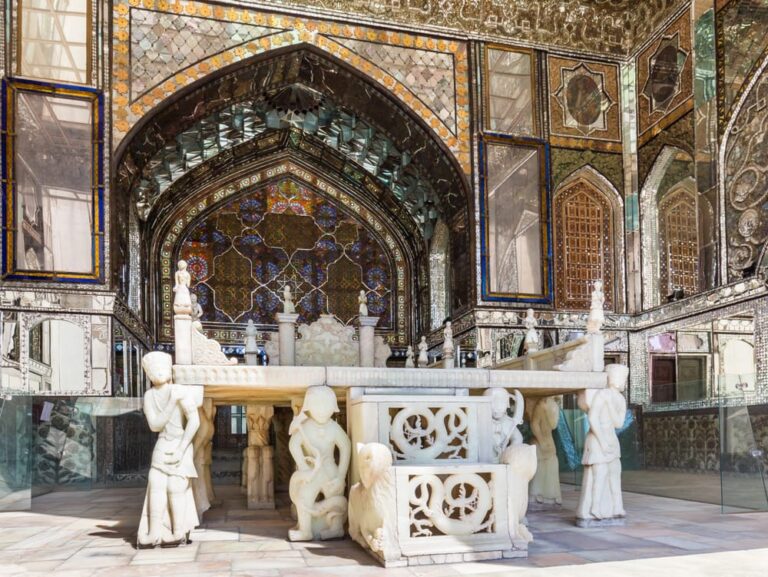
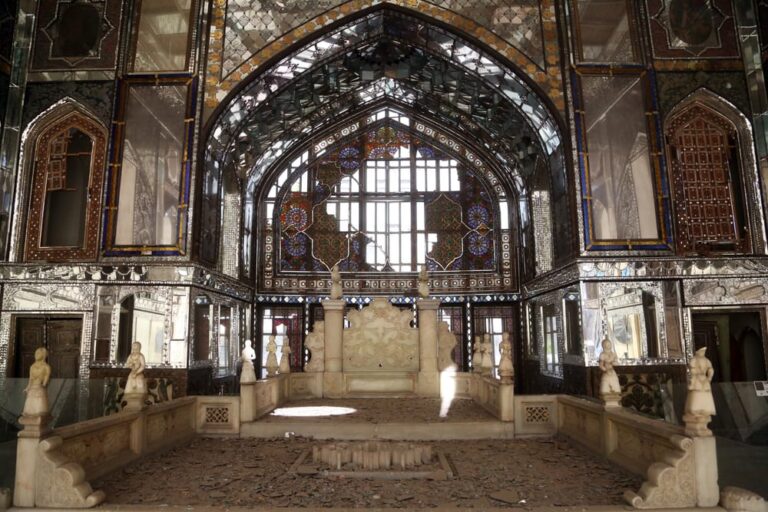
Images and videos of the damage caused to these sites were uploaded to social networks and broadcast on local Iranian television, evoking the wrath of many citizens, both regime supporters and opponents alike. Some wondered how the war ostensibly declared by Israel and the U.S. against the Islamist government and army ends up destroying sites that built the cultural identity of the Iranian people, and have no connection to the fundamentalist religious regime.
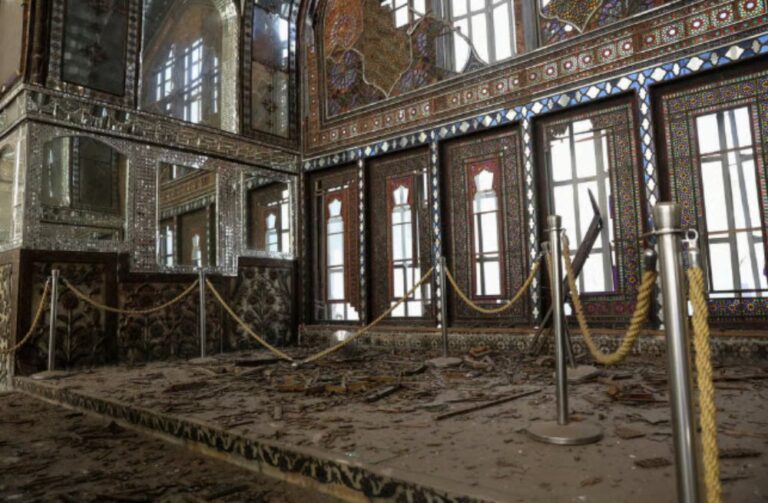
Naghmeh Sohrabi, a professor of Middle East history and director of research at the Crown Center for Middle East Studies at Brandeis University, told the New York Times that these sites are "steeped in historical memory that transcends ideology." According to her, these are living, breathing monuments of beauty and creation, not only for Iranians "but for the whole world."
The governor of the city of Isfahan, Mehdi Jamalinejad, wrote in a post that the strikes harm "the most ancient symbols of civilization with the most advanced weapons." According to him, the harm to Iran's cultural, historical, and national heritage sites is "a declaration of war on civilization": "An enemy that has no culture does not respect symbols of culture. A country that has no history does not respect signs of history. A country that has no identity places no value on identity."
One Tehran resident wondered innocently: "What happened to their claims that the war is against the regime, and not against Iran and the Iranian people? They are lying."
Collateral Damage
Golestan Palace and Chehel Sotoun Palace have reportedly sustained the heaviest damage so far. In videos uploaded online, one can see that while the historic buildings were not hit directly in the strikes, the blast waves from explosions at nearby targets were powerful enough to cause the mirrors in the famous Hall of Mirrors in Golestan Palace to shatter into pieces, and for decorated tiles and hewn stones to break.
Construction of Golestan Palace began by order of Shah Tahmasp I of the Safavid dynasty (1501–1736). The palace was expanded in the Qajar era (1794–1925), after the ruler Agha Mohammad Khan Qajar declared Tehran his capital. It served as a center for royal events and ceremonies during the reign of Reza Khan, founder of the Pahlavi dynasty—and in 1969 even hosted the coronation ceremony of Mohammad Reza Pahlavi, the last Shah of Iran.
The palace combines Persian art and architecture with much later European styles. The complex where it is located includes eight main palace buildings, and gardens surrounded by an outer wall studded with gates.
The 400-year-old palace is located near Arg Square, the oldest square in Tehran, situated in an ancient area dating back to the Zand dynasty. The main square houses civic institutions such as the National Bank branch, the courthouse, and the radio station, which the strikes were apparently intended to hit. However, the palace suffered collateral damage from a missile that exploded nearby.
Local media broadcast images showing the complex, which also serves as a museum, filled with broken stones; the decorated wooden doors of the palace were damaged. The traditional Iranian roof windows ('Orosi windows')—woodwork in complex geometric patterns combined with stained glass decorations and unique mirrors—are shattered. These windows are considered a key feature in the architectural complex, and according to the Art Newspaper, served as a bridge between Persian tradition and 19th-century art.
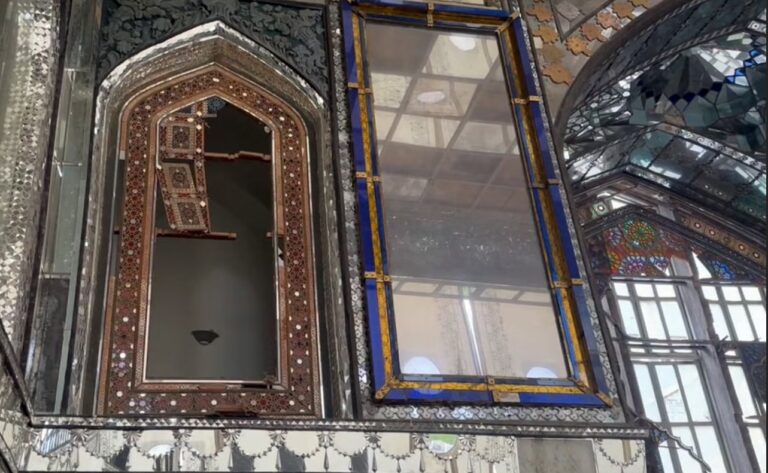
"We usually compare this palace to the Palace of Versailles in France," Lazare Eloundou Assomo, Director of the UNESCO World Heritage Centre, told Reuters news agency. "Unfortunately, it has sustained some damage. We do not know the exact extent of the damage at this moment."
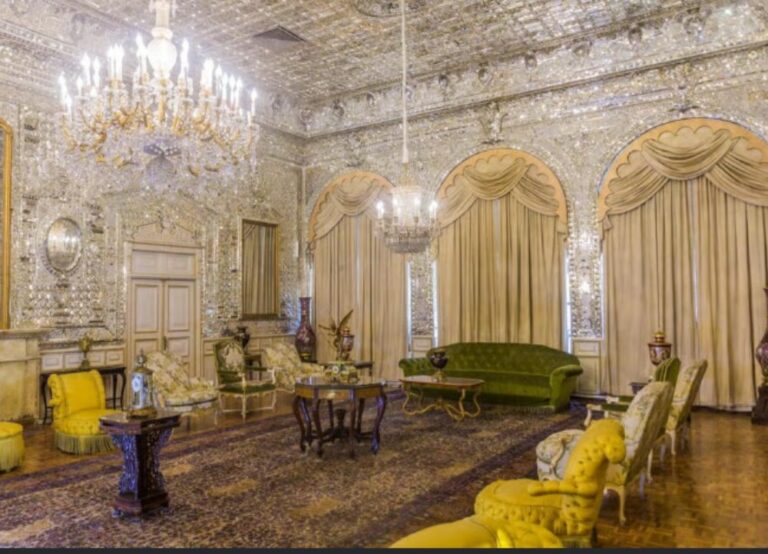
Authorities in Tehran, who had been preparing for an impending attack for some time, managed to save the fragile chandeliers that hung in the palace, along with other decorative features that were moved to safe storage in advance, reported Art Newspaper.
According to the 'Sada News' agency, art items from other museums in the city, including the National Museum of Iran and the Sa'dabad and Niavaran palace complexes, were also evacuated in time. Similar rescue and evacuation operations were carried out throughout the country, including at the Persepolis Museum in Fars Province, located at the Persepolis World Heritage site—one of the oldest in the country.
"Isfahan is a Roofless Museum"
The city of Isfahan was once called Nesf-e-Jahan ('Half of the World'), as its residents believed it contained half of the world's beauty. As a crossroads of art and commerce, Isfahan was formerly one of the largest and most important cities in Central Asia, thanks to its central location on the Silk Road. Its roots are planted in the 11th century CE, and it flourished especially in the 16th and 17th centuries under the Safavid dynasty—when it became, under the rule of Shah Abbas the Great, the capital of Persia for the second time in its history.
"Isfahan is no ordinary city; it is a roofless museum," Governor Jamalinejad recently said. The city is also considered the cultural capital of Iran due to its palaces, gardens, and architectural marvels, several of which have suffered damage in recent weeks, including the Masjed-e Jameh ('Friday Mosque').
The construction of the mosque began in 841 CE, continued during the Seljuk period in the 11th century, and through the Safavid period, which lasted from the 16th to the 18th century. The mosque served as a prototype for later mosques built in Central Asia, and it is the first Islamic religious building to include four courtyards—an architectural design that characterized the palaces of the Sassanid Empire (224–651 CE), the last pre-Islamic Persian Empire. The site also features exceptional decorative details that express stylistic evolution across more than a thousand years of Islamic art.
In 2012, UNESCO added the mosque to its list of 'New Cultural and Natural Wonders of the World' within the World Heritage Sites list, citing its outstanding universal value and its importance to mankind.
Other important buildings damaged in Isfahan include the Ali Qapu Palace ('The Lofty Gate'), a magnificent six-story royal structure built in the 17th century by Shah Abbas I, renowned for its high wooden balcony and spectacular murals; and the Chehel Sotoun Palace ('Forty Columns'), also from the 17th century, located in a park at the end of a long pool. It was named for the twenty wooden columns supporting the ceiling of its entrance pavilion ('Talar'), which reflect in the pool's waters. This palace was also declared a World Heritage Site by UNESCO.
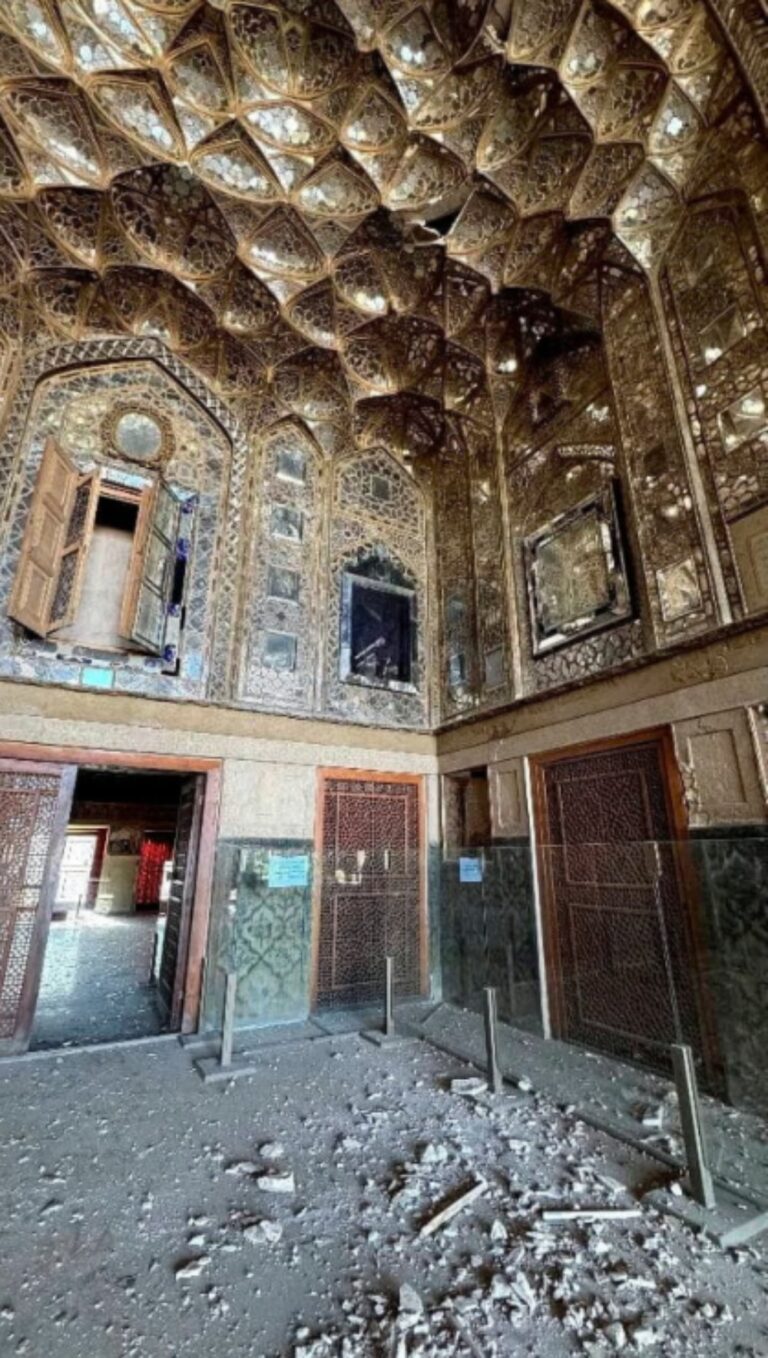
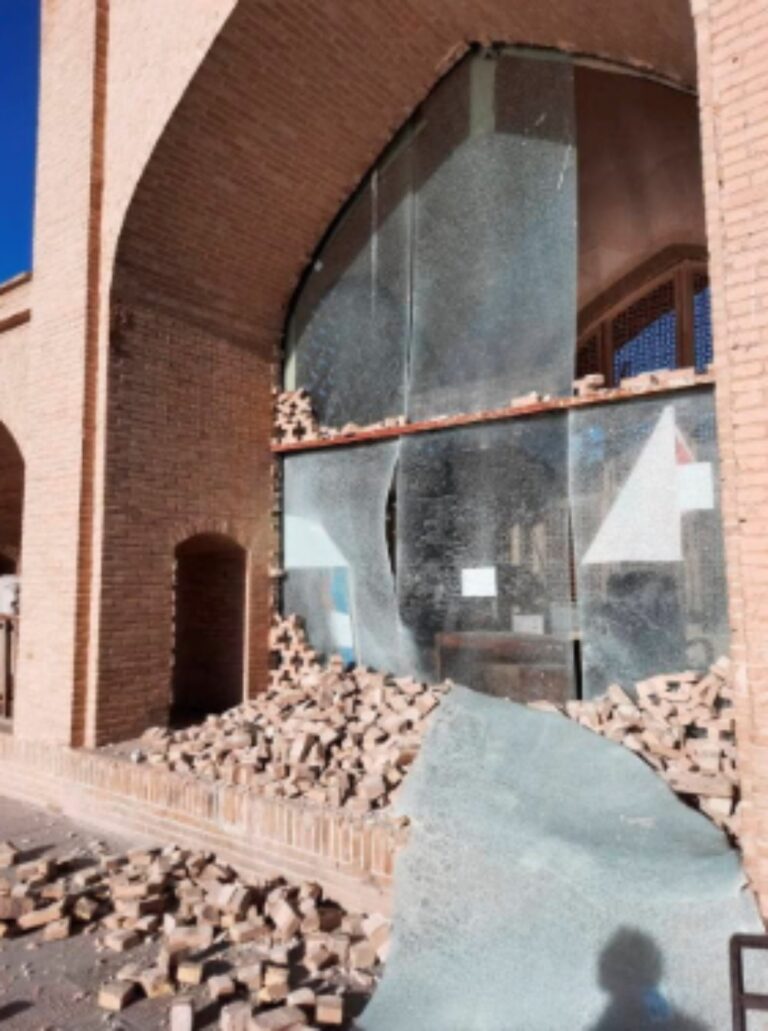
These historical architectural structures surround Naqsh-e Jahan Square ('Imam Square') — one of the largest squares in the world and a World Heritage Site. Similar to Arg Square in Tehran, Imam Square was also attacked from the air, according to Iranian government officials, apparently to strike the nearby governor's building. And similar to the Golestan Palace in Tehran, these buildings, too, were victims of collateral damage.
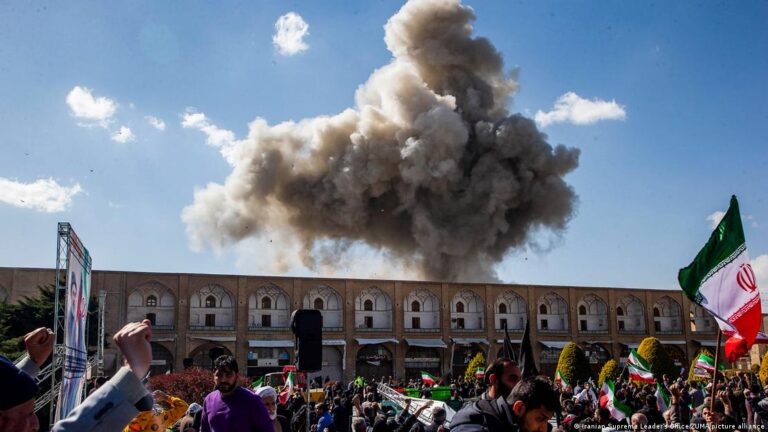
In videos and photographs taken inside the buildings, cracked murals, smashed floral tiles, broken carved wooden panels, and shattered small star-shaped mirrors could be seen scattered across the floor. From the outside, billowing clouds of smoke are visible following nearby aerial bombardments.
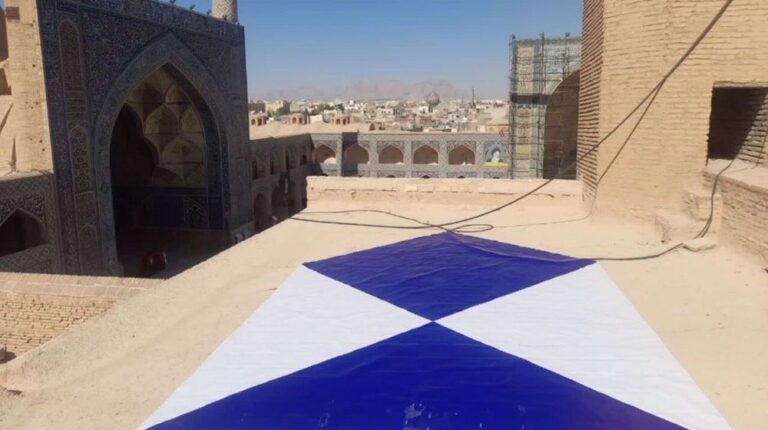
The fighter jets also ignored the blue emblems placed at the sites, the purpose of which, according to the Hague Convention, is to signal to the attacking side that these are historical treasures meant to be protected in times of war. The IDF stated that the aircraft did not directly launch missiles at the heritage sites. However, a response has not yet been received to The New York Times' question regarding the cause of the damage inflicted upon them.
From WWII, through ISIS and Ukraine: Heritage is also a Front
Harming cultural assets and heritage sites during wartime is not unique to the current war with Iran, and has received harsh criticism in the West. According to a February 2025 article in the Harvard International Law Journal, cultural heritage is not just the material value of an object, but "the meaning attributed to it" by every person and relevant communities.
The article's author, Fahim Abrar Abid, a research fellow of the EU Human Rights Fellowship and head of an organization promoting global human rights in Bangladesh, explains that the traditional motivation for attacking cultural heritage is the destruction of the adversary's morale. This action serves as a tool to undermine their identity and heritage, thereby reflecting even more strongly the importance of cultural heritage in the lives of individuals.
The Islamic State organization (ISIS), for example, knew well the implications of such destruction on citizens' morale. From 2014, the organization's militants carried out systematic and comprehensive destruction of cultural assets, historic sites, and antiquities in Syria, Libya, and Iraq, including shattering statues, blowing up temples and mosques, and looting museums.
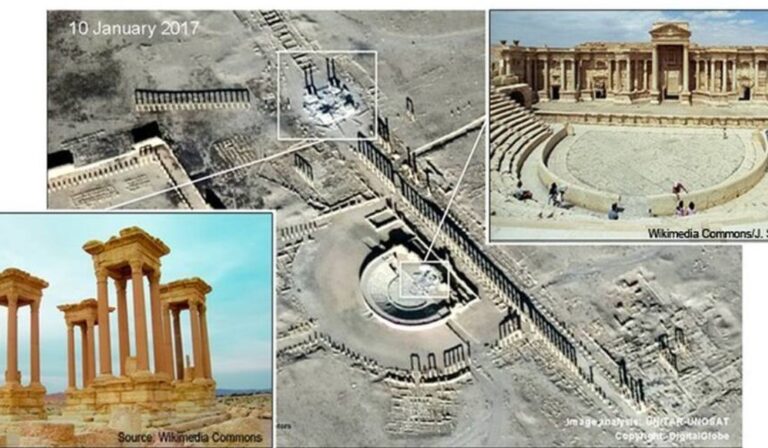
Irina Bokova, then Director-General of UNESCO, said regarding the destruction of the Syrian city of Palmyra, a World Heritage site, by ISIS, that it was a "new war crime and an immense loss for the Syrian people and humanity," and that "the protection of heritage is inseparable from the protection of human life."
According to her, one of the reasons for the destruction of the Tetrapylon (an ancient Roman architectural monument with four entrances that served as decoration and a victory monument) was its very existence as an architectural symbol of the open approach that characterized the residents of Palmyra. The shape and location where the structure was placed were unique in the world of ancient architecture, and testified to the uniqueness of the city's identity as a source of pride and honor for the entire Syrian people," she added, calling on the entire world to unite against the "brutal cultural cleansing."
Russia, too, was not satisfied with killing civilians and intentionally caused extensive damage to Ukrainian culture when it invaded its western neighbor in 2022. UNESCO confirmed that as of December 2025, 514 Ukrainian cultural and historical sites, including 38 museums, 152 religious sites, 19 libraries, and 33 monuments, were damaged by the Russians during the war years. According to reports, more than 35,000 art items were looted, and about two million items are still in areas occupied by Russia. Anastasia Cherednychenko, chair of the Ukrainian branch of the International Council of Museums, said that "we recognize these actions as genocide because they are one of the elements of genocide – first people, then culture."
Abrar Abid's article defines cultural heritage as a reflection of the identity of a nation or community inherited from its predecessors. This heritage can be a collection of sites or traditions that consolidate all the values of various cultures around the world. Crimes affecting cultural heritage, whether tangible or intangible, constitute a direct threat to the sentiments and dignity of a group of people. He further argues that cultural heritage strengthens self-determination and is closely linked to peace. The article asserts that a deliberate attack against such a significant aspect of humanity means an attack on the very existence of a people.
Israel is obligated by international conventions to protect heritage assets
The legal framework calling for the protection of cultural heritage was created following the widespread destruction during World War II, which led to the formulation of the 1954 'Hague Convention for the Protection of Cultural Property in the Event of Armed Conflict'—which Israel and the US are signatories to. The convention is intended to protect cultural heritage (sites, archaeology, artworks, and manuscripts) during wartime. It stipulates that damage to the cultural property of any people constitutes damage to the cultural heritage of all mankind and requires their protection. Signatory states commit to protecting cultural property within their territory and in territory occupied by them, and to refrain from using it for military purposes.
The protection of cultural property is also enshrined in the 1998 'Rome Statute', which is the foundation for the establishment of the International Criminal Court in The Hague, which adjudicates war crimes, genocide, and crimes against humanity. According to the Rome Statute, the intentional destruction of cultural heritage, religious, educational, artistic, and scientific institutions is considered a war crime; when carried out without imperative military necessity, it constitutes a violation of international law. Israel and the US signed the statute in 2000, but did not ratify it.
Over time, the protection of cultural heritage has gained the status of an international obligation (erga omnes – 'owed to all'). According to Abrar Abid's article, the explanation for this is that an attack on any cultural heritage is an "attack on the international community as a whole." Security Council Resolution 2347, adopted unanimously in March 2017, and which was the first resolution focusing exclusively on the protection of cultural heritage during armed conflicts, also reaffirmed the primary responsibility of states to protect cultural heritage and prevent its destruction.
The resolution, which also condemns the illicit trafficking of antiquities that funds terrorist organizations, recognizes that the deliberate destruction of heritage sites is considered a tactic of war. It further determines that cultural heritage is the responsibility of the state, but is also of importance to all of humanity. As such, the resolution constituted a legal milestone in connecting the preservation of heritage sites with international security. The UN resolution received the support of the US and was approved in Israel as part of the international struggle against the destruction of cultural property, obligating it to protect such sites.
The '1972 Convention Concerning the Protection of the World Cultural and Natural Heritage' was also adopted by UNESCO to identify, protect, and preserve sites of outstanding universal value. The convention obligates member states to protect registered sites within their territory and establishes international mechanisms to assist in their preservation. The convention serves as the legal and practical basis for preserving heritage sites worldwide.
Israel joined UNESCO in 1949 but officially withdrew from it in 2019, primarily following resolutions regarding Jerusalem and the Temple Mount. Despite its withdrawal, Israel remains a signatory to 18 of the organization's international conventions and cooperates with it on issues of cultural heritage. The US withdrew from UNESCO in 2018 under President Trump, and in 2023 was readmitted as a member.
"World heritage sites do not belong to a political regime"
The Hague Convention also includes the protection of holy places. In Israel, it serves as a legal and moral basis for safeguarding the country's historical and archaeological sites. But what about damage to the sites of other countries? Karima Bennoune, the former UN Special Rapporteur in the field of cultural rights, said at the UN in 2016 that "such actions undermine human rights, including the right to freedom of thought, conscience, and religion."
She emphasized that military conflicts are one of the main causes of heritage destruction, as are "indiscriminate attacks" that fail to distinguish between military targets and civilian infrastructure, and actions based on an overly broad definition of military necessity. Even if unintended, it appears that Israel and the US have suffered from this same lack of distinction in the strikes in Iran.
Christiane Gruber, a professor of Islamic art history at the University of Michigan who has worked at the Golestan Palace, told the online art magazine Hyperallergic that "UNESCO World Heritage sites have never belonged to a political regime or a group of leaders. They are part of the shared global inheritance, and they need our collective protection and guardianship, especially in times of war."