


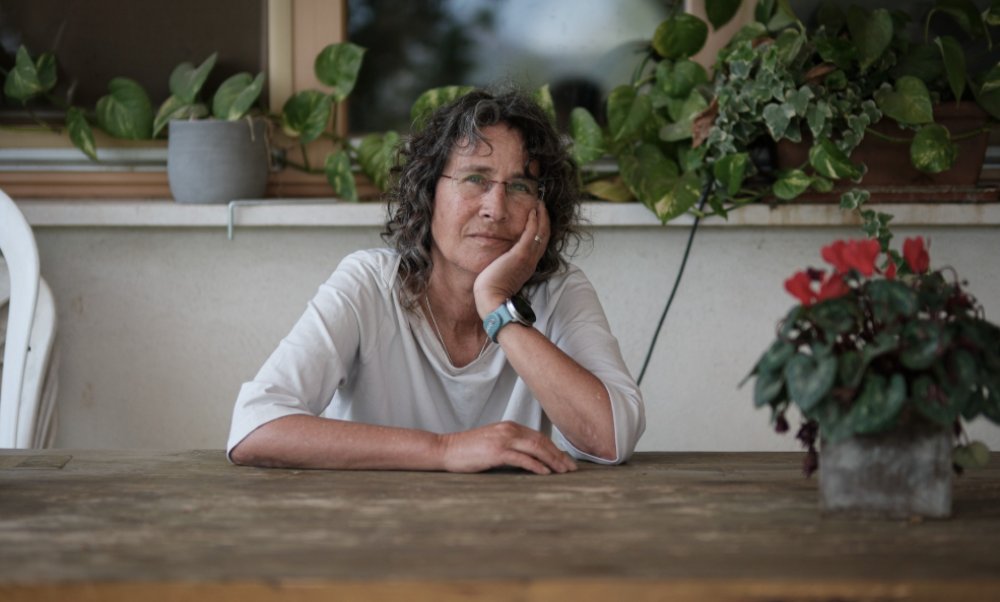
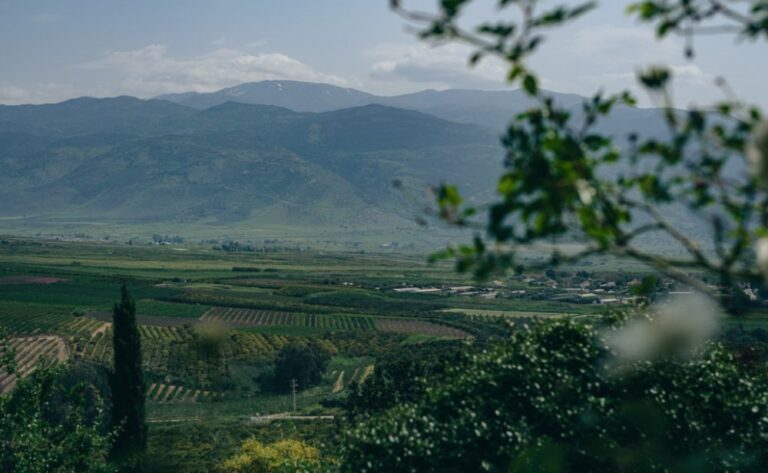
Ayelet Shavit (58) boils water and goes out to the garden of her home in Kibbutz Kfar Giladi to pick some lemon verbena leaves for her morning cup of tea. In the distance to the north, the houses of Metula can be seen, red and peaceful; to their east – the border with Lebanon. To the right of Shavit's house, the edge of the Hula Valley can be seen dipped in green, and beyond it, sunk in heavy spring haze, the Hermon. Silence wraps the Upper Galilee on Friday morning, as the ceasefire with Hezbollah enters its eighth hour.
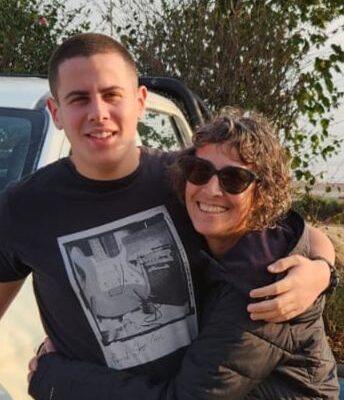
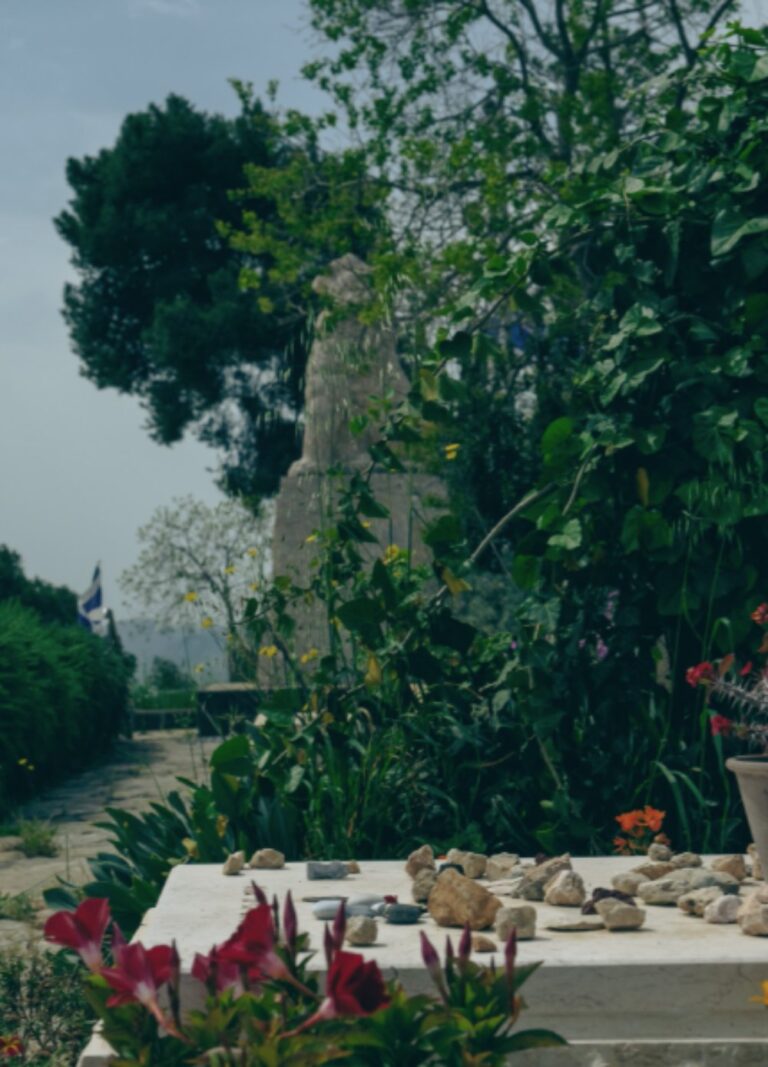
"I'm glad they're not shooting at me this morning. Glad that there is a direction for a political agreement and I also have hope for a different future. Is this future guaranteed to me? – No," Shavit tells Davar. She sits in the living room of her home in the kibbutz where she was born and lived all her life, where her mother was born and lived, and which her grandparents joined somewhere in the early 1930s. In the kibbutz, she and her partner Ran had three sons: twins Tal and Ofri, and Rotem. Tal was a combat soldier in the 931st Battalion of the Nahal Brigade who fought in Gaza starting October 7, 2023. After seven months of fighting, on the eve of Holocaust Remembrance Day, a mortar shell hit a tent at the outpost where he was stationed near Kibbutz Kerem Shalom in the southern envelope. Tal and three of his comrades were killed on the spot. The next day he was laid to rest in the kibbutz cemetery, at the foot of the Roaring Lion statue.
Shavit opens a workbook her son prepared when he was in middle school and points to a small drawing of a memorial candle. The flame curls like the Hebrew letter 'Tet' (ט). The students were asked to design a logo for themselves and today, a decade later, this strange choice sends shivers down her spine. Was there some kind of self-fulfilling prophecy here? Ayelet asks to pay attention to the explanation the 13-year-old attached to his illustration:
"My logo is a candle because I believe there is always hope. The fire symbolizes that always, even in darkness, there is hope."
"Holding onto hope is a dangerous thing," Shavit states firmly with a serious face. “Expectations, and the imaginations that accompany them, have a heavy price. But what is the alternative? The death of my child is present to me every day. And it's clear to me that I will die too," she explains. "Therefore, precisely because of this – I find that an existence of a life without hope is a much more dangerous thing. Today, more than ever, I ask: 'How will I live?', and I want to live. To live well. And a life without hope is not a good life."
Shavit is a philosopher of science, chairwoman of the Israeli Philosophical Association, and a professor at the Technion and at 'Tel-Hai', which is currently making its first steps as a university. The encounter she hoped would not happen, between her professional background and geographical biography with personal bereavement, led her in the last two years to re-examine a matter that has occupied her for many years: the tension between the national and the personal; between the state and the local; between what belongs to the collective – and the personal of the individual.
"Yom HaZikaron [Rememberance Day] tells me 'choose'," says Shavit. "Either a national discourse that silences the personal, or a completely personal discourse, which seeks to disconnect from anything that is not just me. These are two destructive options."
"A discourse of bereavement that seeks to be completely personal – eliminates the personal. If I speak about Tal detached from any social context, I will be left only with memories: his body movements when he was excited, how he danced, how he entered the water while diving, his musical laugh, his personal self as reflected in my eyes. But he wouldn't describe himself like that at all. Tal was a social child. He was a guide (madrich) in a youth movement and was interested and deepened in values and politics, which were important to him. To describe him without these things is a kind of erasure. Clinging only to the super-personal, to 'leave me alone about the state and everything that is not just me', makes a person a stranger to themselves” she says.
"These two options, only the national or only the personal, are like pits that erase the way I live. That my child lived. The most relevant category for Tal and me was always 'the local' – Kfar Giladi, the Galilee. The 'local' distinguishes you on the one hand from nationalism, but by definition shows you that you are part of something bigger. At the current historical point, there is no way to understand the insistence of kibbutz members to return here after a year and a half of evacuation, and not to evacuate again now, without the general fabric called the State of Israel. Localism offers us on the one hand a lifeline from the collapse that nationalism brings with it, and on the other hand from pure and alienated individualism, which distances itself from everything common."
"What is a 'hero'?"
Many good people, some of them complete strangers but full of good intentions, came to comfort the Shavit family during the shiva held in Moshav Shadmot Dvora at the foot of Mount Tabor, to which the family was evacuated in the first year of the October 7 war. Among the comforters were quite a few politicians and senior figures from across the political spectrum who sought to strengthen the family. Marking the anniversary of the Battle of Tel Hai, which took place after the ceasefire in the spring of 2025, the President of the State opened his speech with a direct link between the heroism of the defenders of Tel Hai and the heroism of Shavit – a hundred years later.
"'Your hero son fell for all of us'," Shavit repeats the common phrase told to her hundreds if not thousands of times: "What is a 'hero'? There is no voice in this word. Nothing unique. They attach traits to Tal regardless of what he thought, did, or believed. You are a combat soldier equals you are a hero. Did you die? You are doubly a hero."
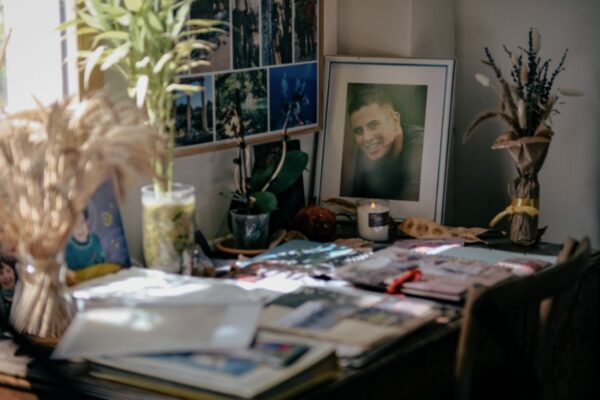
She says Tal was very proud of his combat service and the choice to do it in the Nahal Brigade, which in her eyes is strongly tied to his Galilee identity, living near the border, guiding in the youth movement, and going to a year of service (before joining the army). To her, these are the home values and local traits that sent him on his national mission: "He would have revolted against such talk about him precisely because he was proud of his combat service, of the choice to be in the war. The national discourse doesn't know how to see all his complex choices within the battle, the friendships, the attitude towards the Gazan civilians – concrete things he valued or criticized himself."
The Shavit family has lived in the same kibbutz for almost 100 years, even begore state borders. Tal is buried a few metres from the ‘Roaring Lion’ statue, and the nation ethos is present everywhere.
Shavit tells that "the ethos of Tel Hai is an excellent example of the tension between the national and the private. It was a group of young people who came here out of defiance of the establishment. They had a pretension – to shape the borders of the state. The Yishuv (pre-state Jewish community) demanded they leave, and they said no. They collected weapons and established a secret organization, 'HaShomer' (The Watchman), whose goal was to allow them to hold onto the place, whether they wanted them to or not. They were part of the Yishuv and separate from it at the same time.
"To this day, all sorts of laws and rules in Kfar Giladi are more like a recommendation. We buried Tal in the middle of the war even though it was forbidden to come here. They told me: 'Only family', 'only in the middle of the night'. No one cared. It was clear to me that I would not bury my child temporarily somewhere else or, worse, sneak into my home in the dark. We didn't broadcast or tell anyone about the funeral, and 200 people arrived here at the height of the fire. On the Hebrew anniversary, last week, masses of people visited the grave while swarms of UAVs were above them and shells were falling around them. This is Kfar Giladi."
"The way the ethos was adopted detached it, in a certain way, from the story itself. They put into a mold a message that must be learned without relating to its local contexts: this was a group of young people who lived stormy lives and maintained complex relationships with their Bedouin, Shiite, and Christian neighbors and with the governing institutions. The first commandment of 'HaShomer' was: 'I will be a human being.' This is a universal message that constantly required relating to neighbors. They did not differentiate themselves from the area. The Israeli tragedy is that we don't look at who lives next to us. We differentiate ourselves into our belonging group, within ourselves and against our neighbors, and from there, the mechanisms of differentiation only get stronger."
"Our only chance is to recognize the differences"
Not long after the 30th-day memorial of her son's falling, Shavit chose to join the Israeli-Palestinian Bereaved Families Forum. It was clear to her that this was one of the first things she had to do. The memorial ceremony remained the kibbutz's own, which has 35 fallen men and women—a massive number for a kibbutz of fewer than 600 people.
"My choice to join the forum did not come from a detachment from the national dimension," says Shavit. "I feel very Israeli, very Jewish, Galilean, and a kibbutznik. I am proud of my child's choice to enlist in a combat unit and stay on the front line month after month. The national ethos here on the border of the country was important to him and is important to me, but for the ability of this country to truly live, a recognition of another national identity that is right here next to me is required."
In the Israeli discourse of bereavement, your words are a total dissonance. Almost heresy. These are two antagonistic identities. You can't choose both.
"I don't like to choose. The whole point of localism is that you look right and left and understand the distinctness from the neighbor and at the same time, live with them. Our demand to choose one hat, one identity, one trait, is a flattening of our personality. I am not willing to accept that. I believe deeply in diversity.
"Why is the nature outside my window so beautiful? Because it is diverse. The beauty stems from the connection between the different individuals. The meaning of diversity is not just a variety, like rows upon rows of trees in an orchard. In nature, species interact with each other and together they survive or go extinct, unlike a greenhouse, where plants survive regardless of their neighbor. The Israeli discourse is unable to grasp diversity, and the variety we adopt takes us on the fast track to a dichotomy, either black or white. The other side sees my attitude toward bereavement as a blurring of identities and a risk to their survival. I revolt against all that. Our only chance is to recognize the differences and create interaction between the various individuals."
When asked if she feels this recognition can bring about change at the national level, Shavit replies, ”I am not a politician, and politics doesn't grow in the discourse between bereaved Israelis and Palestinians who meet to talk as individuals. Politics is a matter of power and groups. From our meeting, only one thing grows—recognition of the pain. With some of the mothers I agree more, and with some not at all. In general, agreement is something that is overvalued in our culture. What unites us is a hope for a different future that the politicians must create. I am not pessimistic. Who would have believed a week ago that high-level talks would begin between Israel and Lebanon? That three years after the Yom Kippur War Sadat would come to Israel? I am busy keeping the door open for changing reality. Preserving the lives of my children without leaving a door open for the hope of a different life – is harming their lives."
"Layers upon layers of longing"
Shavit doesn't need triggers: "I am in a 'state' of sadness," she testifies about herself. From the moment she got the 'news', she understood immediately that this was it. Tal is dead. No shock. She accepted the realization that she would never see him again: "I thought it would be the most significant sadness I would ever experience. But two years have passed, and the sadness is only getting worse."
"Sometimes I say: 'Okay, I understand his death,' and then a minute later I realize that it's an illusion, that it's constantly changing. A little after he was killed, we went on a trip to the desert and during the preparations I remember myself saying: 'Oh, there isn't enough room in the car.' And like that for hours, until I realized that I do have room in the car, that someone is missing. I take out five plates for dinner. And get annoyed at myself when I have to return one, so I don't return it. It sinks in slowly, this internalization.
"And after the sadness, the shock, and the realization – a growing and worsening longing arises. Layers upon layers of longing. The understanding that what was will not be. In some ways, it is worse, and in others – it allows for life. Death resets you in a positive way. It makes the fact that you are alive present. That you love and are loved. We developed a special sensitivity towards each other so as not to leave anyone alone with the sadness. Tal's presence in our daily lives is much more prominent today than when he was alive. His death organizes the relationships between us differently; in the past, if we were arguing and he wasn't in the room – his voice wasn't present. If we had to make a decision and he wasn't home at the moment – the decision was made without him. And now he is there all the time."
"It is clear to me that I want to live here"
Shavit opposes the sentiment, controversially associated mainly with the liberal camp, that seeks, conceptually or practically, to detach from the place, from the periphery, from the state, from Israeliness – with all its calamity, wars, and bereavement. The question 'why is it so hard specifically for the left to deal with the local' infuriates her.
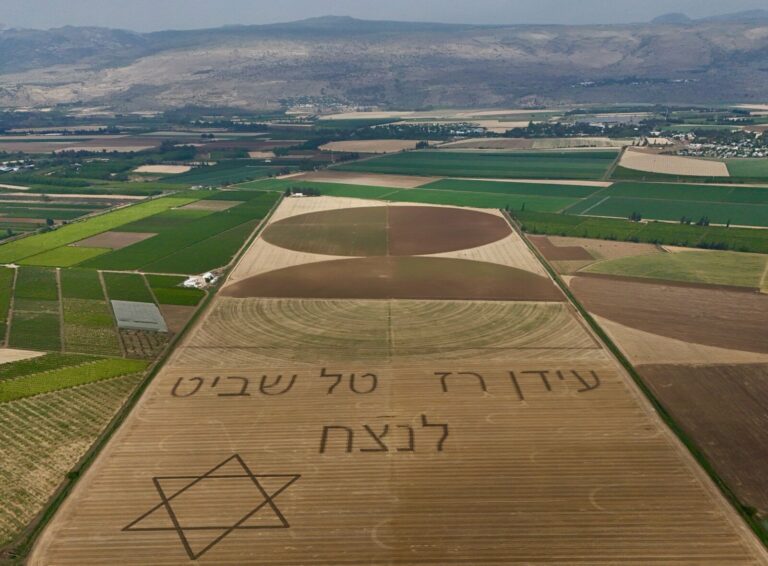
"I oppose with every fiber of my soul the characterization of leftists as detached from this place. True, the left is tied to universal values of solidarity and equality, values that were dear to Tal and that are dear to me because their very realization requires a person to be anchored in a place. During my post-doctorate, I lived in California for three years and enjoyed every moment because the place didn't interest me. I was indifferent to the terrible things the Americans did and do. Here, there hasn't been a week that I didn't leave the house to protest.
"It angers me how leftists apply to themselves these silly categories of 'mobile vs. stationary' that seek to disconnect them from their lives. You can live in many places in the world, and of course, any choice is legitimate, but that won't make them a place that is mine, on the contrary – it will make me disconnected from myself. It is clear to me that I want to live here."
Translated by Josh Traurig, Tal’s madrich.