
The Organisation for Economic Co-operation and Development (OECD) published a new and comprehensive policy report on April 9 titled “Framework for Growth and Competitiveness.” As someone who took part in reviewing the draft versions of the report and submitting comments to its authors, it is disappointing to find that the final publication reflects such an outdated economic approach.
As usual, the report presents policy recommendations for each country, and it is evident that the authors’ overarching objective focuses on economic growth and increasing competitiveness. While both are important, it is equally important to remember that they are merely tools, not policy goals in themselves. Competition and growth have no inherent value unless they serve as means to improve public well-being, reduce inequality, and establish an advanced and equitable economy.
Even if the goal is economic growth, the parameters chosen to evaluate the recommendations reflect a problematic selectivity that expresses an outdated ideology viewing the free market as a value in and of itself. For example, the “tax efficiency” index focuses on simplification and a shift toward indirect taxation, such as value-added tax (VAT), which is known for its negative effects on inequality. However, the implications of such a move on inequality gaps were not examined at all. Moreover, the recommendation contradicts numerous studies, including those by the OECD itself and the Bank of Israel, which have demonstrated the direct contribution of equality to long-term growth—the report’s stated objective—and to residents’ well-being.
Economic growth in Israel is not shared by all
As for Israel, the report praises the country’s high growth, but notes in passing that it is driven mainly by population growth and the high-tech sector—a sector that employs only about 10% of the workforce. In other words, the report implicitly acknowledges, but does not emphasize, that growth in Israel is not broadly shared. More generally, Israel is not in a position to boast; with inequality and poverty rates among the highest in the OECD, public services struggling under heavy strain, and an education system marked by low teacher salaries and the erosion of teachers’ professional status.
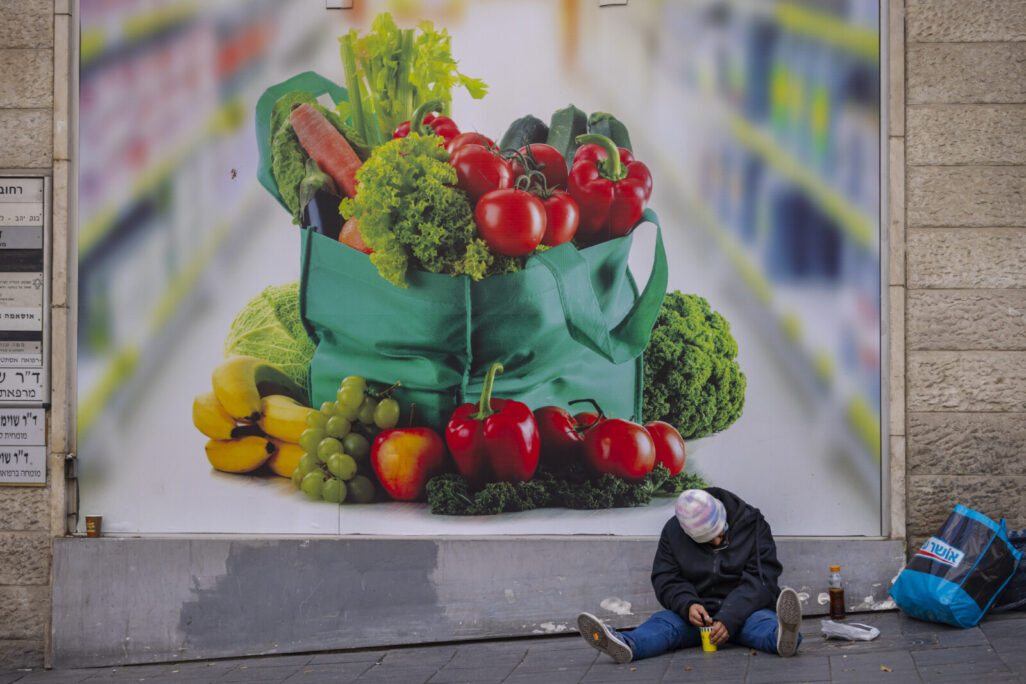
As for the recommendations, there are a few bright spots in the report’s recommendations for Israel, such as a call to develop public transportation. However, the rest of the recommendations rely on outdated neoclassical economic myths and even contradict local findings from the Bank of Israel. For instance, the call to remove tariffs on vegetables, a measure that has effectively been a flagship policy in Israel in recent years to address the cost of living, ignores the fact that Israel’s own experience shows such steps have not led to price reductions.
Worse still, the report ignores deep structural weaknesses in the Israeli economy: the country has been in a continuous state of crisis for more than five years, and strong public services are needed to provide responses to the population in both routine times and emergencies. Our data at the Arlozorov Forum show that Israel’s civilian expenditure is about 9.6% of GDP lower than the average in developed countries—a gap of more than 193 billion shekels per year. The result of this gap is eroded public services that fail to fulfill their role, for example in transportation infrastructure and welfare. The lack of attention in the report, both in its analysis and in its recommendations, is a fundamental failure.
So what should be done? If we do want to focus on growth, it would be better to focus on inclusive growth: growth in which broad segments of the population take part in creating it, and whose benefits reach all layers of society, thereby improving overall public well-being. This requires, among other things, investment in high-quality human capital—something the report does not address in the Israeli context, even though it is well known that Israel’s performance in international PISA and PIAAC tests is relatively low and points to persistent gaps. Concrete steps the state should implement to promote growth engines and increase productivity include vocational training, improving skills for both children and adults, advancing high-quality public education for ages 0–3, raising teachers’ salaries, and more. As for what the report proposes in this area, the recommendations are general and vague.
The result is a report that appears impressive at first glance but lacks depth, focusing on goals like growth and competitiveness as if they were ends in themselves. As long as the OECD continues to confuse means with ends, it will miss the essence of public policy: not how much the economy grows, but for whom.
Shira Biblash is an economics researcher at the Arlozorov Forum.