


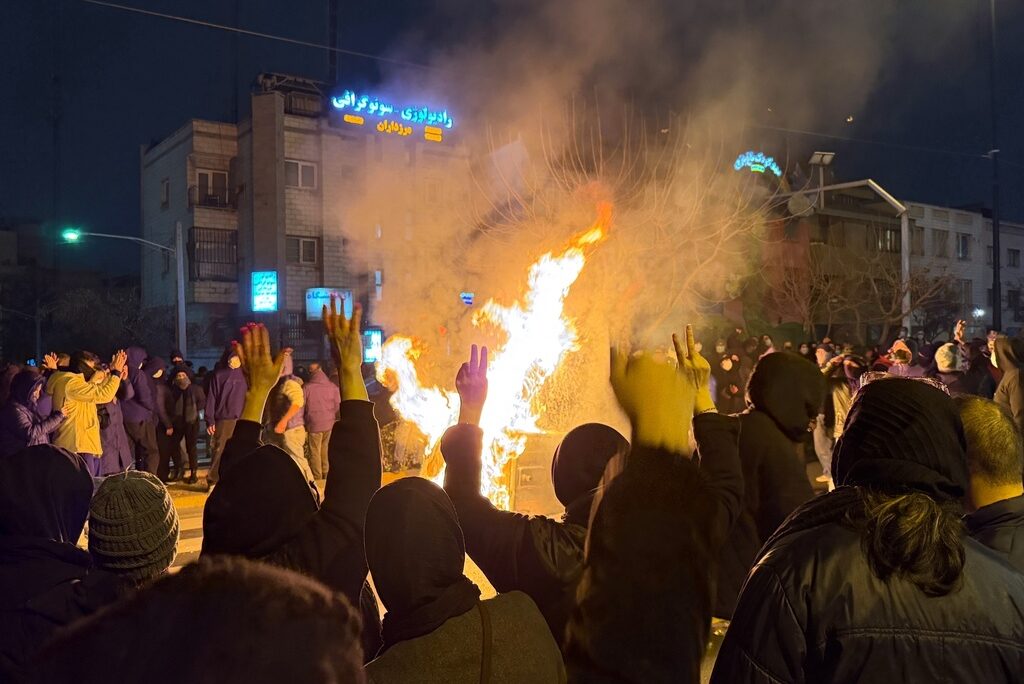
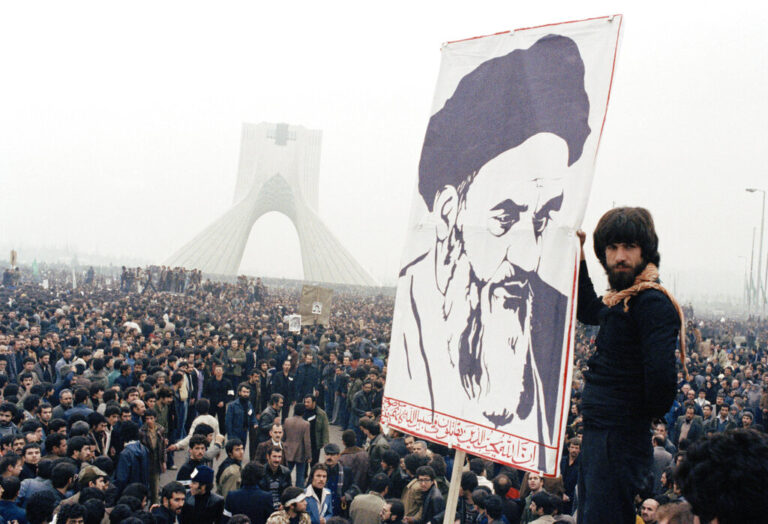
“Since the peak moment of the revolution in 1979, the Iranian people and the regime have gradually drifted apart. They live in separate bubbles,” says Mehrdad Payandeh, an Iranian exile in Germany and, until recently, head of the Lower Saxony branch of the German Trade Union Confederation (DGB). “They have nothing in common anymore — not in their value systems, not in their media, and not in their perceptions of life.”
Payandeh spoke during an informal Zoom meeting organized by Mark Neumann from the German Trade Union Confederation office in Düsseldorf, with the participation of representatives from German unions and Israeli representatives from Histadrut, as part of a lecture series aimed at connecting Israeli and German trade union members.
Alongside the understanding he expresses for the United States’ strategic considerations regarding Crown Prince Reza Pahlavi, who enjoys broad support among opponents of the regime, Mehrdad Payandeh also voices deep Iranian fears surrounding the ceasefire.
“If Reza Pahlavi disappears, there will be nothing left after him,” he says. “People are frustrated for one simple reason: if there is an agreement with the regime, we will become powerless and be left at the mercy of its barbarity. They will take our children, they will kill them.”
“In the village where my brother lives, a very small village, 70 young people died within two days. Every family lost a child.”
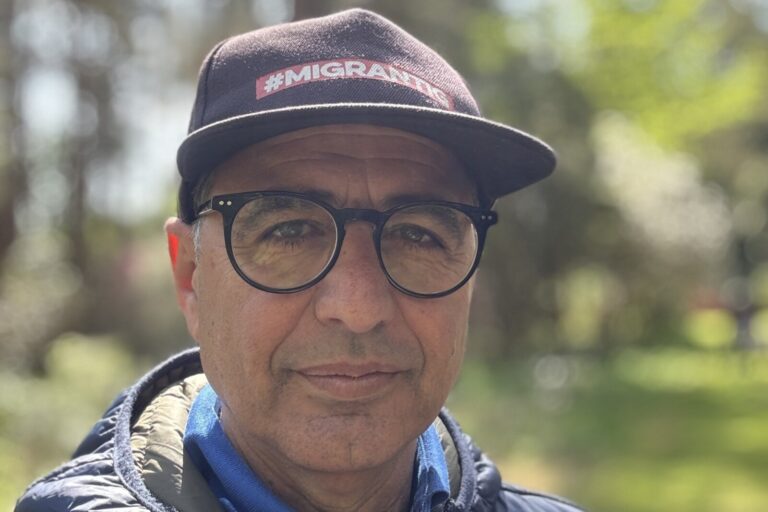
Mehrdad Payandeh, an economist by training, has studied Iran’s economy before and after the revolution. “The Shah was the founder of Iran’s modern economy,” he says. “When the mullahs took power 47 years ago, in 1979, they inherited a highly successful economic system. One can say that the Shah was a dictator, but the economic and socio-political achievements of the old regime are impressive and remain undeniable to this day.”
“Initial enthusiasm for the revolution was replaced by patriotism”
Until the outbreak of the Iran–Iraq War in 1980, citizens, he argues, benefited from the economic prosperity of the Shah’s era and later from benefits introduced by the revolutionary regime, such as free energy, free water, and free public transportation.
“At the beginning, people were patriotic. Right at the start, before the war, there was a bit of hope,” he says. As the war dragged on and political repression intensified, support for the regime began to erode, according to his account.
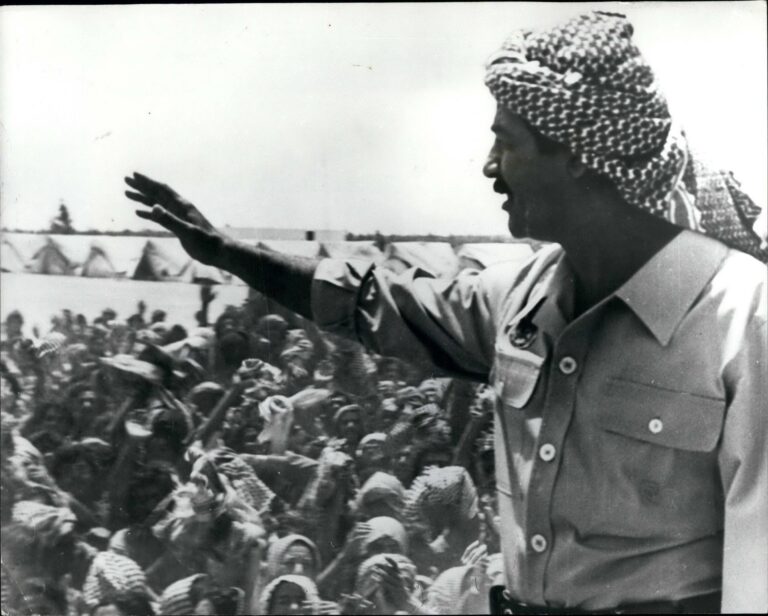
“The initial enthusiasm for the Islamic Revolution was replaced by patriotism. Defending the country against the sworn enemy Iraq and Saddam Hussein became central, and that brought the regime the support it needed. But even that patriotism, that defense of the country, declined significantly during the eight-year war. No one was willing to send their child to be a soldier, to be cannon fodder.”
Today, he says, most supporters of the regime have a personal interest in its survival. He points to a poll conducted two years ago, according to which 80% of Iranians support regime change.
“Sixteen percent of the remaining 20% are state employees and people who benefit from the regime,” he says. “That leaves only 2–3% of the population as the true social base of this regime.”
“In the public consciousness, the Pahlavis are the only ones who built Iran”
“The Shah succeeded in achieving real prosperity, something that did not exist before,” says Mehrdad Payandeh. “He established a social market economy in which there was not only growth, but also a fair distribution of wealth. Consumer and agricultural cooperatives were created, social insurance systems were introduced, collective bargaining agreements, profit-sharing with workers, modernization of agriculture, and industrialization.”
According to him, literacy was also introduced during that period. “In 1960, 80% of Iranians could not read or write. Today we know Iranian doctors and engineers, but these professions did not exist then.”
")
“This leads to the big question among young people: ‘Why on earth did the revolution happen?’” he says. “The revolutionaries of that time have still not managed to apologize, or admit they were wrong. The younger generation uses a derogatory term for that generation: ‘the 57 generation’ (referring to the Persian year 1357, when the revolution took place).”
Mehrdad Payandeh emphasizes that Reza Pahlavi, who ruled from 1925–1941, and his son Mohammad Reza Pahlavi, who ruled from 1941–1979, “succeeded in transforming Iran from an underdeveloped country into a modern and prosperous society.
“In the collective consciousness of the people, the Pahlavis are the only ones who built Iran. Before them were the Qajars, who destroyed the country in futile wars against Russia and the Ottomans. Iran was forced to surrender large parts of its territory to Armenia, Azerbaijan, and Russia.”
Mehrdad Payandeh is aware of the criticism directed at the Shah’s authoritarian rule. “From today’s perspective, neither of them was a democrat,” he says. “But we can classify them as benevolent dictators. Women were granted rights. The lack of political freedoms is also linked to the fact that the opposition in Iran was either Islamist or communist.”
He also argues that Mohammad Mosaddegh, the prime minister who nationalized Iranian oil in 1953 and was removed in a coup supported by the Shah and the United States, was not a democrat either.
“He was very authoritarian. The ‘National Front’ that supported him was a group of National Socialists disguised as social democrats,” he says. “We need to break taboos and stop creating myths. None of these organizations or groups were democratic in the sense we understand it today.”
"Where are the progressive forces? Is there good murder and bad murder?"
As a trade unionist, Mehrdad Payandeh also addressed the Iranian left, both past and present. He divides the Iranian left into two groups. The first is the Tudeh Party of Iran (“Party of the Masses of Iran”), which he describes as “a puppet of the Communist Party in the Soviet Union, which sought by all means necessary to establish a regime similar to that of the Soviet Union. It exploited the Iranian labor movement for its own purposes.” The party supported the 1979 revolution, but was later suppressed.
The second group consisted of armed groups and guerrilla fighters. “They did not want democracy,” he says. “We must not even pretend they were democratic. They sought to impose regime change in Iran through armed struggle and terrorism. During the Islamic Revolution there was no strong democratic political force representing a genuine democratic alternative to the Shah’s regime.”
“I underwent political socialization in democratic countries. The left, by contrast, did not distance itself from the Islamic Revolution and also does not hold a realistic conception of how to govern or lead a state. In the most fundamental sense, they dream of an undefined socialism and a world in which everyone lives freely and equally in peace, without borders, all noble goals, but without concrete plans for implementation.”
He also criticizes left-wing movements in Europe, which he says were swept up by revolutionary slogans and opposition to war instead of supporting Iranian protesters.
“Where are these progressive forces?” he asks. “Is it only because Iranians are carrying Israeli flags at protests? Only because Americans are carrying flags? Is there such a thing as ‘good murder’ and ‘bad murder’?”
“That is what hurts. The protesters want freedom. They say, ‘We want normal lives. We don’t want to be afraid of what we wear or how we live.’ I am old, but I also feel like a messenger of this generation. They did nothing wrong. We need a bit of conscience. We need to look in the mirror. This is not an ideological debate, these are human lives.”
“If Reza Pahlavi disappears, there will be nothing left after him”
Mehrdad Payandeh says that in the most recent wave of protests, around 9 million people took to the streets. According to him, the state and the internet were effectively shut down, and the protests were then brutally suppressed, culminating in what he describes as a massacre on 8–9 January this year.
“There were 40,000 deaths in two days, 100,000 arrests, and 7,000 people blinded by deliberate shots to the eyes,” he claims. “Executions are still continuing today.”
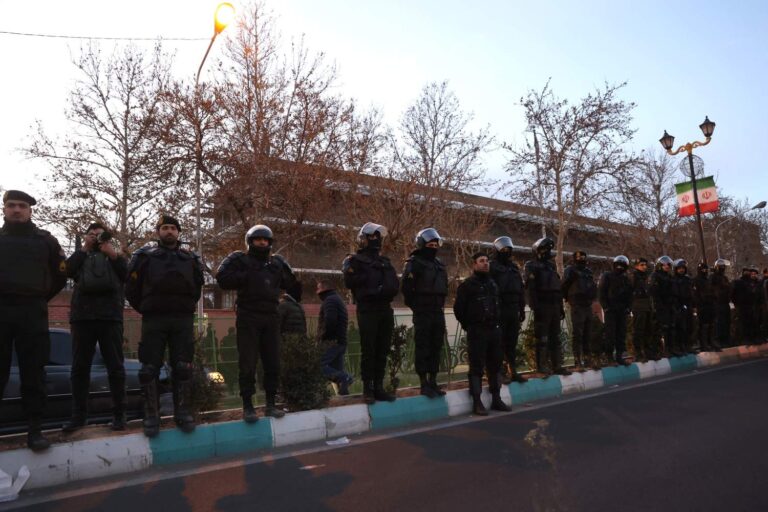
“For more than 10 weeks, people lived without access to the internet. Many small and medium-sized businesses went bankrupt. An additional 2 million people lost their jobs,” says Mehrdad Payandeh.
He adds that the Iranian economy is increasingly dollarized, and that the Iranian currency is no longer used for purchasing cars, homes, land, and similar assets.
“These transactions must be carried out in dollars,” he says. “But because no one has dollars, and no one is willing to trade in Iranian currency, economic activity has come to a complete standstill. Buying and selling are no longer possible. This rapid negative economic development is also leading to growing dissatisfaction.”
According to him, the streets are now filled with checkpoints staffed by quasi-military units, including minors, some as young as twelve, deployed to search people at roadblocks, as well as mercenaries from Iraq, Lebanon, Afghanistan, and Pakistan.
“This is the greatest humiliation, truly the greatest, for the Iranian people,” says Mehrdad Payandeh. “They remember the darkest periods when Arabs, Mongols, Turkic peoples, and Afghans conquered their land and homeland. And this time it was not the result of military defeat, it was planned by the regime itself.”
According to Mehrdad Payandeh, claims about internal cracks within the regime are unfounded. “Generally speaking, all factions and groups within the regime are united in their efforts to preserve the system. In the end, no one will benefit from a different system. They have billions to lose. All these hands are stained with blood.”
“At the same time,” he adds, “the system is inherently fragile. With dictators, you can never know how they will collapse. Many regimes were strong for long periods and then disintegrated overnight. There is nothing left of their base.”
Across the country, not only in the capital but in every remote corner of Iran, people have been killed, he says. “Everyone knows someone who is a victim of the regime — friends, family members, neighbors who lost their young children. We do not forgive. All illusions are gone.”