


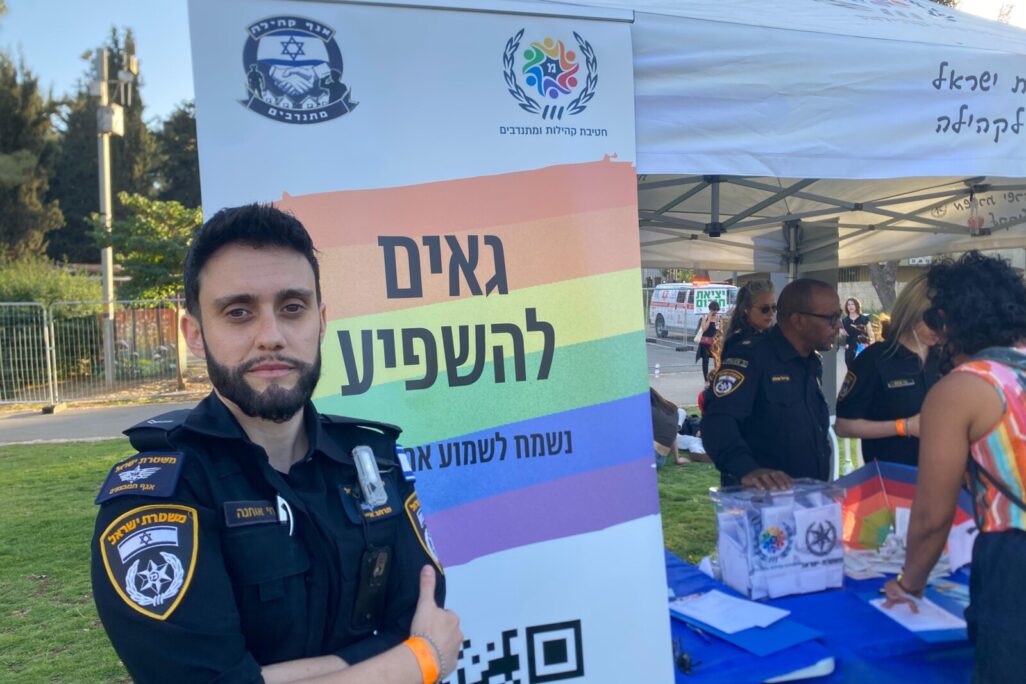
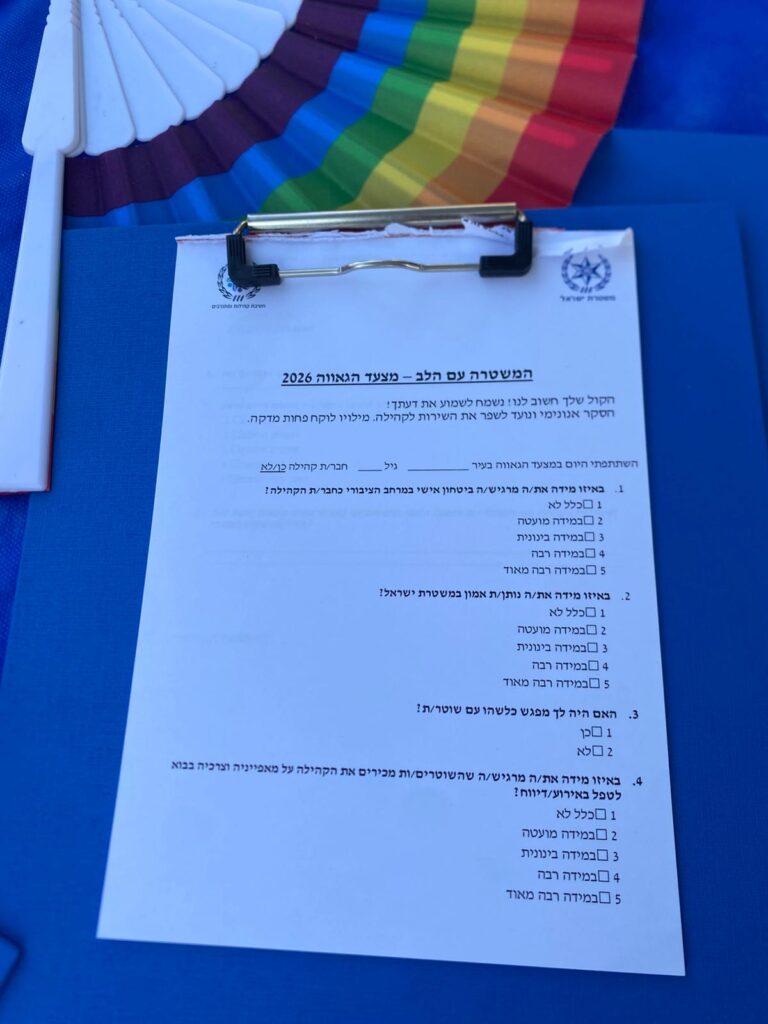
“First and foremost, I am a police officer. Being trans is an added value,” Roy Ohana (33), the first trans officer in the Israel Police, tells Davar at the Jerusalem Pride Parade. Ohana, a patrol officer at the Tel Aviv South station, stood alongside his fellow members of the LGBTQ+ community at the stand set up by the police during the pre Jerusalem Pride Parade gathering at Sacher Park, handing out questionnaires to marchers regarding police performance. “I’ve been with the police for six and a half years now. I know that being an officer is challenging, and I am well aware of the magnitude of this responsibility.”
Ohana is conscious of the years-long tension between the LGBT community, and the trans community specifically, and the police. “It is no secret that a disconnect has formed between the police and the community, but today I am prouder than ever. Everybody needs to improve – and the police are doing their part. There are more trans people enlisting, and it is filtering into the organization. There is a sense that something is changing and there are winds of change for the better. I am optimistic as a trans person and as a police officer.”
Ohana shares that the really difficult responses come precisely from inside the pride community. “There are those who call me a traitor, and some who identify me and mock me. I am familiar with the complex connection between the pride community and the police. At the end of the day, the police officer-citizen encounter is what's important to me. If a police officer knows how to approach an individual – I have done my part. We are the most diverse police force in the Middle East.”
Ohana shares that he attends police training programs to conduct seminars on gender and sexuality, where he also shares his own life story. “Everyone deserves a safe space. A parade is nice, but there are a million ways to wage the LGBTQ+ struggle. The police force is the most important body responsible for internal security.”
Is there a chance for a trans Police Commissioner?
“Why not? I am not the Israel Police's token trans person. If I weren't qualified, I wouldn't have been accepted. Right now, I’m a patrol officer in the neighborhoods; I love being out in the field, and I want to become an officer. If there are glass ceilings, I’ll climb in through the window. In the police force, they don't look at what's between your legs.”
To conclude, Ohana wishes to send a message: “Happy Pride, and a safe space to everyone. May we learn to accept those who are different, and may we learn to be tolerant even toward those who aren't like us. To the trans youth, know that there is absolutely nothing we cannot achieve.”