
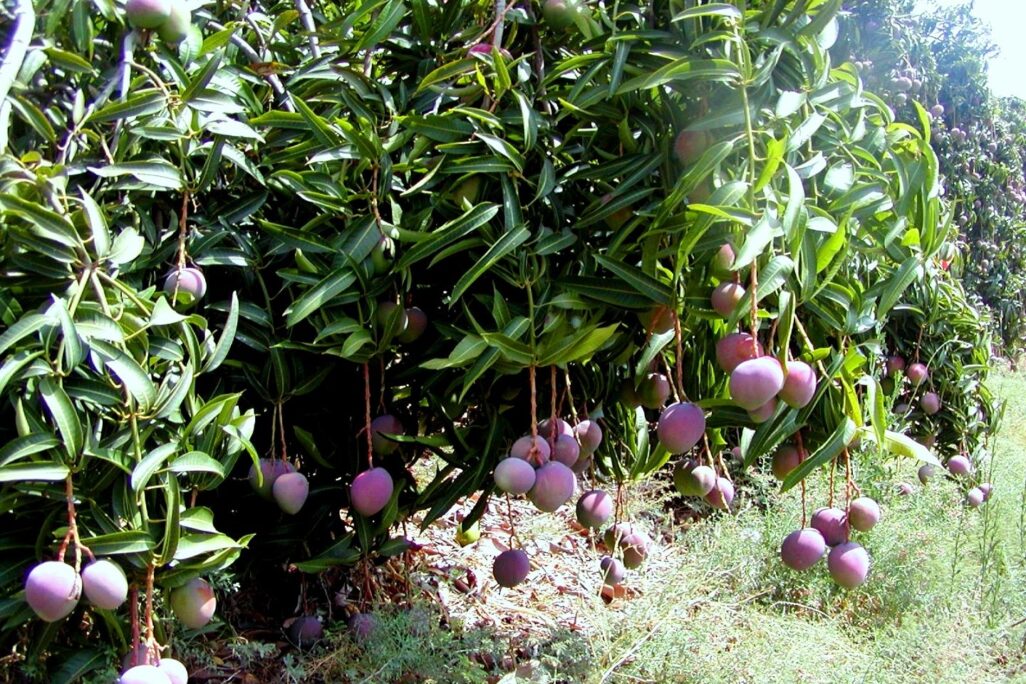
Just before summer, the mango industry is reporting severe damage to crops and a significant decline in expected yield.
According to industry estimates, a drop of about 70% in production is expected this year, to approximately 35,000 tons in total. According to a preliminary assessment by Kent – Agricultural Insurance Fund, compensation for mango growers due to the damage is expected to reach three times the average annual compensation over the past decade.
Mango orchards in northern Israel, which produce an average of about 85,000 tons per year, have suffered a severe blow this year as a result of two extreme phenomena: an unusually widespread outbreak of “inflorescence malformation” disease, and extreme weather conditions in March, which was hotter and drier than usual.
The disease mainly affected yields of the Keitt variety.
The phenomenon of “inflorescence malformation” in mango trees is a common occurrence that requires treatment. It is a destructive disease caused by a fungus, leading to the development of deformed, dense, and compact inflorescences with a yellowish-green hue that do not produce fruit.
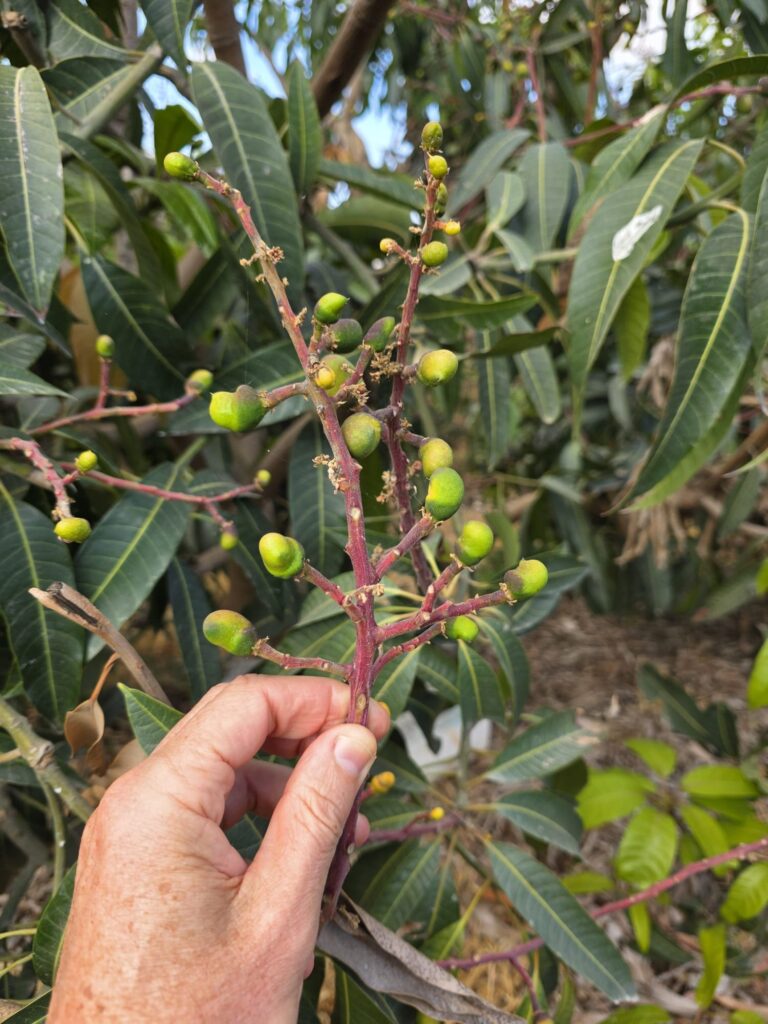
According to Elkana Ben Yishai, this is a well-known phenomenon in Israel and around the world, but it has erupted in an unusually widespread manner in many mango orchards this year.
Mango orchards in Israel cover about 24,000 dunams (24 square kilometres), most of them located in the Kinneret region: the Jordan Valley and the Lower Galilee. Ben Yishai said the disease mainly affected yields of the Keitt variety. However, he added that the damage caused by the disease, which was extensive this year, is a relatively minor problem for growers compared to the damage caused by weather conditions and climate change.
The spring season of 2026 was characterized by highly unstable weather: February was hotter and drier than usual, March was especially cool and rainy in the north, and April was cooler than usual, with heavy rainfall and flooding events in the south and east of the country.
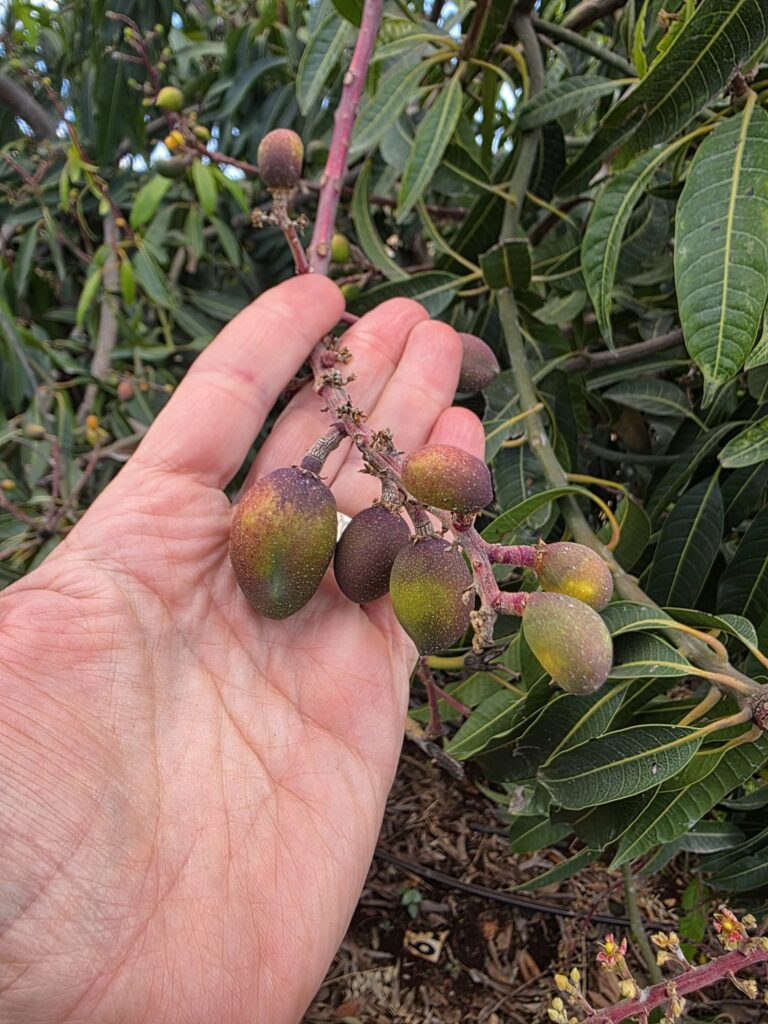
According to him, “thousands of dunams across a large share of the orchards did not enter flowering, and most of the trees that did have normal flowering failed to reach fruit set, the stage in which flowers are fertilized and turn into fruit, because the cold and rainy weather did not allow proper fruit set. There are entire orchards that will not harvest at all.”
According to a preliminary estimate by mango growers and cultivation advisors, the decline in yield in the Kinneret region is expected to reach about 70% of the expected crop, amounting this year to roughly 25,000 tons in the Kinneret area and 35,000 tons nationwide. This represents a drop in national mango production from about 85,000 tons last year to about 35,000 tons this year.
The decline in yield is accompanied by turbulence that the Israeli mango marketing sector experienced last year, when Israeli mango exports to Europe were affected by a “chain reaction” resulting from the tariff policy of U.S. President Donald Trump.
The increase in U.S. tariffs on Brazilian mangoes pushed Brazilian growers to divert their produce to Europe. In Europe, buyers preferred the cheaper, medium-quality Brazilian mango, due to circumstances, over the higher-quality Israeli crop.
At the same time, the continuation of the Iron Swords war left the Gaza market closed, preventing sales that in normal years served as an effective outlet for surplus in the domestic market.
If that were not enough, a heatwave caused many fruits to ripen all at once, creating a rapid and unplanned increase in supply. Israeli growers were left with a very large quantity of fruit intended for export, and the local market became flooded.
“Clearly we will export less because there will be less fruit, but in the domestic market prices will be good,” said Elkana Ben Yishai.
“For growers, who are usually dependent on exports, the economic damage will not be as severe as it could have been in a normal year, thanks to the drop in the euro exchange rate, which makes the price in Europe unattractive.”
“Some exporters may want to maintain their customers in Europe and will export part of the crop, but most of the yield this year will serve the domestic market, so no shortage is expected for consumers in Israel. I call on marketers and growers to manage the marketing wisely so that the fruit reaching the market is of good quality and receives the optimal price for both growers and consumers,” he said.
At Kent – Agricultural Insurance Fund, which insures farmers against natural damage, it was said that fruit-set damage occurs every year and is covered by the company’s insurance, but this year the damage is widespread, with entire orchards of trees left without fruit.
According to a preliminary estimate by Kent, the company is expected to compensate mango growers for the reduction in yield at a level of about NIS 15 million, compared to an average of about NIS 4.5 million over the past decade.