


A tender for a senior position in the Prime Minister’s Office ended with the disqualification of all candidates for the role, raising concerns of political appointments, according to documents obtained by Davar.
The documents indicate that in the tender for the position of Senior Director of the Spokesperson, Communications, and Public Diplomacy Division in the office, qualified and experienced civil service candidates who received high scores were disqualified without clear explanations.
It further emerges that excessive weight was given in the selection process to international public diplomacy, despite the fact that most of the division’s work is domestic. In an unusual development, one member of the selection committee claims that the committee members came in with the intention of disqualifying all candidates in advance—a claim strongly denied by the committee chair.
Candidates from within the civil service were disqualified without explanation
The spokespersons division in the Prime Minister’s Office is responsible for the office’s and its units’ relations with the media in Israel and abroad, for its digital presence on social media, and for managing advertising campaigns.
The division has been understaffed for several years. Today, it employs only two full-time spokespersons, one of whom holds a trust-based position that can be terminated if the government changes. The rest of the spokespersons in the division are employed in part-time positions, student roles, and some are not employed through the division at all, but rather through the Prime Minister’s Office or the Likud. The position of head of the division has not been filled for several years, and its powers have repeatedly been transferred to other spokespersons working under the Prime Minister.
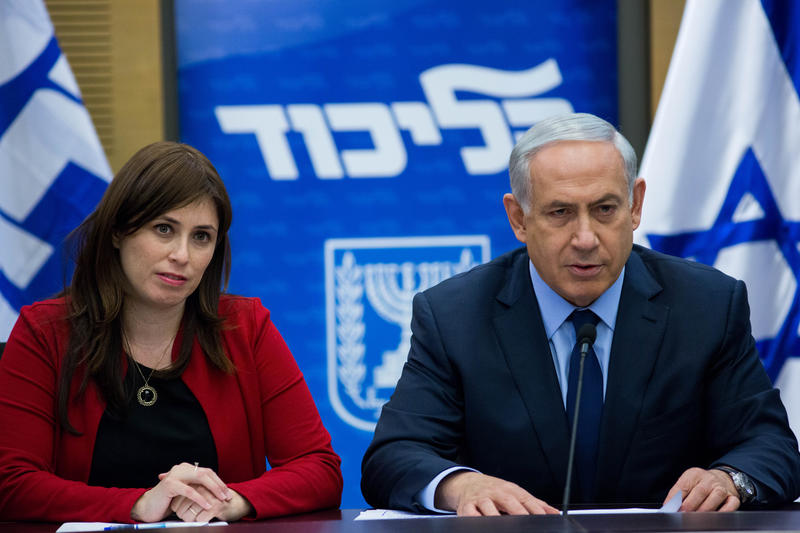
The division operates under the National Public Diplomacy Directorate, headed by former minister Tzipi Hotovely, and includes the National Public Diplomacy Headquarters as well as parts of the Government Press Office.
Hotovely was appointed to the role a few months ago, after the position had remained unfilled for three and a half years, despite the fact that the need for it had only increased following the October 7 massacre, the Iron Swords war, tensions with Iran, and the significant diplomatic challenges Israel has faced internationally as a result.
The tender for the position of Head of the Spokesperson’s Division was published on March 5 this year and defined as an “inter-ministerial tender,” meaning it was open only to civil servants. At the end of May, six candidates, all civil servants who passed the initial screening, appeared before the selection committee. Some were experienced spokespersons in government bodies, others had experience working in English-language and international communications.
The senior figure who sat on the selection committee and led the interviews, although not formally designated as its chair, was the head of the National Public Diplomacy Directorate, Tzipi Hotovely. In the end, all six candidates were informed that they had not been selected for the position; some, according to testimonies and documents obtained by Davar, were not given any explanation for their rejection.
The documents provide a rare glimpse into how the process unfolded behind the closed doors of the selection committee: one points to a candidate who received a particularly high score yet was not selected; another describes a claim by a committee member that the disqualification of all candidates was the intended outcome from the outset.
Sources present in the room, as well as individuals familiar with the field who are reluctant to be identified, told Davar that the committee could have advanced at least one of the candidates, but chose not to do so.
“Better That You Stay Silent”
According to one of the documents, one of the candidates received a particularly high score compared to the other applicants, yet was still not selected. Although he was included among the leading candidates, the “additional remarks” field was left blank, with no explanation given for the disqualification.
According to the candidate himself, who also occasionally serves as a member of selection committees, when he asked why he had been disqualified, he was told: “‘Better that you stay silent,’ in those exact words.”
The candidate refused to disclose who made the remark, making it impossible to seek a response on the matter. “This is mostly sad, the way they treat the civil service,” the candidate said. “They violated several rules in this committee. This process should be disqualified.”
Claims of a Deliberate Disqualification of All Candidates
In another internal document, one of the members of the selection committee wrote that “from the outset, the committee members arrived with the intention of disqualifying all of the candidates and proceeding to an external tender,” describing this as “improper conduct” and “unacceptable.”
According to the document, the committee chair, Lior Haiat, was unwilling to hear opinions that contradicted the decision to disqualify all candidates. Haiat himself denied the allegations (his full response appeared at the end of the article).
The candidates who spoke with Davar said that the committee conducted itself in an orderly manner, and that each candidate was given sufficient time to be interviewed and present their views.
However, according to them, the simulation exercise and the questions were more suited to a spokesperson role in the National Public Diplomacy Headquarters than to the position in the Prime Minister’s Office Spokesperson’s Division.
These are two separate roles within the same framework: one is intended to coordinate the communications activities of the Prime Minister’s Office and its units, while the other focuses on public diplomacy and communications in a broader and more international arena.
According to the testimonies, the distinction between the two became blurred during the committee proceedings. Tzipi Hotovely was the central representative of the office in the room, rather than Prime Minister’s Office Director-General Drorit Steinmetz, who also works closely with the division.
According to some of the sources who spoke with Davar, the interview questions themselves were geared more toward international public diplomacy than toward government communications. They also said that the committee raised a requirement for proficiency in “American English,” which, according to them, did not appear in the original tender.
The Tender Becomes Public, with New and Unusual Requirements
Earlier this week, only a few days after the candidates were disqualified, a public tender was published for the position of head of the division, opening the competition to candidates from outside the civil service as well.
Unlike the original internal tender, the public tender introduced unusual criteria, under which 53% of the score is determined by international experience and native-level English proficiency.
According to Tzipi Hotovely, a professional team was responsible for setting the criteria. However, in response to Davar’s inquiry, no explanation was provided for the change in criteria between the internal tender and the public one.
According to the public tender, the preliminary screening stage gives unusual weight to an international profile: up to 30% of the score is allocated to experience in communications and public diplomacy in the international arena, and up to an additional 23% is awarded for native-level English proficiency.
Alongside these criteria, points are also awarded for crisis-management experience and for extensive experience in spokesperson work, communications, public diplomacy, or digital media.
The practical effect is that a candidate with international experience and native-level English proficiency may receive a significant advantage in the competition for the ministry’s spokesperson position over a candidate with extensive experience in communications directed at the Israeli public.
The shift to a public tender is not merely a technical change. An inter-ministerial tender is intended to give civil servants, who are already familiar with the public service, an opportunity to advance within it rather than leave it. A public tender, by contrast, opens the process to candidates from outside the civil service.
If no suitable candidate is found through the public tender either, the ministry may argue that it has exhausted the standard recruitment channels and seek an exemption from the tender requirement altogether.
As a result, a process that appears formally proper can become a mechanism that removes candidates from within the public service and paves the way for a personal or political appointment.
Ahead of Elections: Pressure to Staff Senior Positions with Outsiders
Tzipi Hotovely, a veteran Likud member and close associate of Prime Minister Benjamin Netanyahu, served as Deputy Foreign Minister between 2015 and 2020, while Netanyahu simultaneously headed the Foreign Ministry alongside his role as Prime Minister.
In 2020, Netanyahu appointed her as Israel’s ambassador to the United Kingdom, a position she held until last September. Since taking up her role as head of the Public Diplomacy Directorate in April, she has reportedly been working to appoint senior figures from outside the system into the directorate, while sidelining experienced officials within the civil service, ahead of what appears to be a pathway toward personal appointments.
The spokesperson’s division in the Prime Minister’s Office has, as noted, been understaffed for several years. However, this situation is part of a broader problem: according to Calcalist, about half of the positions in the National Public Diplomacy Directorate are currently unfilled, including those of six division heads.
Within the Public Diplomacy Directorate, the National Public Diplomacy Headquarters operates with 18 positions, most of which are unfilled; the Prime Minister’s Office Spokesperson’s Division employs only two spokespersons in established positions; and the Government Press Office is currently operating without a director.
Even now, there appears to be little intention to appoint professional spokespersons from within the civil service. Instead, there are efforts to pave the way for personal appointments or special tenders, which, according to some estimates from sources who spoke with Davar, are “tailor-made” processes.
As a result, appointments to key positions that have not been filled since the beginning of the government’s term may now be carried out quickly, some through unusual channels, ahead of an election period in which permanent appointments are harder to approve.
Earlier this week, the government already approved a one-time exemption from a tender process for the position of head of the National Public Diplomacy Headquarters, without a prior tender being conducted, but only after approval of the exemption.
Although the government is also entitled to request an exemption without a failed tender process having taken place, this constitutes an exception to the general rule that civil service positions are filled through competitive tenders. As such, it requires formal approval and justification.
It should be noted that even an appointment made under a tender exemption still allows anyone who meets the threshold requirements to apply for the position. However, the selection process is faster and is not bound by the same level of transparency as a regular tender, potentially opening the door to the selection of a preferred candidate by the appointing authorities.
Despite the fact that Prime Minister Benjamin Netanyahu delayed the appointment of a head of the National Public Diplomacy Headquarters for three and a half years, his request to the government to approve the exemption states that this is an urgent necessity:
“With the re-establishment of the National Public Diplomacy Directorate and the preparation for coordinating Israel’s public diplomacy efforts across various arenas, there is an immediate and urgent need to fill the position of head of the National Public Diplomacy Headquarters, which constitutes a key role in managing, leading, and building the system and ensuring the operational and managerial continuity of the unit.”
Alongside the Spokesperson’s Division tender, Channel 12 reported that Prime Minister Benjamin Netanyahu is seeking to appoint former Likud spokesperson Eli Hazan as head of the Government Press Office, another body under the National Public Diplomacy Directorate.
A public tender is currently also being held for this position, even though according to civil service regulations, positions in the public service are generally required to be published first as internal or inter-ministerial tenders.
Sources involved in the appointment process estimate that if no candidate is selected, the government may request a tender exemption here as well. Thus, precisely now, towards the end of the government’s term and after three and a half years in which the public diplomacy system has not been fully staffed, it appears that there is a rush to fill key positions within it.
These are permanent six-year appointments that will remain in place even if the government changes, raising the question not only of who will be appointed, but whether the process itself was open, competitive, and fair, or predetermined in advance.
The National Public Diplomacy Directorate responded: “The committee conducted interviews with all candidates for the position, and afterwards a thorough discussion was held among committee members. The committee decided that none of the candidates fully meet the required conditions. Regarding the appointment of the head of the Public Diplomacy Headquarters, this is a vital and urgent need given the requirement to build a managerial infrastructure that will allow the headquarters to operate optimally.”
The Civil Service Commission stated: “The selection committee convened and, by majority vote, concluded that none of the candidates are suitable for the advertised position. Regarding the public process, the threshold requirements have not changed. Additional filtering criteria were set in place in lieu of a screening process, in accordance with the profile of the position in the Prime Minister’s Office.”
The Deputy Director-General of the Ministry of Foreign Affairs, Lior Haiat, who chaired the selection committee, responded to the claim that the decision to disqualify the candidates had been made in advance:
“This is a false accusation. I participated in the interviews of all the candidates in a completely open manner, and only after the interviews was it decided that none of them are suitable for the position in the National Public Diplomacy Directorate.”