


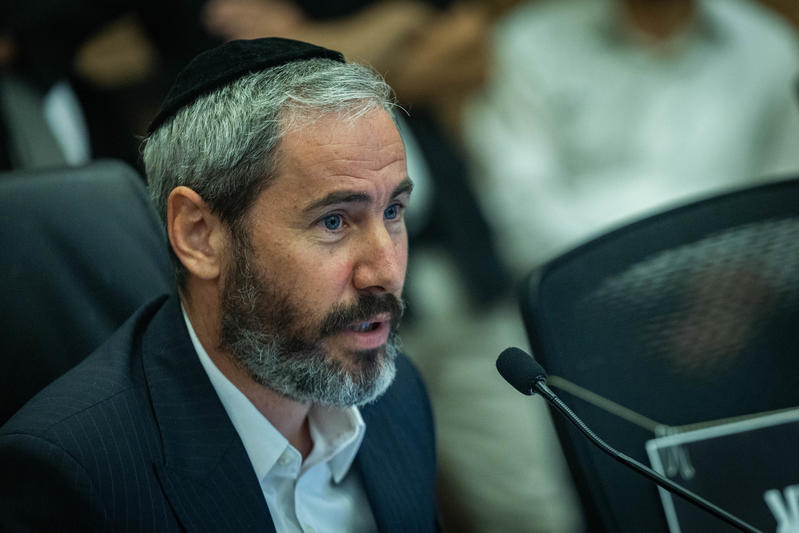
The Education Committee is expected to vote, in second and third readings, on the bill to establish a memorial authority, in which a council of 13 representatives will operate, appointed by the Prime Minister.
According to the bill, government representatives on the council will come from the Prime Minister’s Office, the Ministry of Defense, the Ministry of Education, and the Ministry of Heritage. The “Tkuma Administration” will have one representative, but only until the end of its mandate in 2028, and another representative will come from the Department for Victims of Hostile Actions at the National Insurance Institute.
Alongside them, public representatives will serve on the council: a representative of released hostages or their families; a rotating representative from the regional councils of Eshkol, Sha’ar HaNegev, Sdot Negev, and Hof Ashkelon; a rotating representative from the municipalities of Sderot and Ofakim; a rotating representative from the kibbutz movement, the moshav movement, and the religious kibbutz movement; as well as representatives of bereaved families among civilians and security forces.
In addition, following pressure from organizations representing survivors of the Nova festival, a last-minute representative of southern festival survivors will also be added to the council.
As of today, and unlike similar bills in the past, the law does not allocate a predetermined amount of funding for commemoration. Michal Uziyahu protested the decision, saying: “We need financial certainty. You cannot convene every year and see whether the government will bring the money or not.” The chair of the Education Committee, MK Yosef Taye, who is leading the legislative process, responded that he will demand that the Prime Minister’s Office present, in addition to the planning, a minimum budget figure that reflects the expected costs.
Doron Aspir said “The amount should be a minimum of 400 million shekels for the first five years.” He emphasized that most of the funding would come from donations in any case: ‘The construction of the memorial complex, which will include a museum, monument, and archive, will cost approximately 1.5 billion shekels.’”
The current bill seeks to establish a memorial authority in the western Negev that will include a memorial site, museum, and archive to be built within four years. The site will centralize and document all information relating to the events of 7 October, including documents, videos, and artifacts. The 13 members of the council will be responsible for deciding how the funds, drawn jointly from state budgets and donations, will be allocated in practice, and where they will be directed.