


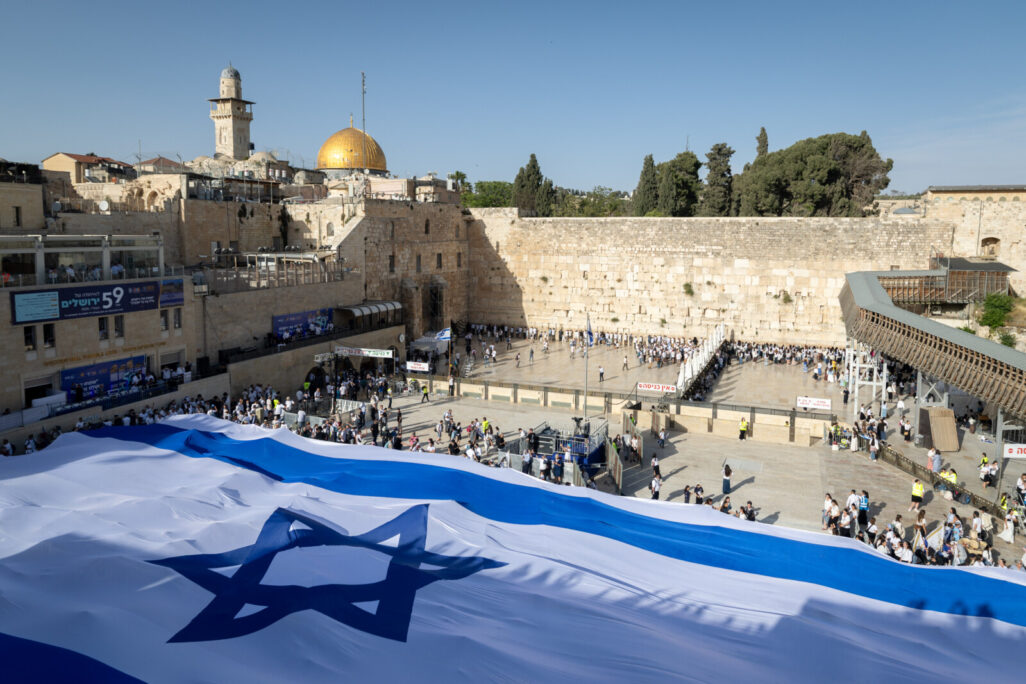
At a time of rising religious tensions across the region, as security, geopolitical, and religious realities become increasingly intertwined, researchers and religious leaders from the three monotheistic faiths gathered for a conference on the role of religion and religious leadership in promoting peace and resolving conflicts during times of crisis.
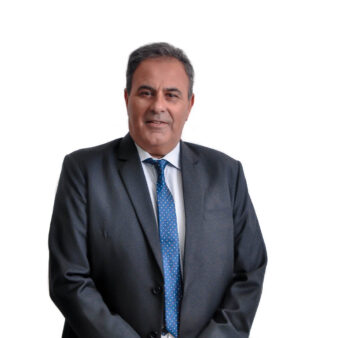
“Religious tolerance is not merely a theoretical or academic question, but an issue that affects the daily lives of every citizen of the State of Israel. Precisely at a time when extremist voices are growing stronger, and Israeli society is grappling with tensions, disagreements, and polarization, it is important to create a space in which respectful dialogue can take place among different communities, religions, and identities,” said Nissim Ben David in his opening remarks at the conference “Religious Tolerance: From Theory to Practice?”
The conference was held under the auspices of the Institute for the Study of Arab Society in Israel at Western Galilee Academic College on Monday, against the backdrop of security tensions. Throughout the event, participants addressed questions of dialogue, tolerance, and the role of religious leaders during periods of crisis and uncertainty.
Dr. Salwa Alinat-Abed of The Open University of Israel and Dr. Laila Abed Rabbo, a researcher at the Harry S. Truman Research Institute for the Advancement of Peace, brought to the discussion the issue of women’s role and place in interfaith dialogue.
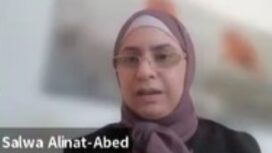
“Although awareness of the importance of women in peacebuilding processes and interfaith dialogue has increased in recent years, women are still almost entirely absent from decision-making centers,” said Dr. Salwa Alinat-Abed.
“Women are the ones who, in practice, create interfaith encounters, sustain ongoing dialogue, and build relationships of familiarity and trust, even in a reality marked by suspicion and tension.”
She also pointed to differences in perspective between Muslim and Jewish women. “The demand of the Muslim women is to balance the power relations on the ground. They refused to accept an imagined peace. For them, that was not enough,” she said. “For the Jewish participants, the issue of inner peace was very important. The Jewish women consistently spoke in terms of peace with oneself.”
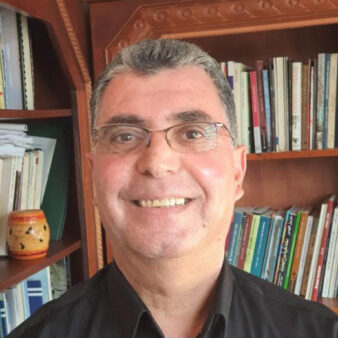
Nohad Ali presented the complexity inherent in the intersection of faith, identity, political power, and tolerance. “Throughout history, religion has served as a source of meaning, hope, and morality, but also of authority, struggle, and conflict. The bridge between absolute faith and religious tolerance is complex and creates tension, because many religions hold the belief that they possess absolute truth, and this perception can sometimes make it difficult to accept other beliefs.
“On the other hand, many religions also teach respect for human dignity, tolerance, and openness toward others. One way to bridge this gap is to return to the sociological definition of religion, which does not concern itself with whether a particular belief is true or false, but rather with its place in society and its influence on the shaping of identities and values.”
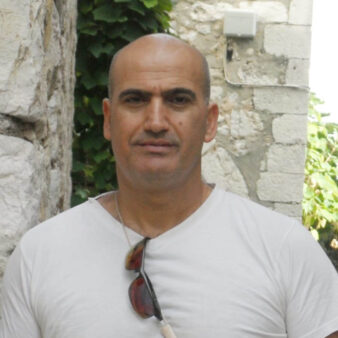
According to Dr. Saar, conflict resolution has been a foundational element since the early days of Islam, with the Prophet Muhammad serving as an arbitrator and mediator.
“There is a religious obligation to receive holistic religious support, including ‘authorizations’ for conducting negotiations, and religious leaders hold authority that shapes actual behavior within the community and in the struggle over the character of society,” he said. “Religious leadership has real power to influence reality. When an imam speaks clearly against violence and the taking of human life, his words can have a deeper impact than those of official state authorities.”
“To Make Peace Within Ourselves”
The lecture preceded a panel in which religious leaders discussed their role. “Before speaking about peace between nations and societies, we must first make peace within ourselves,” said Rabbi Adiel Buaron, a community rabbi in Ma’alot. “The success of a people stems from its internal cohesion, and it is this cohesion that shapes strategy and guides goals. We must be more assertive in creating face-to-face encounters with the other.”
Ibrahim Shomali, head of the Greek Catholic Church in Peki’in, added: “Members of the community listen to our voice, but they also recognize when tension arises between religious principles and politics. It is important to educate children toward mutual respect, to break down barriers, and to distinguish between religion and political struggles.”
Omar Kial noted that “the first circle in which a child absorbs values of tolerance is the family. God created a diverse world, and just as it contains a mosaic of trees and clouds that are not identical, so too it contains people of different religions, each acting according to their faith and tradition. Therefore, we must learn to live together with respect and recognition of the other. The root of the problem is mutual fear, and when we understand that there is room for everyone on earth and demand that leaders stop perpetuating conflict, we can move onto the right path.”
Jamil Khatib said: “We have different languages, but we also share one common language, the language of humanity. This is the language of the Prophet Muhammad and of all the prophets, whose essence is tolerance, respect for others, and acceptance of the other. When people recognize one another, they can live together. The concept of jihad has many interpretations, and revenge is only the last of them. Jihad is, first and foremost, doing good and sanctifying God—this conference itself is a form of jihad.”
Four Alternative Principles for a Peace Agreement
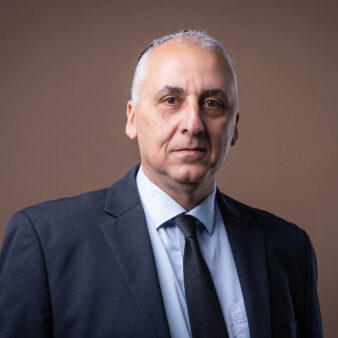
In his lecture, Rabbi Doron Danino challenged the assumptions that have underpinned negotiations between Israel and the Palestinians until now. According to him, both sides are driven by deep religious emotions. He proposed four alternative principles for a peace agreement.
“The first principle is that not everyone needs to support an agreement for the same reason. Instead of identifying a shared interest, we should identify each side’s individual interest,” he said. “The second principle is that each public should be allowed to explain its support for the agreement in its own language. Each group must be able to find within the agreement something that fits its own value system.”
“Third,” said Doron Danino, “we need to take religious beliefs into account and not only conventional politics. In the Middle East, people view the conflict as a religious matter, as well as a historical one, and therefore any solution that does not take into account the fact that this is also a religious conflict will struggle to gain real legitimacy.” Danino continued by arguing that “the path to peace will require new ideas, creative ideas that can also respect religious emotions, respect historical memory, respect narratives, and also address current political needs.”
According to him, both dominant paradigms, the two-state solution and the notion of ending the conflict, belong to a European-liberal discourse. He argued that the core of the rejection by both sides lies in the assumption that every concession is final and absolute, and therefore contradicts divine promises. “If an agreement is time-limited, and can be renewed at its end, or reopened for negotiation, it may be easier to accept it. This is something that, in principle, can be framed within the idea of the Jubilee (Yovel),” he said.
“Another option that can be considered is based on the saying: ‘The earth and everything in it belongs to God.’ All land belongs to God. When both sides recognize in advance that the land belongs first and foremost to God, to Allah, then claims over parts of that land, which belongs to God, to Allah, do not necessarily constitute absolute ownership claims,” he said. He called on all sides to recognize the legitimacy of the other. “If people are true neighbors, and members of the same household, they must find a solution, because no one is going anywhere.”
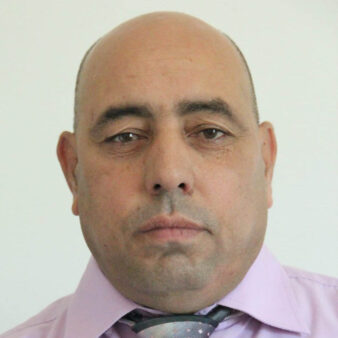
“Religions have a profound influence on shaping attitudes, identities, and behaviors in society, and therefore they can be a factor that intensifies conflicts, but also a significant resource for promoting reconciliation and coexistence,” said Mohammad Swaed. “Ultimately, shared life in Israel requires not only tolerance, but also responsibility, listening, and a willingness to act together.”