



The number of people registered with the Employment Service in May stood at 180,000, compared with 308,000 in April and 396,000 in March, according to data from the Employment Service. The reason for the decline is the economy’s recovery from the effects of Operation Roaring Lion. The Employment Service expects the number of registered job seekers to continue falling as long as the fighting does not resume.
The Employment Service noted that the significant increase in the number of registered individuals in March and April stemmed from many workers temporarily leaving the labor market, primarily being placed on unpaid leave, due to the war and the resulting reduction in economic activity. The current decline reflects those workers’ return to the labor market.
48% drop in the number of unemployment benefit claimants
The number of people claiming unemployment benefits fell from approximately 265,000 in April to about 138,000 in May, a decline of around 48%. The number of income support recipients also fell by 6%, standing at 36,500 people in May.
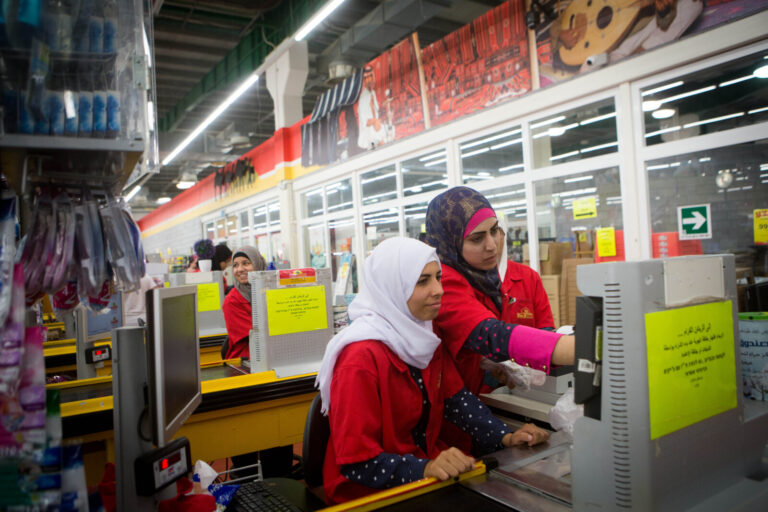
During Operation Roaring Lion, the primary victims of the operation’s impact on the labor market were women, particularly mothers with children, who made up more than 60% of the new registrants with the Employment Service. In April as well, contrary to expectations, the share of women among those registered with the Employment Service rose by 1.3 percentage points, reaching 59.6%.
In May, the share of women among registrants fell by 5.2 percentage points to 54.4%—the same as their share in February and slightly higher than their share in May of last year.
Around 52% drop among young job seekers
The decline in the number of registered job seekers was evident across all age groups, but it was significantly more pronounced among young people (up to age 34), with a drop of approximately 52% among young job seekers, compared with a decline of about 39% in the middle age group (35–54) and about 30% among older adults (over 55).
As a result, while the share of young people fell by 6.1 percentage points and stood this month at 28.3% (very close to their share before the war), the middle age group saw an increase of 1.5 percentage points (43.5%), and the older age group saw an increase of 4.6 percentage points (28.2%).
A decline in the number of registrants was also recorded across all population groups, though at different intensities: the number of Haredi job seekers fell by approximately 58%, the number of non-Haredi Jewish job seekers fell by 41.5%, and the number of Arab job seekers fell by only 34.5%.
As a result, the share of Haredim fell by 2.9 percentage points and stood this month at 7.1% (the same as in February), the share of non-Haredi Jews remained stable at 63.9%, while the share of Arabs rose by 3 percentage points to 28.8%.
A decline in the number of registrants was also recorded across all occupations. The fields that saw the most significant decreases between March and May were those involving gatherings, outdoor work, physical presence, institutional activity, commerce, local services, and routine operational work. These occupations were more heavily affected by Home Front Command policy.
As a result, they also saw sharper increases during the operation, and consequently the steepest declines after it ended, as part of the return to routine.

The largest declines were recorded among the agricultural sector (a drop of approximately 82%); childcare workers and teacher aides (about 78%); waiters and bartenders (75.5%); and sports and fitness workers (about 73%).
The smallest declines were recorded among occupations characterized by high productivity and academic education, such as doctors (10%), as well as high-tech professions, including database and network specialists (15%), and software developers and application analysts (18%).
Inbal Mashash, Director General of the Employment Service, said: “The Israeli labor market is once again proving that it knows how to recover from crises. The return to routine is not the end, it is the starting point. Now is the time to prepare the Israeli labor market for the era of artificial intelligence, and to ensure that reservists and their families do not pay an employment price for having served all of us.”