


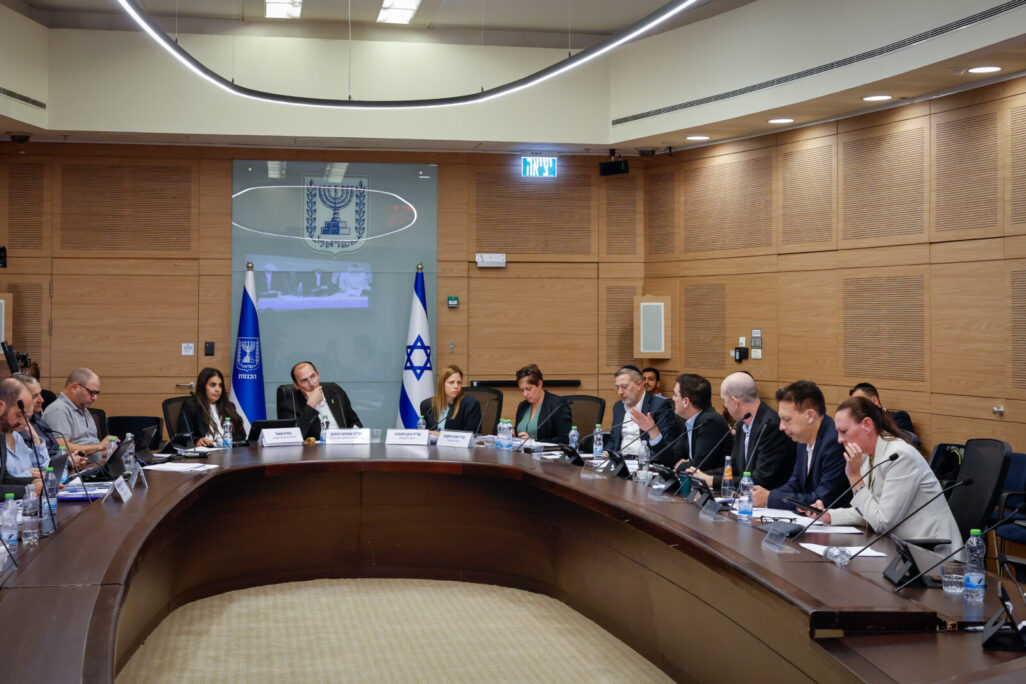
The Knesset Constitution, Law and Justice Committee discussed last Sunday a proposal to require the labeling of election campaign content produced using artificial intelligence.
Under the proposal, videos, images, or text used for election campaigning that are generated with artificial intelligence would be required to carry a clear and conspicuous disclosure informing the public of their AI-generated nature. The requirement is expected to apply as early as the upcoming election campaign.
The provision is included in the bill to dissolve the Knesset and hold elections for the 26th Knesset, which has been referred to the Constitution, Law and Justice Committee. The bill has already passed its first reading in the Knesset plenum, and committee deliberations have begun in preparation for its second and third readings. Once the bill receives final approval, the current Knesset’s term will end and the official election date will be set.
Acting Director General of the Central Elections Committee, Attorney Din Livneh, addressed the provision during the committee discussion, stating that the proposed legislation would require the labeling of any digital campaign material that could lead voters to believe that something did, or did not, occur, so that voters are aware of this in real time.
During the discussion, it was clarified that the requirement would apply throughout the entire election period, rather than only during the 90 days preceding election day. However, no clear answer was given as to exactly when the election period would begin, whether on the day the Knesset is dissolved or at a later date.
In recent years, the Knesset and other public forums have increasingly focused on concerns over the use of artificial intelligence to spread fake news and deepfake videos as part of election campaigns. During a discussion held in January by the Knesset Subcommittee on Artificial Intelligence, former Director General of the Central Elections Committee, Attorney Orly Ades, warned about the growing scope of the phenomenon and called for the issue to be regulated through legislation or regulations before the elections.
According to Ades, without legislation and without cooperation from digital platforms, the Central Elections Committee lacks effective tools to deal with misleading viral content online.