


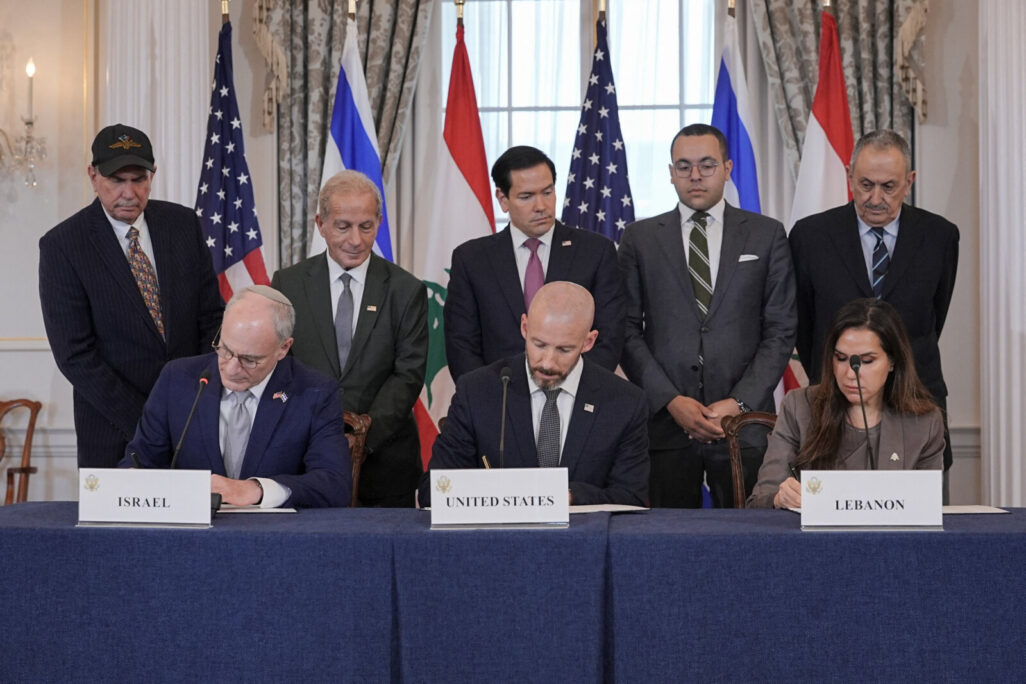
The framework agreement between Israel and Lebanon could mark a significant turning point in relations between the two countries and may even pave the way for a historic peace agreement. The agreement, the product of more than two months of talks between the countries’ ambassadors to the United States, is largely based on previous frameworks but also introduces important new elements. At the same time, without diminishing its significance or its potential, it should be remembered that an agreement signed at the ambassadorial level is only the first step. The road to Israelis vacationing in Beirut is still a long one, and Israel, Lebanon, and the United States will have to overcome a series of complex challenges before such a vision could become reality.
From a historical perspective, Israel and Lebanon have reached several agreements in the past, and the current framework even incorporates a number of provisions taken almost verbatim from earlier accords. This time, however, the starting point is fundamentally different. It is based on a new reality in Lebanon and the broader region: the weakening of the Iranian axis, the severe degradation of Hezbollah, the change of regime in Syria, the Lebanese government's formal willingness to disarm militias, and the 2022 maritime border agreement. Together, these developments represent significant milestones that made it possible to formulate this ambitious agreement and may help ensure its long-term durability, unlike the agreements that ultimately failed in the past.
To determine whether the document signed in Washington has a genuine chance of reshaping the Middle East, or whether it is destined to join the graveyard of past agreements, it is necessary to read the fine print carefully.
A close analysis of the 14 published provisions reveals how the new framework attempts to create a geopolitical hybrid. On the one hand, it relies on a legal and declaratory foundation drawn directly from previous agreements. On the other, it incorporates unprecedented enforcement, monitoring, and economic incentive mechanisms tailored to the realities of the Middle East in 2026.
Potential Versus the Shadow of the Past
Past experience shows that agreements involving Lebanon have struggled to endure, and it will likely take years to determine whether the new framework can truly establish a lasting peace between the two countries. Even so, there are several factors that justify cautious optimism.
The principal reason previous agreements failed was the weakness of the Lebanese state in the face of the extremist actors operating within and around it. Terrorist organizations, including the PLO, Amal, and later Hezbollah, consistently sought confrontation with Israel. The same was true of Syria and Iran, both of which viewed any Israeli-Lebanese framework agreement as a strategic nightmare that had to be thwarted through violent attacks.
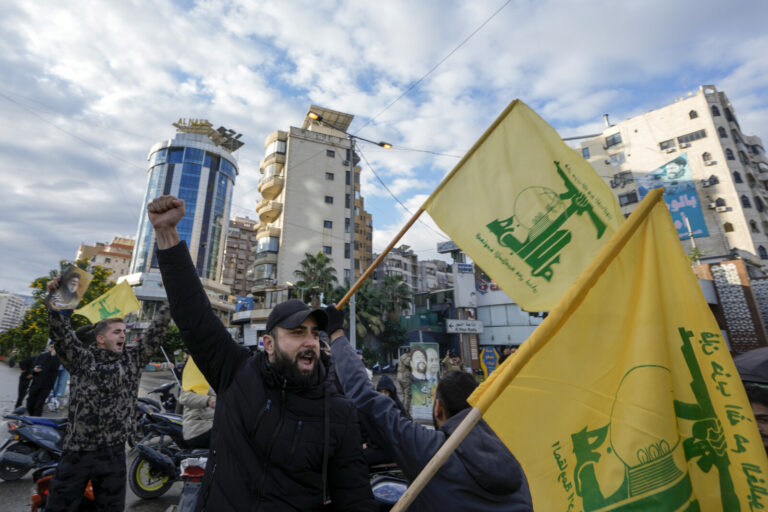
In the current situation, although the Lebanese state has not significantly strengthened, all other subversive actors have been substantially weakened. For example, Syria under the new regime does not appear, on the surface, to be interested in fueling an armed conflict with Israel.
Iran, on the other hand, remains the central driver working to generate confrontation with Israel. Any emerging American settlement with it will necessarily have to include the requirement of severing its influence in Lebanon, as stipulated in Article 6 of the agreement:
“Lebanon rejects the claims of any state or non-state actor to use force on its behalf without its explicit authorization,” and that “any claim by a state or non-state actor to play a military or security role is unlawful under decisions of the Lebanese government and contrary to Lebanon’s national interests.”
It should be noted that a breakdown of understandings between Tehran and Washington could lead to a military escalation in the northern arena, as Iran has so far demanded that Israel halt its progress in dismantling Hezbollah in Lebanon.
What the Agreement Is Based On and How It Echoes the Past
The new framework agreement draws its stated legal foundation directly from three historical milestones: the May 17, 1983 agreement, the understandings from Operation Grapes of Wrath in 1996, and UN Security Council Resolution 1701 from 2006.
End of the state of war: The first clause of the current agreement is standard and declarative, but it is based almost word-for-word on Article 1 of the 1983 agreement, which defines the end of all states of hostilities and mutual recognition of each side’s right to exist. Article 5 similarly echoes the past, with each side recognizing the other’s territorial sovereignty and declaring the absence of territorial claims.
Disarmament of militias: The issue of delegitimizing armed militias (except for the Lebanese Armed Forces) appears in Articles 2, 4, and 6 of the current agreement and draws extensively on both Resolution 1701 and the 1983 agreement. The 2006 resolution already assigned Lebanon responsibility for armed groups operating within its territory; the difference now lies in the enforcement mechanisms.
International arena: Across a span of 43 years, both agreements pursue the same diplomatic objective: a commitment to refrain from boycotts, propaganda, or hostile international, diplomatic, public, or legal actions against the other side.
Maritime border: The 2022 maritime border agreement resolved decades of dispute over what is effectively the longest contested section of the border. While some disputes remain, such as over the Shebaa Farms and Ghajar (which is now practically under Israeli control), the maritime agreement removed a significant obstacle that could have complicated the current negotiations.
Key Innovations in the 2026 Version
Beyond its similarities to past agreements, the current framework introduces a number of significant innovations that reflect both learning from previous failures and a more pragmatic approach:
The United States as a committed party: Unlike in the past, when Israel and Lebanon were the sole signatories and the United States or France served only as mediators, this time the U.S. is a formally committed party responsible for upholding the agreement. While the full practical implications of this step under the current administration are still difficult to assess, the declaration itself carries substantial weight. This is also reflected in the agreement’s wording, which mentions U.S. President Donald Trump twice, while no other individual is referenced.
Phased and cautious withdrawal: In many respects, the agreement is more “mature” and reflective of past mistakes. Instead of demanding an immediate Israeli withdrawal and relying on UNIFIL (which remains a largely toothless international force) for enforcement, the agreement calls for a gradual withdrawal beginning with two pilot zones. This cautious approach stems from the recognition that the Lebanese Armed Forces are not yet strong enough to control such territory in the face of remaining Hezbollah forces.
Strengthening the Lebanese Armed Forces and setting benchmarks: Unlike previous agreements that placed responsibility almost entirely on the Lebanese army or on passive UN observers, the current framework establishes clear and measurable enforcement benchmarks, tied directly to strengthening the Lebanese military. Meeting these milestones could restore state sovereignty and contribute to rebuilding Lebanon.
Economic incentive mechanism: Articles 10 and 11 effectively link Lebanon’s failing economy to security conditions. The United States commits to leading an international effort to mobilize substantial reconstruction funding from Gulf and Western states, but conditions this on a legal commitment by the Lebanese government to block funding flows to non-state entities and militias.
Prisoners and missing persons: Another innovation is the mutual commitment by both sides to work toward the return of prisoners and remains. From the Israeli side, there is hope of recovering the remains of Yehuda Katz (missing from the Sultan Yacoub battle in 1982), and possibly shedding light on the fate of Ron Arad, whose aircraft was downed over Lebanon in 1986 and who was captured by the Shiite Amal organization. From the Lebanese side, the demand centers on the release of dozens of Hezbollah operatives, some held alive and others deceased.