


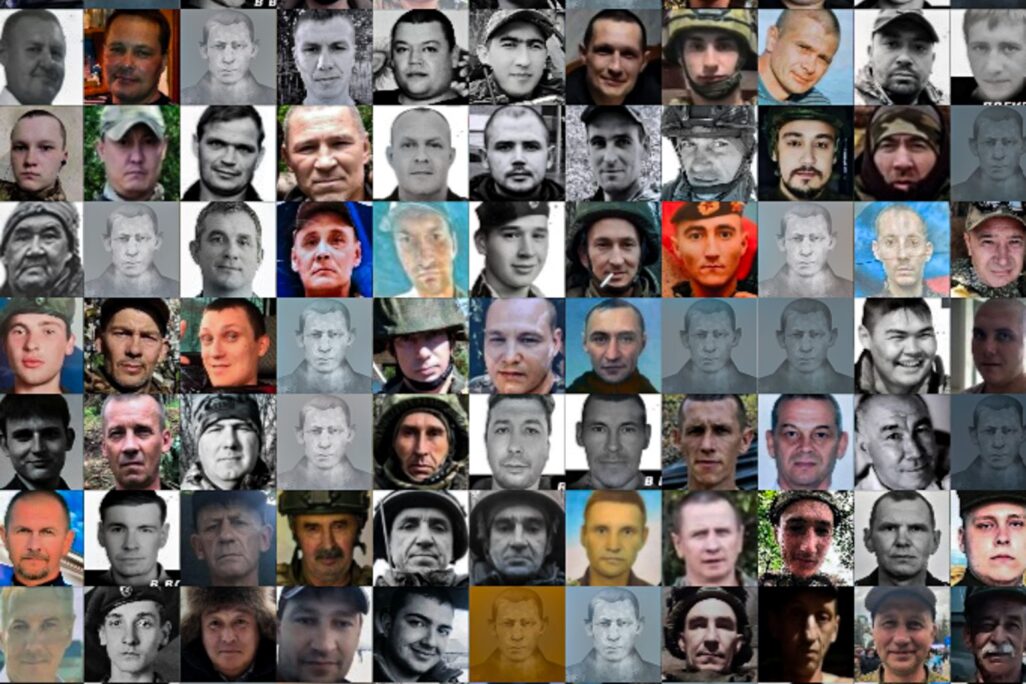
A month after the Russian invasion of Ukraine, on March 25, 2022, the Russian Ministry of Defense announced the 1,351st casualty of the war. 225,000 soldiers were killed, with certainty, in the four years that have passed since. That was the first, and last, time that such a figure was provided.
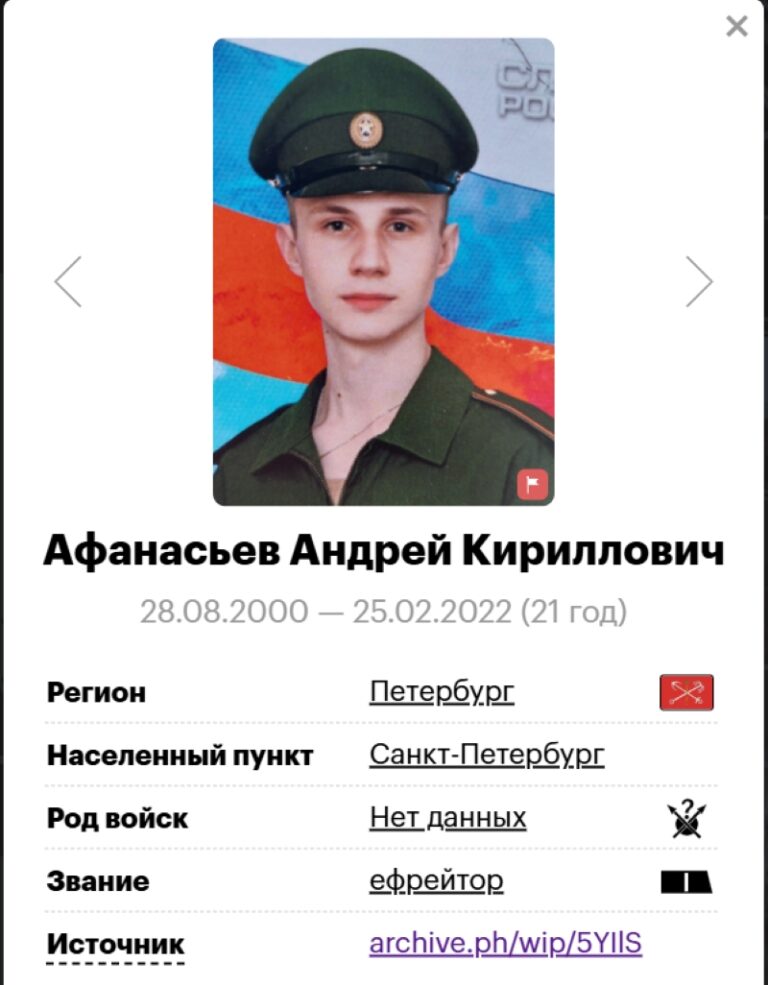
One of those killed was Private First Class Andrey Afanasyev, 21 years old at the time of his death. A brief report on the official website of the St. Petersburg municipality notes that Afanasyev, a native of the city, fell during his service in the special military operation in Ukraine. “Like a true soldier, he sacrificed himself for the freedom and peace of the children, women, and elders of Donetsk and Luhansk,” eulogized regional governor Alexander Beglov. His unit or the location of his death are not mentioned. All that is known about Andrey is that he was a professional fencer and was killed on the second day of the invasion. On that same day, according to the tracking project of the Russian news website Mediazona, at least 110 more soldiers were killed.
“In the first official statement from the Ministry of Defense, two weeks into the war, it was stated unequivocally: ‘We have no casualties,’” Dmitry Treshchanin, a journalist and editor at Mediazona, tells Davar, “Not only was this a lie, but the data clearly shows that in the short period of time leading up to that statement alone, at least 1,383 soldiers had been killed.”
Treshchanin, a 45-year-old veteran journalist currently residing in Prague, brings this data from the ongoing four-year investigation he leads into the identity and number of Russian military casualties. In collaboration with the news website ‘Meduza,’ ‘BBC Russia,’ and dozens of other journalists and volunteers, Mediazona's tracking and counting project has become the most reliable tool for understanding the scale of Russian losses. “We are blocked in Russia and classified by the censors as foreign agents,” he says, “but from the experience of recent years, I know that our information finds its way inside.”
Compared to Ukrainian and British intelligence agencies and private research institutes, which publish general estimates based primarily on gathering open-source information from the battlefields and processing it through complex statistical systems, Mediazona does something much simpler and far more accurate: counting obituaries.
Local Government publishes the names, but is banned from counting
The first public announcement of Private Afanasyev's death came, like the vast majority of the casualties, retroactively. The report on the municipality's website appeared a full three months after his death. Not only was the fact of his falling on the second day of the war a crushing rebuttal to ‘there are no casualties,’ but the figure subsequently published by the state was also very far from the true numbers. According to Mediazona's cross-referencing of obituaries and public notices, in the first month of the Russian invasion, at least 2,336 soldiers died, 1,000 soldiers more than the official figure.
“In the first weeks of the war, there was a small town, deep in the Russian frontier, where a closed funeral service was held for 60 soldiers from the same brigade, all of whom were killed on the same day,” Treschchanin recalled, referring to one of the first highly publicized events regarding the documentation of Russian war casualties, an event that marked a turning point in the discourse surrounding the dead. “Someone filmed and uploaded a low-quality video of the memorial service. At the same time, another person was walking through the town's cemetery and captured photographs of the fresh graves. The publication made waves on social media, prompting the central government to alter its policy of absolute secrecy, and they began allowing local authorities, down to the level of schools and community centers, to publish announcements about their deaths.
To this day, half of the names held by Mediazona come from there; short announcements written in a phrasing that can easily be found on the accounts of these institutions on Russia's largest social network, VKontakte (VK), and in local newspapers. The state forbids these institutions from disclosing anything beyond the most basic details about the deceased, and strictly prohibits keeping count. Even if it is the 100th or 1,000th soldier from that district or city, they are forbidden from mentioning it. Such counting can be considered a disclosure of state secrets, which carries a severe penalty.
“The permission to publish these obituaries came from the authorities' attempt to resolve a contradiction,” Treschchanin says. “On one hand, the authorities tell the bereaved families: Your children are national heroes, be proud of them! Yet in the same breath, they say: 'The funeral and the honors are state secrets, so hide them. People refused to accept this equation. Why should their ‘great patriotic sacrifice’ be silenced? The Kremlin caught on to this pretty quickly and backed down; today in Russia, you can do almost anything to people, but forbidding them from mourning their dead was one step too far.”
For the average Israeli, counting the fallen is, unfortunately, a part of daily life. Why does a country avoid keeping count?
“There are several parts to this answer. First of all, to this day, formally, Russia is not waging a war in Ukraine, but rather a ‘special military operation,’ which grants a different legal status to the situation. The war in Ukraine already began back in 2014. Up until 2022, we knew almost nothing about military casualties, though there were several hundred or perhaps thousands. In terms of information security or the public duty to report, the invasion at the end of February 2022 simply continued this line.
“Secondly, the Russian state absolutely does keep count. The Ministry of Defense maintains a massive database containing every detail regarding all military personnel. It stores every piece of information possible on each soldier from the moment they sign their contract with the military at the enlistment office: where he fought, which medals they received, the funds transferred to them, roles, offices, and so on. This data is gathered from the various headquarters and field officers. Now, whether this information actually makes it to the centralized system depends on the officer on the ground. There are brigades that report casualties frequently. Others prefer to register all their dead as individuals whose place of death is unknown. Pro-war bloggers often write that high casualties are a positive sign for a unit, because casualties imply action. Unfortunately, even the military numbers held close to the chest are no guarantee of the truth.”
“Most families burying their loved ones know nothing about their military service”
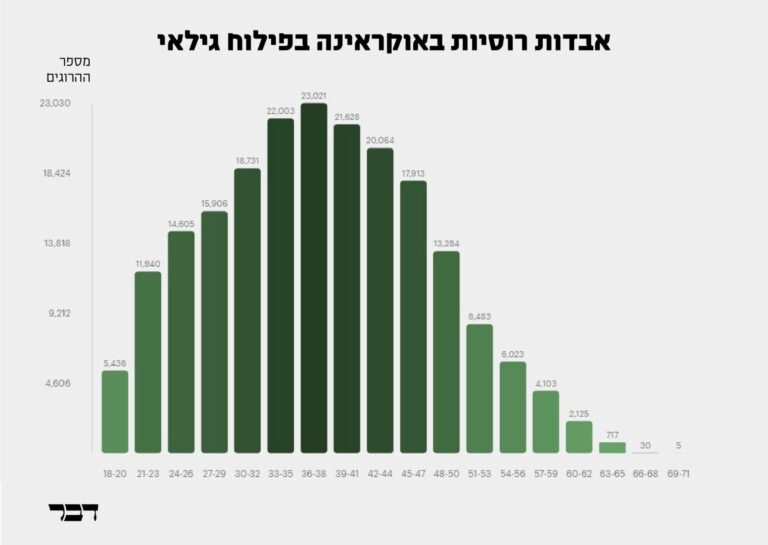
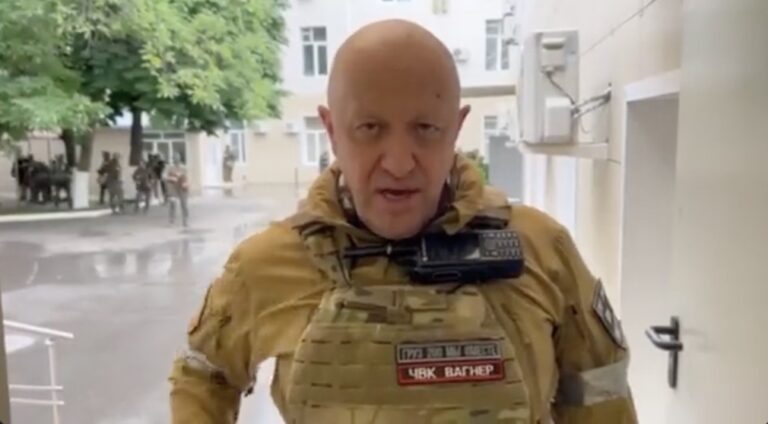
Who are the casualties of the Russian military? An analysis of the ages and roles of the deceased reveals that at the beginning of the war, the primary casualties were from the regular infantry, paratroopers and special forces units alongside standard infantry brigades. This is mainly given away by the young age of the fallen, averaging 25 years old, who ended up in the trenches as regular soldiers, even though young conscripts were not supposed to be sent to the front lines according to the wartime operational order. Over the years, the average age has increased, and today it stands at 39. These are men who volunteered for the military, most of whom have little to no prior military experience. Throughout the entire year of 2023, prison inmates took the lead among the casualties, having been recruited by the 'Wagner Group', a private military firm, straight from their detention cells to the battlefield. At the end of 2023, the private military firm was “nationalized” into the Russian military, and volunteers returned to leading the casualty charts.
“Wagner was the exception that proves the rule,” Treschchanin says of the notorious mercenary militia, whose leader, Yevgeny Prigozhin, attempted to lead a Putsch (coup) against the authorities and met his death when a missile struck his private jet. “Because they were all sent to fight around the city of Bakhmut at roughly the same time, and also due to them being prisoners within a militia operating separately from the military, it was relatively easy to find information about them.”
How are they different from the rest of the soldiers?
“The military does not volunteer information regarding the units in which the fallen served. At the beginning of the war, some of the obituaries still listed the name of the unit, or you could deduce it from the uniform, but now the information has become entirely hidden. Most of the recruits from recent years are what they call ‘volunteers’ or ‘contracted soldiers.’ They are registered as combat soldiers at their regional enlistment office without any mention of a battalion, brigade, or division. There isn't even a contact person within the military for the family to reach out to for details. All they receive is the number of the military unit to which the deceased was assigned on the day of his enlistment–a figure that means absolutely nothing to anyone. The vast majority of families burying their loved ones today know nothing at all about their military service.”
How does a Russian mother find out her son has fallen during the war?
“When soldiers are at the bases, they are allowed to speak with home all the time. The possibility that something happened to a relative begins when he stops making contact. After a few weeks of silence, families usually start posting on social media that their family member, along with a few basic details about him, has stopped contacting them, hoping that someone will get back to them. Sometimes, after several months or even years, the regional enlistment office receives a notification: Soldier X was killed on date X while serving in unit X. An officer will then deliver the message to the family. There is another possibility–the relative is summoned to court, where an officer informs them that the relative has not made contact for a long time, and they ask the family member to confirm his death based on the notice currently being presented to them. Just like that, without a body or any pieces of information. Another way is that the family is required to come to a pathology institute and provide DNA or perform a visual identification to verify if it is indeed their family member.
“The information the family receives is slightly more detailed than what can be made public. An obituary, on the other hand, will always be concise: a first name, surname, and a photo. The authorities are very wary of publishing these notices, and usually, when they are released, they are accompanied by the phrase “The information has been confirmed by the enlistment office.” The fear felt by local officials is highly justified; they are terrified of being accused of publishing inaccurate, or worse, false information, an offense for which a person today can find themselves in prison for up to 15 years.”
“Behind every number is a confirmed casualty”
How do you find such specific information from a country of 140 million people?
“For years now, Russia's social network has been under strict state control, and every official heading a formal institution is required to have an account on it. Simply, even the council building of the most remote village in Siberia, where no more than 20 elderly women live today, has a social media page that needs to be filled with some kind of content. That is where the obituaries are born. Finding them requires nothing more than a simple keyword search, and over the years, we have built a system capable of remaining highly sensitive to their appearance across the web.
“The project is everything I do. I invest about 100 work hours a week into it; at the site, we are a team of about five journalists working on it, along with several dozen regular volunteers. Since the start of the project, over a thousand people have participated, helping to gather and process information.”
How do you process all that information?
"In the beginning, we worked with Google Docs. Today, we already have a complex and smart data intake and verification system designed to aggregate and verify all incoming data, ensuring there are no duplicates or publications based on partial information. It isn't particularly difficult work: on one hand, the Russian state holds vast amounts of information on its citizens, and on the other hand, it manages the retention and protection of this data in a disgraceful manner. There is no personal data that doesn't get leaked. ID cards, official documents, traffic and purchasing data. We would never use this information as a primary source to identify a casualty, but it helps us verify and better understand the names we receive, especially in cases where the notices consist of nothing more than a first and last name. A high amount of data flows in, which is why our standards are so tough. Behind every number, there is a confirmed casualty. If we loosened our criteria, we would have hundreds of thousands of additional names. If anyone has received information or found that data we published is incorrect, they can easily contact us through the website.”
According to your data, significantly more people have been dying over the past year than in the past. Why is that?
“For a long time now, the volume of information we've been receiving has surpassed our processing and verification rate. We have 225,000 verified deaths and another 30,000 that we haven't even gotten to yet, and the number is only growing. This is happening partly due to those killed recently, but also because we are still getting to people who were killed back in 2023, and even in 2022.”
Are you still “burying” people who were killed at the very beginning of the war?
“Exactly that. For example, a small town recently dedicated a monument bearing a hundred names. We already had eighty of those names, but twenty turned out to be completely new to us. There are no dates on the monument, only names. So go figure out when each person was killed. Photos of monuments like this reach us in bundles on a weekly basis. Ultimately, when we start verifying everything, we'll find that one of them fell six months ago, while others died as long as four years ago. Today, in June 2026, dozens of names of soldiers who were killed before the war even finished its first year are still being added to our database every single week. Our project shouldn't be viewed as an updated, chronological list of casualties. What we are providing is a look at the big picture of the war.”
What is the reason for the massive delays between the time of death and the publication?
It begins right on the battlefield. Soldiers falling now will be brought to burial, in a best-case scenario, in 2027, if not 2028. The battlefield in Ukraine has remained unchanged for about two years now, and in the vast no-man's-land between the Russian and Ukrainian armies, you have thousands of bodies of soldiers who were sent on minor missions and met their deaths from drone strikes. The pace of progress in this war is extremely slow, so capturing a no-man's-land like that, which stretches 20 to 30 kilometers from each side's front line, can cost an army two years of intense operational activity. Until that happens, no one will reach the body, if they ever reach it at all. And if they do, what will even be left of it?
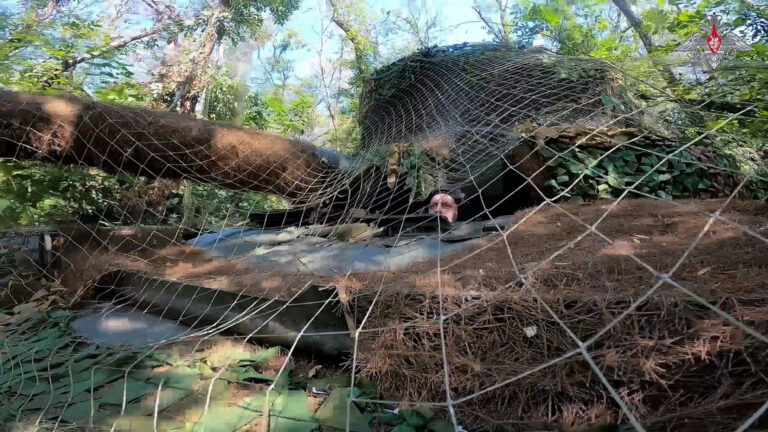
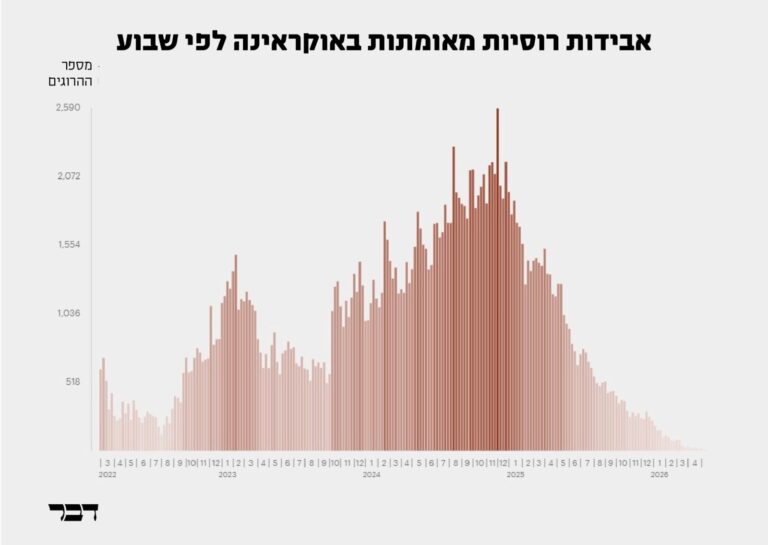
“Ultimately, the army knows how to handle this problem technologically and logistically, and the death notification will likely come out at one point or another. However, for most of the soldiers being killed in Ukraine right now, you will only see their names in our system in another year and a half. And even then, that will perhaps only account for 70% of the total casualties from this period. Today, I can tell you with a relatively high level of confidence how many soldiers were killed only in 2022 and 2023, maybe 2024. We have only just begun counting the casualties of 2025.
Just last month, The New York Times published an entire article based on your data. They reported that the number of casualties has surged significantly recently, standing at 350,000.
As mentioned, our minimum calculation stands at 225,000 verified dead soldiers based on their names. In addition, we project and estimate casualties using data from the Russian inheritance register. We publish this figure separately from the official count, and as of today, it increases the death toll by approximately 135,000 additional soldiers. This number is unverified, but it will likely be the final death toll once we finish counting all of 2025. Based on my experience, because our forecast is always slightly conservative, the realistic number will probably be closer to 360,000.
“Men march proudly to the front; nobody cares about their deaths”
Kumertau is an industrial mining town located in the south of the Republic of Bashkortostan, in the Ural Mountains region. According to Wikipedia, it is home to approximately 56,000 residents, half of whom are men. Like many towns of its kind, it has experienced a wave of emigration since the dissolution of the Soviet Union; over the past 30 years, every sixth resident has left, never to return. Those who stayed work in the coal and iron industries, and at a plant that manufactures parts for combat helicopters. According to Mediazona's geographic breakdown, Bashkortostan ranks first in the casualty tables by region, with 9,672 verified deaths – one fatality for every 206 men.
In Kumertau, 128 men have been killed so far. In this respect, the town accurately reflects the fatality rate of the Republic of Bashkortostan in particular, and the Russian periphery in general–which accounts for the vast majority of the military's manpower. Mediazona’s mapping project allows users to navigate across the entire map of Russia to see who the casualties are in every single location, from the capital down to the most remote villages in the far East. In Kumertau, the average age of a fallen soldier is 40; he joined the army as a willing volunteer who signed an individual contract, and he met his death sometime during the past three years.
Clicking again on the photo of one of the town's soldiers pulls up a short biography of Yuri Nikolaevich Matushin, as reflected in his VK social media account, to which the visitor is directed from his death profile. Matushin was 46 years old when he was killed in an unknown location in eastern Ukraine during June 2023. In the photos he uploaded to the social network in the years before his death, he appears alone in a raincoat in the middle of Red Square, smiling in a selfie with his family against a backdrop of a river and smokestacks, riding a bicycle in the fields outside the town, and hugging his children in a typical municipal playground. In one of the posts, he shared a picture of a family member with a toddler on their shoulders, adding the caption below: “The meaning of life – to leave life behind you.”
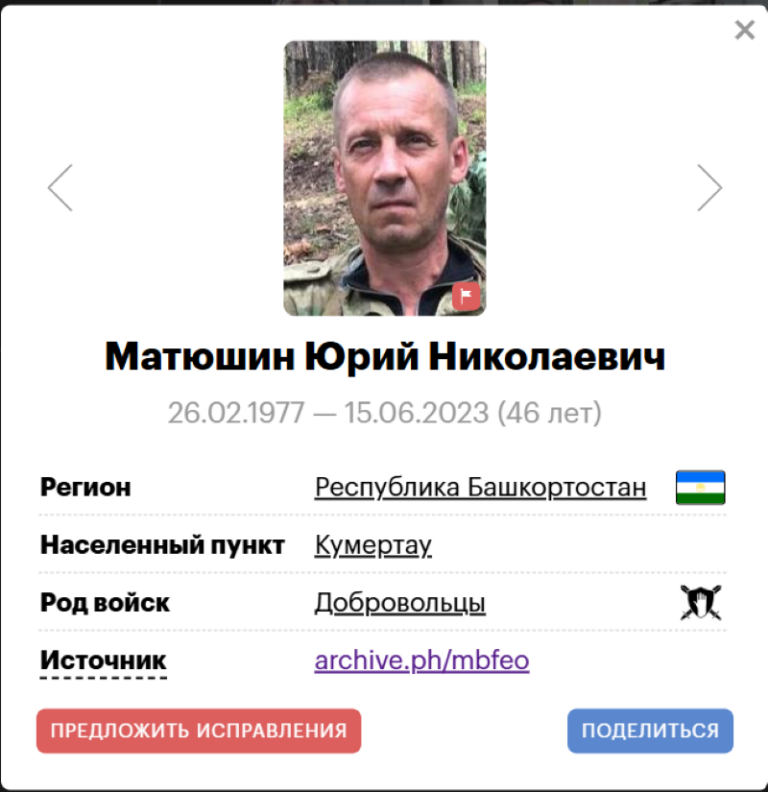
“The casualties of this war are men of my generation who never got to experience a good life,” Treshchanin says. To him, the story of Matushin, who was born the exact same year as Treshchanin, is a reflection of the entire war. "We were born in the decade before the collapse of the Soviet Union, and we grew up during the poverty and chaos of the 1990s. Most of the men who meet their deaths in Ukraine do not come from Moscow or St. Petersburg, where there was at least some possibility of a life, but from small, depressed places where things were tough even during Soviet times, and after its collapse, became simply impossible. They survived alcoholism, drugs, street fights, and prison, and then suddenly, for the first time in their lives, they are called upon for a national mission. When else would they have an opportunity to credit their lives with achievements? So they march to the front with a certain sense of pride, only to find themselves, on their second day of battle, scattered into a thousand pieces in some field in eastern Ukraine after a kamikaze drone hits their truck.
“And what does Russian society tell them in response? You are to blame. No one forced you to sign a contract for a handsome salary. Nobody cares, neither about their deaths nor about the grief of their families, be it an ex-wife they haven't seen in years or a mother for whom they are an only son. And so it continues, man after man, in endless convoys of death.”
How do you view their choice to go to this war?
“We can look at these people in different ways–see them as war criminals, felons, or villains. For the most part, I just see them as fools. People who believed the story the state sold them, and were willing to put their lives on the line for it. There are those who truly believed that Kyiv had been taken over by neo-Nazis, while others were enticed by the high salary and benefits. Some of them were undoubtedly happy to kill, but certainly not to be killed.”
“At the beginning of the war, a lot of young boys were killed. Regular soldiers, 18 and 19 years old. When I would look them up on social media, I’d see a lot of graduation parties, high school class nights, trips with a girlfriend out in nature. Regardless of what I think about the war, it’s very hard for something like that not to affect you. Now, when I look at the names, I mostly see people of my own generation in the photos, with a daughter on their lap, with a kid on a bicycle, having a barbecue after work. I tell myself: these aren't professional or trained soldiers. These are just ordinary people who have now left children without a father. So you had debts, so you wanted more money, because that, after all, is the reason they went to war. But still, why the hell did you go?
“We thought that if we brought information, it would shock people. The Russian public remained indifferent.”
Do you feel that your work is changing anything?
“That claim that ‘there are no casualties’ proved to us right from the very start that the system would exert maximum effort to hide and silence the issue of losses in order to prevent protests. For a while, we felt that if we brought reliable information to the public, there would have to be some kind of public reaction to the massive numbers of dead. Unfortunately, that was an illusion. I still remember days when we said: 1,000 dead, 2,000 dead, if we just shove these numbers in people's faces, it will shock them! We were proven wrong. Most of the Russian public was, and remains, indifferent.”
“Today, about 30,000 people are sent to the front every month. The vast majority of them arrive at the battlefield, where they survive for an average of just a few weeks. Our goal today is to tell this story as accurately as possible.”
Do you believe the recruitment pace will continue at the same rate?
“The Ministry of Defense is currently paying massive sums of money to staffing and recruitment agencies to track down potential volunteers and bring them into the army. This has turned into an industry in its own right, encompassing private companies and government-funded organizations, including fixed quotas that companies are required to supply to the military from within their workforce. As the war drags on, it is becoming harder and harder for the state to recruit, that is a fact. And yet, the recruitment persists and continues. In my opinion, the war is not going to end anytime soon, and we certainly won't succeed in stopping it. But it is enough if just one person looks at the numbers, understands what awaits him, and thinks twice before signing a contract with the military.”