
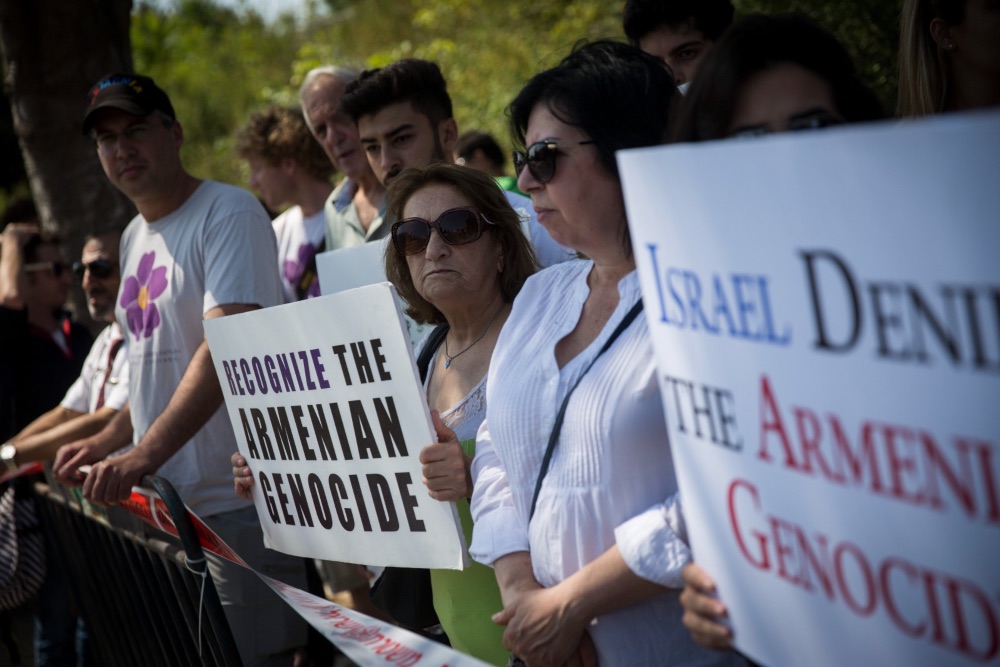
These days, after decades of persistent struggle, the Government of Israel has officially recognized the Armenian Genocide. The decision was adopted unanimously at the cabinet meeting on June 28, 2026, following a proposal by Foreign Minister Gideon Sa'ar, and marks a historic breakthrough. It reflects a significant shift in the political leadership's position while also highlighting the deep gap that existed for many years between Israeli public opinion and official government policy.
Approximately 1.5 million Armenians were killed
The Armenian Genocide, which took place between 1915 and 1923 in the Ottoman Empire, is considered one of the first genocides of the 20th century. Under the rule of the “Young Turks,” systematic massacres, mass deportations, and death marches in the Syrian desert were carried out. Around 1.5 million Armenians were killed, many through starvation, rape, looting, and executions.
The event began on April 24, 1915, with the arrest and execution of hundreds of Armenian intellectuals and cultural figures in Istanbul. The Ottoman Empire viewed its Christian minorities, including the Armenians, as a security threat during World War I. However, under this pretext, it carried out a systematic ethnic extermination campaign against the Armenians, and also against other Christian minorities such as the Assyrians and Greeks.
The official recognition was stalled for many years
In Israel, the struggle for recognition was long, difficult, and sustained over decades. Prominent scholars such as Prof. Yair Auron, author of “The Banality of Indifference” and “Denial: Israel and the Armenian Genocide,” the late Prof. Israel Charny, and the late Prof. Yehuda Bauer, emphasized the moral obligation to recognize the tragedy. The issue was also repeatedly raised in the Knesset throughout the years.
At the same time, leaders of the Armenian community in Israel, including Dr. Georgette Avakian (of blessed memory), who served for many years as chair of the Armenian Action Committee in Jerusalem, and Hagop Djernazian, leader of the Armenian Quarter Guardians movement, worked alongside many Israeli Jews. These included activists from the Dror Israel movement’s Committee Against Genocide, writer Ora Ahimeir and her husband, Israel Prize laureate Yaakov Ahimeir, Yoav Loeff, a lecturer in Armenian studies, as well as the author of this article, who were among the central activists in this struggle.
They acted through repeated appeals to the Knesset, lectures, opinion pieces, books, protests, and numerous other advocacy efforts.
Despite repeated discussions in the Knesset, from the first open debate in 2011 to the 2016 decision by the Education Committee calling on the government to recognize the genocide, official recognition remained stalled for many years.
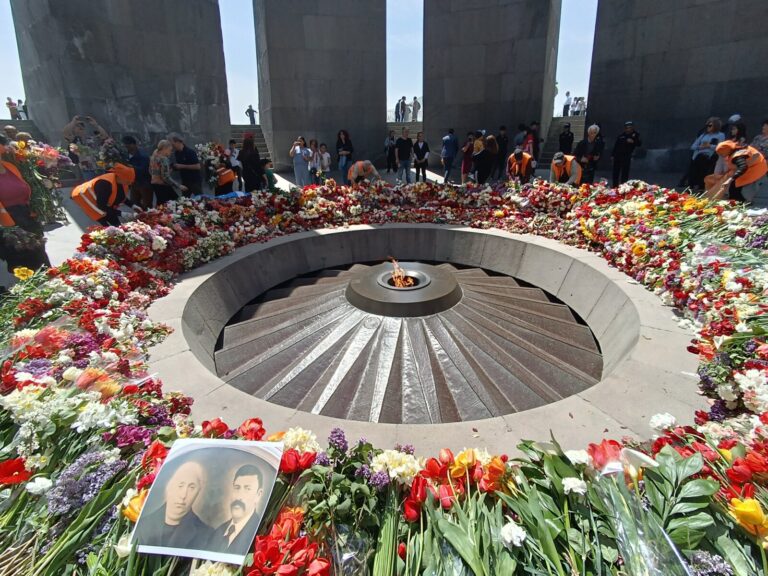
Last Wednesday, a day before Gideon Sa’ar’s announcement, I stood with a group of travelers I was guiding at the memorial for the victims of the genocide in Yerevan, the capital of Armenia. I expressed to them my hope that we would still see Israeli recognition in our lifetime. The next day it happened, much sooner than I had expected. It was a moving sense of history changing course before our eyes.
Years of non-recognition harmed Israel’s moral legitimacy
For many years, a large part of the Israeli public, which was aware of the details of the tragedy, expressed deep empathy and solidarity with the Armenian people. The gap between public opinion and the political leadership, which refused to recognize the genocide and at times even adopted a stance of denial, was wide and painful. A state founded in the wake of the Jewish people’s Holocaust should, for moral and ethical reasons, have been among the first to recognize it.
This lack of recognition acted as a boomerang, undermining Israel’s moral standing and negatively affecting its image in the world. For this reason, the relatively indifferent response of Armenian Prime Minister Nikol Pashinyan to Israel’s recognition underscores that it is seen as a political move rather than a purely moral acknowledgment.
Nevertheless, it is important to look ahead. Next week, a vote in the Knesset is expected, likely to pass by a large majority. Only then will it be possible to celebrate the completion of the process and formally declare: the State of Israel recognizes the Armenian Genocide.
Education is the real key to preventing such crimes
Now, with the positive momentum created around the official recognition, Haifa, the only city in Israel that recognized the genocide already in 2023, should be turned into a national model. At the memorial ceremony held in April this year, Mayor Yona Yahav declared that the municipality would work, in close cooperation with the Armenian community, to include the issue in the city’s educational curricula.
This statement opens an important opportunity, and it should be used to replicate the “Haifa model” across the country through the Ministry of Education.
In parallel, genocide studies and Armenian studies in higher education should be significantly expanded. Today, Israel offers dedicated courses and programs on genocide studies, mainly in the context of the Holocaust and comparative cases: the Open University of Israel offers courses such as “Genocide” and “Genocide, Politics and Memory”; Bar-Ilan University runs a program in Holocaust studies with deeper engagement in genocide-related topics; the University of Haifa offers an international MA in Holocaust studies; and the Hebrew University of Jerusalem includes courses on the subject.
However, dedicated study of Armenian history, Armenian culture, and the Armenian Genocide itself remains relatively limited, and exists mainly within elective courses or through the work of individual scholars. Expanding these areas would allow for a deeper understanding of the Armenian case as part of comparative genocide studies.
Education is the real key to preventing the recurrence of such crimes. By deeply studying the Armenian Genocide alongside the Holocaust of European Jewry and other cases of genocide, such as Rwanda, Cambodia, and Bosnia, we can cultivate in the younger generation a heightened sensitivity to minority rights, inter-communal solidarity, and awareness of the dangers of ethnic cleansing, denial, and indifference. The younger generation must understand the heavy human and moral cost of apathy and silence in the face of atrocities.
In conclusion, official recognition, even if driven by political considerations, is an important and welcome step. The main achievement lies in opening the door wide for the Israeli education system. Now that the issue is in the center of public attention, the Armenian community in Israel, Israeli activists, and educational and academic institutions should intensify their joint efforts. Only in this way can we ensure that recognition does not remain a symbolic declaration, but becomes a solid foundation for shared education, collective memory, and concrete action to prevent mass atrocities in the future.