
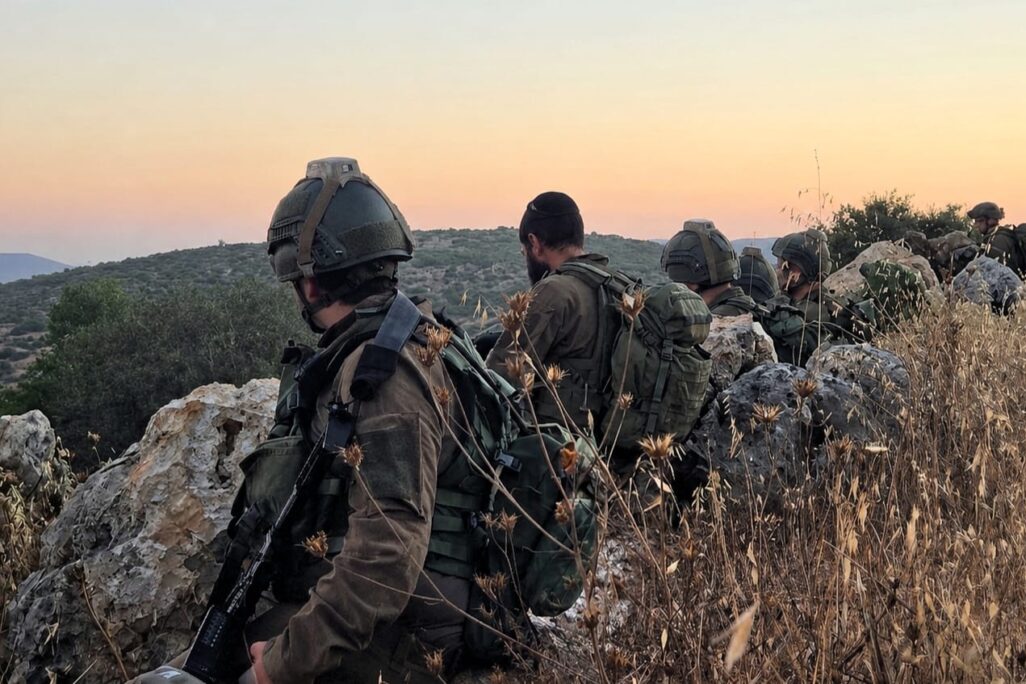
Serving. Suddenly, this word has taken on a new meaning. I began another round of reserve duty last Sunday, another part of the 1,000 days of this war. I was called up for 99 days, but no one is making any promises about when it will end; in the past, the dates have already been brought forward or postponed.
This week, the Knesset also decided to advance the equalization of the rights of Torah learners with those of those who serve in the IDF and national service. Apparently, the rights in heaven are not enough for these particular Torah learners.
Although this is a step with no practical implications, at least for now, it carries a clear value-based message: the coalition is willing to reduce the gap between those who serve and those who do not, in order to cling to their seats. It reflects a set of priorities in which those who serve are taken for granted. After all, they are only serving.
“Is this good for the People of Israel?”
A thousand days ago, I understood, and many others understood, that things could not return to the way they were. The nation, which had been torn apart before October 7, was stronger than the forces dividing it from within. The different parts of society were stitched back together through the power that exists only in organic tissue that has been torn apart and needs its other half. We returned to being a whole that is greater than the sum of its imagined parts.
But apparently, political dynamics possess even stronger forces of division.
A few dozen days ago, a friend asked me enthusiastically what I thought about the move by Moshe Cohen Eliya. The former legal scholar and “Patriots” panelist turned to U.S. President Trump requesting that he impose sanctions on Supreme Court President Yitzhak Amit and Attorney General Gali Baharav-Miara. I told myself that it reminded me of the appeal to the Roman governor before the destruction of the Second Temple, and I asked my friend whether he thought this was good for the Jewish people.
“Of course,” he replied, “it’s good for the right.”
I realized he had not understood. But perhaps, by the end of that conversation, he had.
It does not come from only one direction. The protests against the government, both during the war and before it, have taken different forms and shifted their focus each time, for different reasons, and there are those who have been protesting for nearly 1,200 days. In the name of fighting the government’s wrongs, some refuse to acknowledge even its achievements for the public as a whole. It is true that the roots of these achievements lie in the failure of October 7, but the refusal to recognize what is good only helps the other side entrench itself in its position and deepen the divide.
Those Who Will No Longer Understand
A thousand days ago, reality decided to teach Israeli society a lesson in humility.
The belief that negotiations with a terrorist organization would bring us calm, that “quiet will be met with quiet,” came crashing down against the reality on the ground. Along with it, fences, lives, and entire communities were destroyed. Reality taught the political leadership that a terrorist organization seeking to destroy Israel cannot be allowed to exist.
The belief that a small, smart, and technologically advanced army would be sufficient to face the threats also collapsed; that if surveillance capabilities were used, there was no need for boots on the ground. Among members of the military and the Shin Bet, there were those who learned the lesson, took responsibility, and went home. But this humility is still not shared by certain people.
The person who said that after a year and a half of serving in a command center he had more military knowledge and understanding than the average brigade commander did not learn the lesson in humility that reality sought to teach him as well. That person, incidentally, is Bezalel Smotrich.
Those who threatened non-volunteering and even refusal to serve before October 7, and refused to acknowledge the impact of their declarations on perceptions of the IDF in the Arab world, have also not learned. It is true that they enlisted immediately when the war broke out and proved that their love for the country was stronger. But those who did not acknowledge the mistake they made before the war refused to learn the lesson.
A thousand days ago, many people understood that they did not understand. And those who also bore the heavy responsibility on that day need, even more so, to understand that they did not understand. And if they have not changed, and have not understood the magnitude of the responsibility over the past thousand days, they never will.
The Elections Are More Frightening Than the Military Mission
This may be my hardest and most frightening round of reserve duty. Not because of the mission itself, but because of what happened leading up to it, and because of the election period that will arrive in the middle of it. The fear is that the political reality will seep into this place as well, and turn the gaps between us into chasms.
But my friends and I also remember the thousand days behind us, when those very same divides did not stop any of us from fighting for each other’s families. Today too, my company includes Jews, Druze, and Christians serving together; right-wing and left-wing Israelis, settlers and Tel Aviv residents, government protesters and government supporters. This is not a promise that things will be easier this time. But it is a reminder that we know how to serve, and to protect the human beings behind the political labels.