
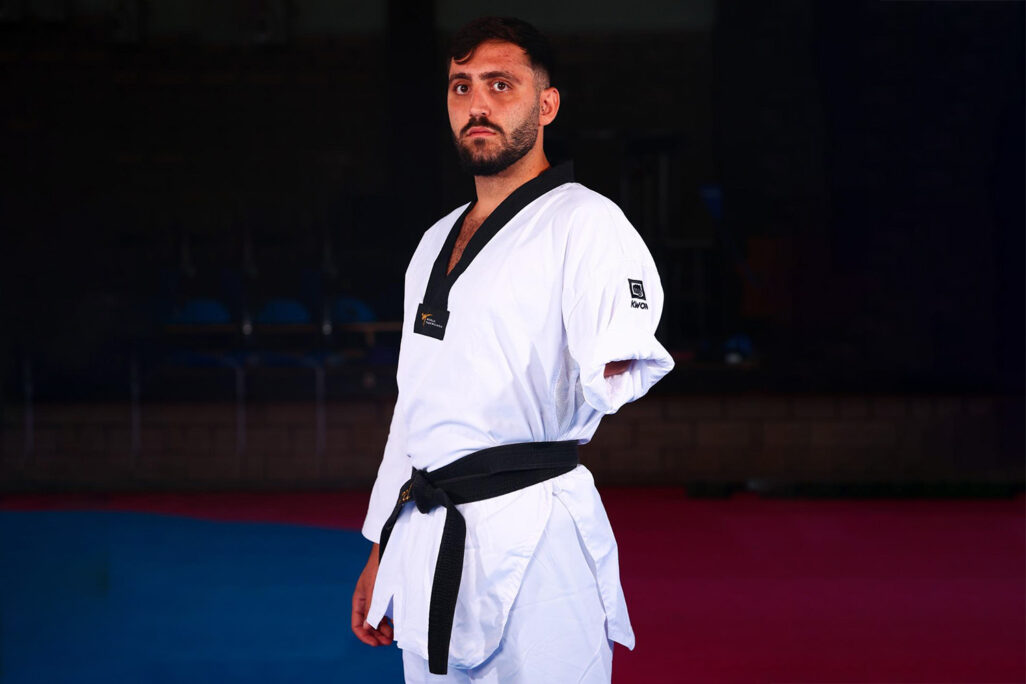
In October 2023, Omer Barel was preparing to return to civilian life after completing his service in the Armored Corps. But on October 7, like many others, he immediately put his uniform back on and rejoined his comrades in his company.
After being seriously wounded in Gaza, losing an arm, and undergoing a long rehabilitation, the combat soldier found himself back in the competitive arena, this time in paralympic taekwondo. Two weeks ago, Barel took another step in his new career when he competed in his first international tournament in Germany.
For the 24-year-old, the competitive arena had never been unfamiliar. His love of martial arts began at the age of six, when he joined the local judo club in the town of Kokhav Yair, where he grew up.
“I fell in love with it immediately,” Barel told Davar in an interview.
Before long, the hobby became a competitive career. By around eighth grade, he had earned a place on Israel’s national team.
“I had the routine of a professional athlete. I traveled abroad for competitions, attended training camps, and competed in the Israeli championships.”
")
Barel competed in the under-81 kg weight class and won Israeli youth championships. “I loved the feeling of stepping onto the mat with one goal, to win. If I lost, it was only my fault, because it's an individual sport. And if I won, it was only because of me. Unlike a team sport like soccer, here it's just me on the mat alone, and everything depends on me.”
Despite his success, when he reached enlistment age, he decided to put judo aside in favor of meaningful military service. Although he was initially assigned to basic training for a non-combat role, he insisted on serving in a combat unit.
“I told them, ‘Give me the most combat-oriented role you have.’ I had a high profile, so they sent me to the Armored Corps.”
He Ended His Service, Then Immediately Returned to Fight at the Scene of the Massacre
Barel’s official discharge date was set for October 8, 2023. Three days earlier, on Thursday, he had marked the end of his military service by cutting up his military ID card with a friend at the induction base.
That weekend, Barel was working at a bar and arrived home at six in the morning after his shift. He recalled the morning of October 7:
“At eight o’clock, my parents woke me up and said, ‘Come see what happened.’ I immediately texted my company commander. I told him, ‘I don’t care about anything. I haven’t officially been discharged yet—I’m coming.’”
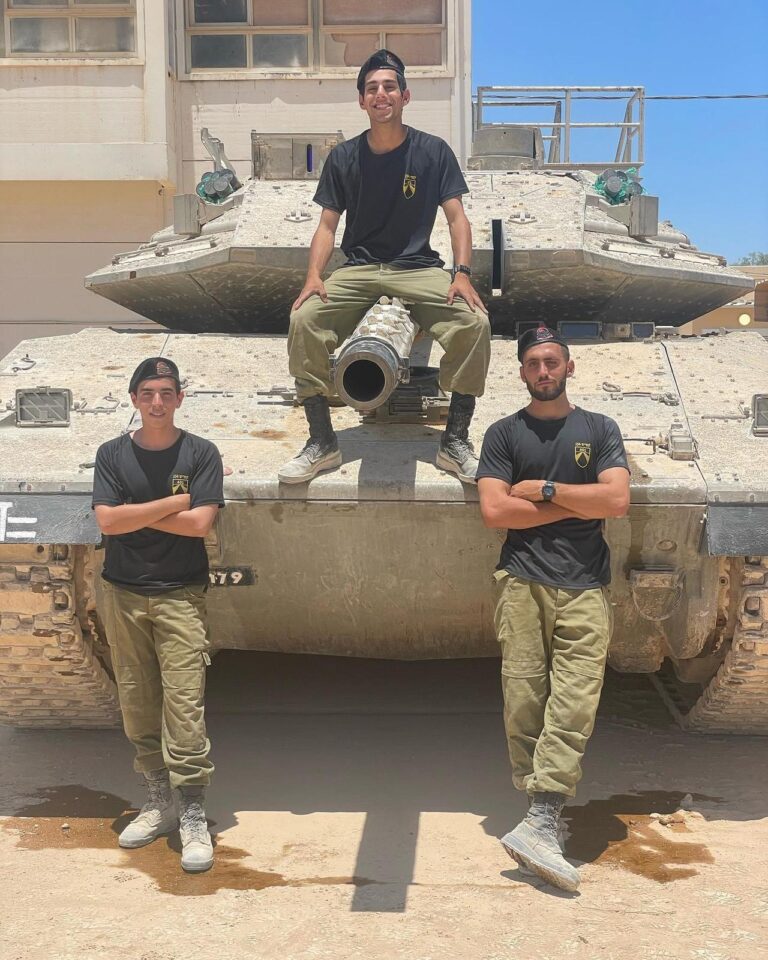
Barel rejoined his company, which first made its way to the Golan Heights to collect equipment. On October 8, they were deployed to the Gaza border region, where they took part in the fighting near Nir Am. After about three weeks in the staging areas, they became part of the first force to enter the northern Gaza Strip on October 27. “I was a tank commander, so I knew how to perform every role, but I didn't have a crew. So I told my company commander, ‘It doesn't matter where you put me.’ I ended up serving as the company commander’s tank driver.”
“I Was Awake Throughout the Evacuation; I Realized I Would Have to Learn to Live Without an Arm”
About two months after entering the Gaza Strip, on December 27, during fighting in Gaza City, a wire became entangled in the tank’s tracks. The late Captain Neria Zisk volunteered to exit the tank and fix the problem, while the company commander provided cover.
A few seconds later, Zisk was shot by a sniper in his upper body and was killed at the scene. The company commander was moderately wounded while attempting to exit the tank to rescue him, and the tank crew evacuated both of them under fire.
Following the tragic incident, the tank crew was disbanded, and after a short leave, Barel chose to return to his company once again. This time, he was assigned to the deputy company commander’s tank. “I was his loader. I spent about two weeks in the tank with him until I was injured.”
On January 16, he was wounded by an RPG strike. He was quickly evacuated to the emergency room and still remembers the thoughts running through his mind during those critical moments. “I was conscious throughout my entire evacuation by helicopter, and I more or less understood what had happened and what the consequences would be. I realized that I was facing a very long rehabilitation, and that I would have to learn to live without an arm.”
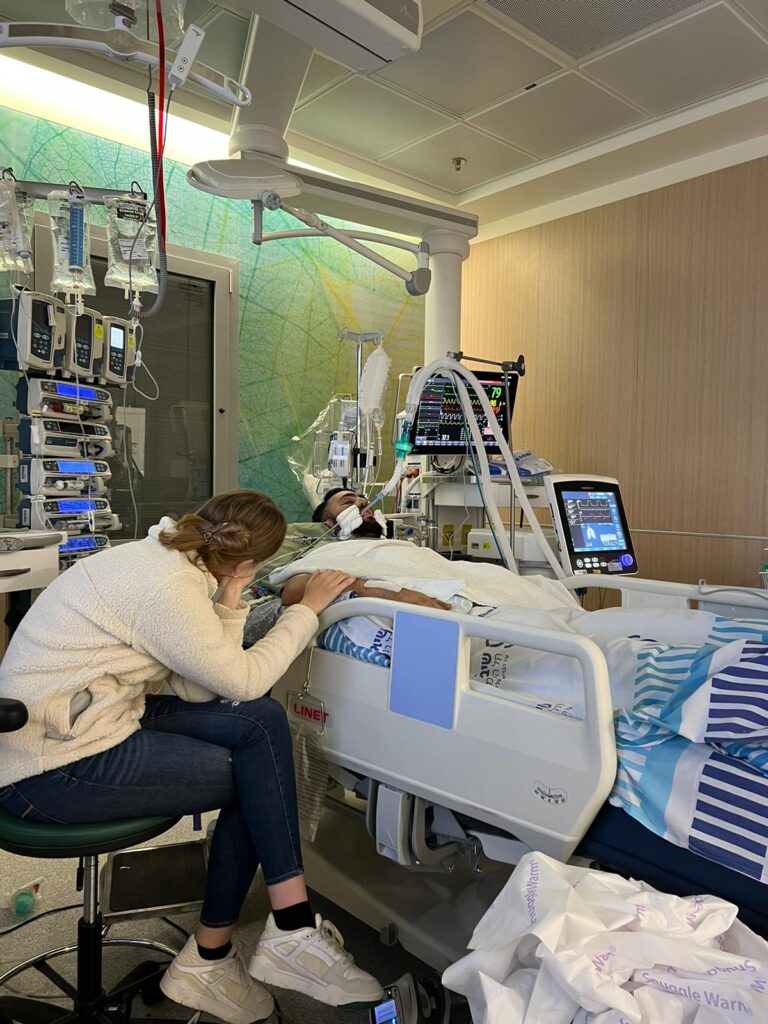
In addition to the amputation of his arm, Barel suffered a very serious injury to his leg. The rehabilitation process was arduous and included an eight-month hospitalization and more than 20 surgeries, accompanied by frequent setbacks due to infections that required additional operations. “The rehabilitation was not easy. The hardest part was learning how to live without an arm. Every time they discovered a new infection in my leg, I would go back for several months.” Even after being discharged from the hospital, his rehabilitation continued, including a trip to the United States for a prosthetic fitting and intensive physiotherapy treatments.
")
Back in the Arena: “The Feeling I Had in Judo Came Back”
Barel was in Thailand when he received a surprising call from Roni Yivzori of the Paralympic Committee, but he did not respond immediately. “They heard that I had been involved in judo, and she told me that I was exactly what they were looking for, people with arm amputations, for the taekwondo discipline. I returned to Israel and went back to work, and I didn’t want to come. But they didn’t give up and kept pushing me until eventually I said, ‘Alright, give it a chance.’”
“I came to a training session and I really fell in love with it,” he recalls. “The feeling I had when I competed in judo came back to me. That feeling of fighting, being in the arena, and doing what I know and what I’m good at. It gave me a purpose in life.”
Although both are individual combat sports in the Olympic program, the transition required significant adjustments. “It is very similar in the sense that you are on the mat and fighting against an opponent,” he explains. “But in the end, it is a completely different sport. In judo, you need close contact, it is a fight based on grips and throws. Taekwondo, on the other hand, requires fighting from a distance, agility, and knowing how to control your legs when kicking. I still have a lot of work to do, to keep learning and improving in the sport.”
")
In recent months, he has been training at a facility in Ramla alongside the Olympic and Paralympic teams. The story of Paralympic world champion Asaf Yasur serves as an inspiration for him. “I heard his story when I was 14, and I thought to myself, ‘Wow, what a shame, now he’ll have to manage without hands.’ Then to see this person up close now, training and competing at the highest levels—I hope to reach those levels as well. He is a phenomenal athlete, one of the greatest to have emerged from our country.”
“We Can Produce Dozens of Paralympic Medals from This War”
His debut competition this month at the President’s Cup in Germany was a successful first test. “I really enjoyed it. I truly understood where I stand and what I still need to continue working on,” he concludes. “I believe I will continue to improve in the upcoming competitions.”
He sees great importance in connecting wounded soldiers from the war with Paralympic sports and feels the full support of the Paralympic Committee. “The Paralympic Committee truly supports me in everything. It is very important to them that we succeed. During the war, many young men and women with incredible potential were injured. I believe we can produce dozens of Paralympic medals from this war.”
Looking ahead, Barel outlines his next goals: “The first thing is to continue learning, progressing, and improving. The main goal we have set right now is the World Championships this coming November in South Korea. I hope I can reach the required level and bring as much of myself as possible to this competition.”