
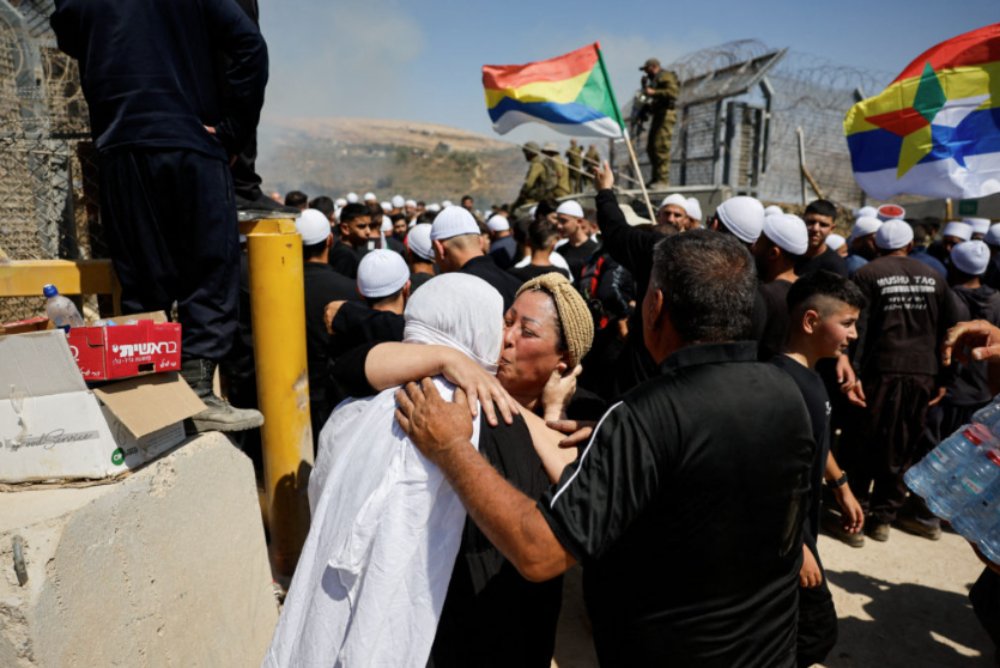
The Syrian civil war has in recent years brought about a profound change in the traditional social structure of the Druze community in the As-Suwayda Governate. Against the backdrop of the need to survive the threat posed by various armed groups fighting in the area, gender roles within the community were forced to change—not as a result of ideological perception or choice, but out of an existential necessity of survival.
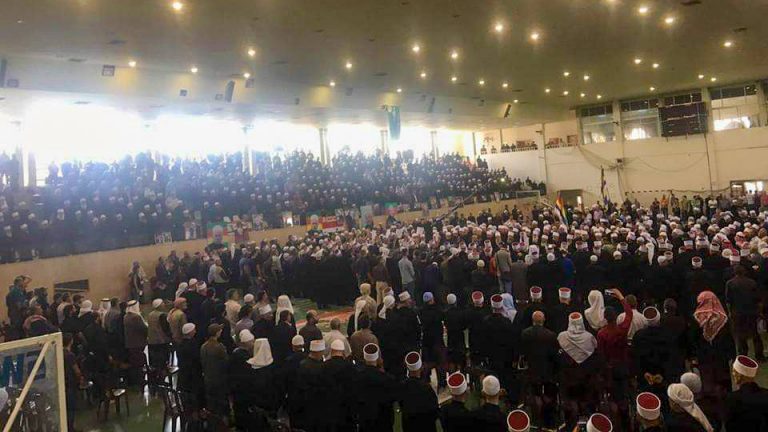
A new study by Dr. Janan Faraj Falah of the University of Haifa documented and analyzed this dramatic transformation. Preliminary findings ahead of the study’s final publication were presented last week at a conference held by the Academic Institute for the Study of Druze Society and Culture at Western Galilee College, in cooperation with the Druze Heritage Center in Israel.
Despite the geographic distance, Faraj Falah and her students succeeded in using social media, targeted questionnaires, and online interviews with women in Syria to create a picture of a society in upheaval, and of the new status of women that emerged from that upheaval.

According to Faraj Falah, the changing status of women in the heart of a conflict zone drew her to investigate the issue further. “I saw that women in Syria had begun taking on an active role, and that was something that had not existed before,” she tells Davar. “At the beginning of the war, even before the events of the past two years, women were kidnapped and raped, and then returned. I asked myself: ‘Why are they sitting silently?’
“It is not customary in society to accept a situation in which women are kidnapped, raped, and returned as if nothing happened, and they do not speak out. I began exploring this topic. Although in my lectures I usually avoid political or security-related issues because they are sensitive, due to the situation, and the fact that I had many Druze female students, the subject simply opened up.”
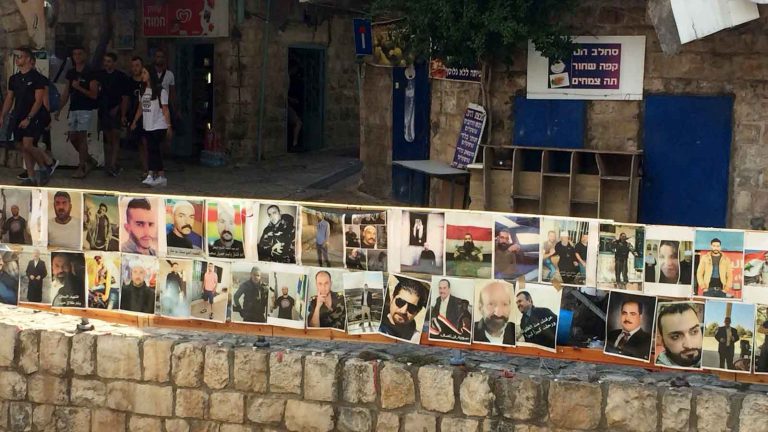
She asked one of her students to see whether it would be possible to examine the situation on the ground, and to her surprise discovered an existing and active social network. “I found that there were WhatsApp and Facebook groups of women from there—it started with one woman’s relative, who connected her to more women, and that is how a large group was formed where they talk together and share what is happening in Syria.
“I asked my students to check whether these women would agree to be interviewed or to receive questions from us, and they agreed. That is how we collected the initial findings for the study.”
In the questionnaires, Faraj Falah sought to understand what role women played in the fighting, and the responses were unexpected. “I realized that they had a dual role: both encouraging bereaved families, providing food for families in need and for fighters, and also fighting physically. Some of the women took up weapons and said: ‘If someone enters our home, we will shoot them.’ A small number of them actually went out to fight. “What is especially interesting is that the society there did not object to women leaving the home for the purpose of defense.”
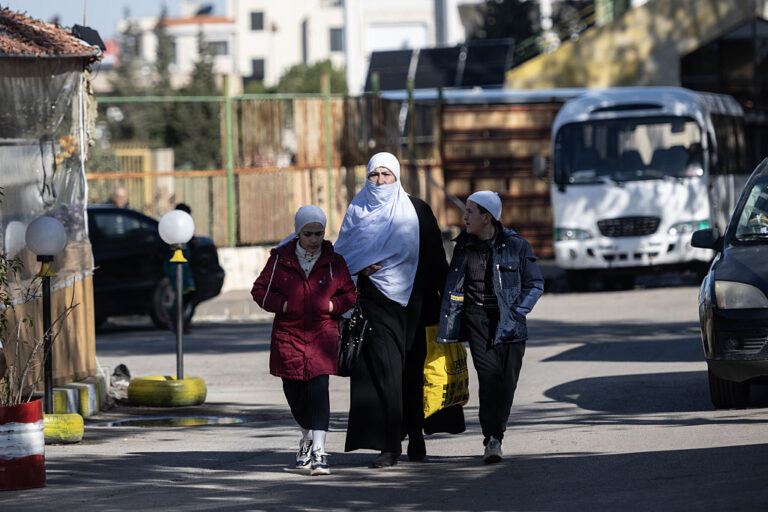
According to her, the most profound perceptual change was identified among the older generation:“They are completely in favor of protecting the home, the body, and the family, even if the price is carrying weapons and defending themselves inside the home. They are not opposed to women going out to fight.”
The Major Change Was Born Out of the Circumstances
Faraj Falah emphasizes that, ultimately, the major change emerged from the conditions of reality. “It was a matter of survival or extinction,” she explains. “And that is exactly what also led the Druze here in Israel to stand firm and establish the command center. In this command center, there are Druze women leading very important initiatives in support of our brothers and sisters in Syria. As everyone knows, without the spiritual and material support that flowed from here, the situation there would have been far worse.”
Following the severe humanitarian events that took place in the As-Suwayda region (including the harm inflicted upon and abduction of Druze women), dedicated command centers were established in Israel to raise donations and provide assistance.
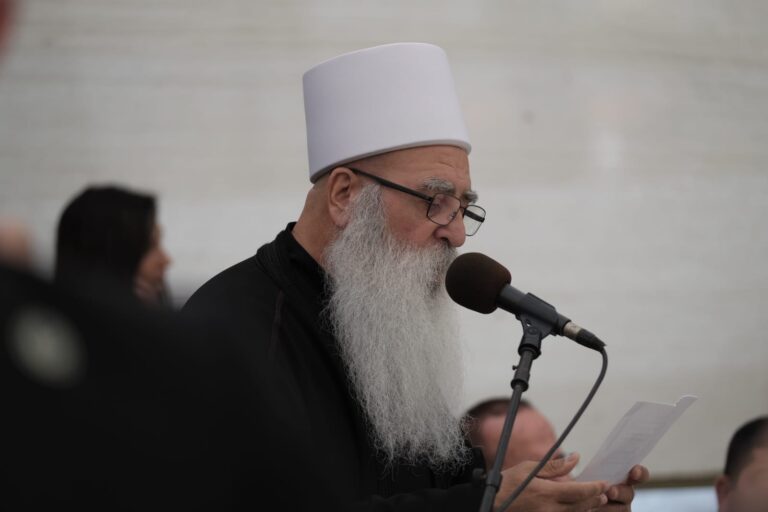
The support that came from Israel also had a clear gender dimension. “This major effort was led by the spiritual leader of the Druze community, Sheikh Muwaffaq Tarif,” says Faraj Falah. “He stood firm, mobilized support, spoke out, traveled, and even opened the command center in the courtyard of his private home. Hundreds of people arrived there every day.
“But I must give enormous credit to his wife—she is a very strong woman who helped, supported, and did everything behind the scenes. It is very important to mention her; she is a true pillar of support.”
From the Home to the Battlefield
The research findings, collected through dozens of questionnaires alongside a series of in-depth interviews with older women, point to five stages of female involvement that gradually expanded as the fighting in Syria intensified:
The pillar of the home: At the beginning of the war, during days of fear and escalating violence, women served as an emotional anchor of stability and protected children and elderly family members within the domestic sphere.
Organizers of resilience on the home front: As the fighting continued, women expanded their role from the household into the wider community. They opened their homes, hosted displaced families from As-Suwayda, prepared food, provided medical assistance, and cared for the wounded. They supported mothers and elderly people in order to create a social safety network.
Entering the public sphere: Women’s voices began to be heard beyond the private sphere through demonstrations and local and international protests by Druze women, who asserted their presence and their commitment to standing alongside their community.
Carrying weapons and active resistance: The most significant turning point was women’s willingness and readiness to carry weapons for self-defense and for the protection of their villages. Beyond this, some women physically entered the field and took part in resistance and actual fighting.
Total mobilization of “from young girls to elderly women”: A collective stance by women of all ages, rooted in a perception of resistance until death in defense of the body, honor, and home. As one respondent put it: “From the young girl to the elderly woman, in times of danger we all have to stand together. We do not leave our honor and our home behind.”
In one of the interviews, a mother who lost her sons in the fighting was documented. “We all saw how they accompanied them [to their final resting place] and how they carried them in their grief,” recalls Faraj Falah. “But she stood up and, like every Druze mother, said: ‘My faith has not been broken. The pain we all carry is immense, but we are still standing, because my strength today is not only for myself. My strength is for all the people of the village and the Druze community.’”
“When There Is an Existential Threat, You Become Something Else”
When Faraj Falah is asked about the new insights that emerged from the research, she responds with certainty: “These findings led me to a clear conclusion: it does not matter what you are or who you are—when your existence is threatened, you will become something else in order to preserve your life. Otherwise, you simply disappear. In such a situation, the path you take no longer matters.”
According to her, one of the unique and surprising aspects of conducting this particular study was the strength of the testimonies that emerged from the field, compared with conventional research that examines a sample and develops a theory without direct emotional involvement.
“These women have an enormous strength that is difficult even to put into words,” she says. The source of this strength, she argues, lies primarily in their anxiety for the fate of the community.
“First and foremost, it comes from the connection to the survival of the community,” Faraj Falah explains. “We are a very small community, there are only about 1.5 million Druze worldwide, and the vast majority live in Syria. In Israel, we number around 150,000, in Lebanon around 350,000, in Jordan around 40,000, with additional communities in the diaspora.
“If the Druze majority in Syria is destroyed, there will be nothing left of this community. The women understand this and say: ‘This is my existence as a woman, as part of the community, and this is the existence of our children and young people who are being killed day after day in the courtyards of our villages.’”
The Long-Term Impact on the Self-Perception of Druze Women
“In my opinion, it is clear that this will have a long-term impact, and it will be impossible to go back. Society will have to understand that women must be given power in terms of leadership, roles, and participation.
“In terms of education, the situation there has always been strong, there are many highly educated women in Syria, but now, as many young people have been killed in the war, women are taking their place.
“What I am always proud to say is that according to Druze religious law and tradition, men and women are completely equal in every respect. What caused the imbalance over the years was not the religion, but the customs of a patriarchal Mediterranean society.”
“For example, the murder of women is completely prohibited in the Druze religion. Murder is forbidden, period. Not long ago, a study of mine was published in the journal Israel Affairs, examining the attitudes of older Druze men (over the age of 70) toward the killing of women in the context of what is known as ‘family honor.’ Every single one of them opposed it unanimously.
“In the past, the rate of femicide in Druze society was very low, almost nonexistent. For decades, in most Druze communities there may have only been one or two cases. Unfortunately, over the past 20–30 years, this phenomenon has increased.
“Today, my colleague Prof. Shalva Weil from the Hebrew University and I are conducting a comprehensive study on femicide, and we see that there are still a significant number of Druze women who are murdered because they are accused of something. This is why I turned to older members of the community—to show that in the past this was almost nonexistent, and that this new phenomenon is a modern social distortion, not a religious tradition.”
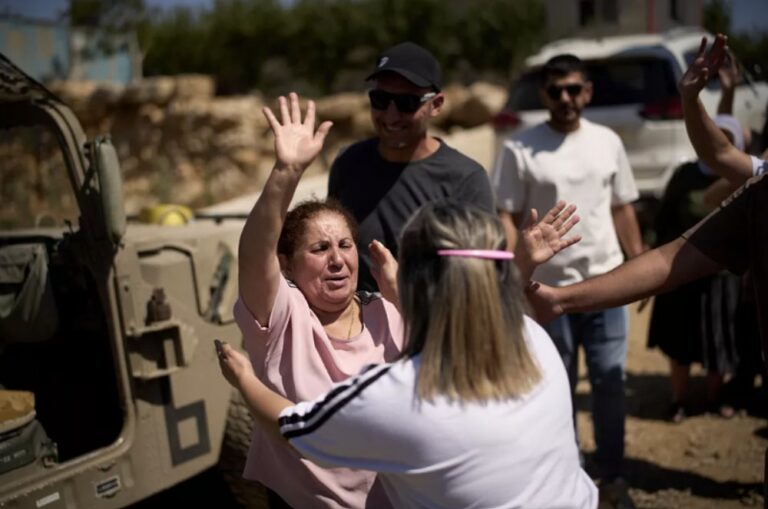
The impact of the changes taking place among Druze women in Syria is also reaching Israel, creating points of existential connection between the two communities. Faraj Falah notes that, historically, the entry of Druze women in Israel into the public sphere has occurred primarily around moments of existential crisis. The first time this happened was during protests against the Nation-State Law, and the second followed the profound shock caused by the massacre in Suwayda.
Can Druze women in Israel draw inspiration from the processes and the strength of women in Suwayda?
“No, we do not want to draw inspiration from there. That is a situation of war, massacre, and severe survival conditions. Here in Israel, our situation is different and much better. The percentage of Druze female students here is higher than that of male students and stands at nearly 68%, and many women are advancing and taking on senior positions.
“Even in the command center established following the events in Syria, there was a very significant female presence: they were not there to serve refreshments, but rather managed the public diplomacy and awareness efforts. They worked with the Ministry of Education to develop educational programs explaining what was happening, and they even built plans for the future.”