
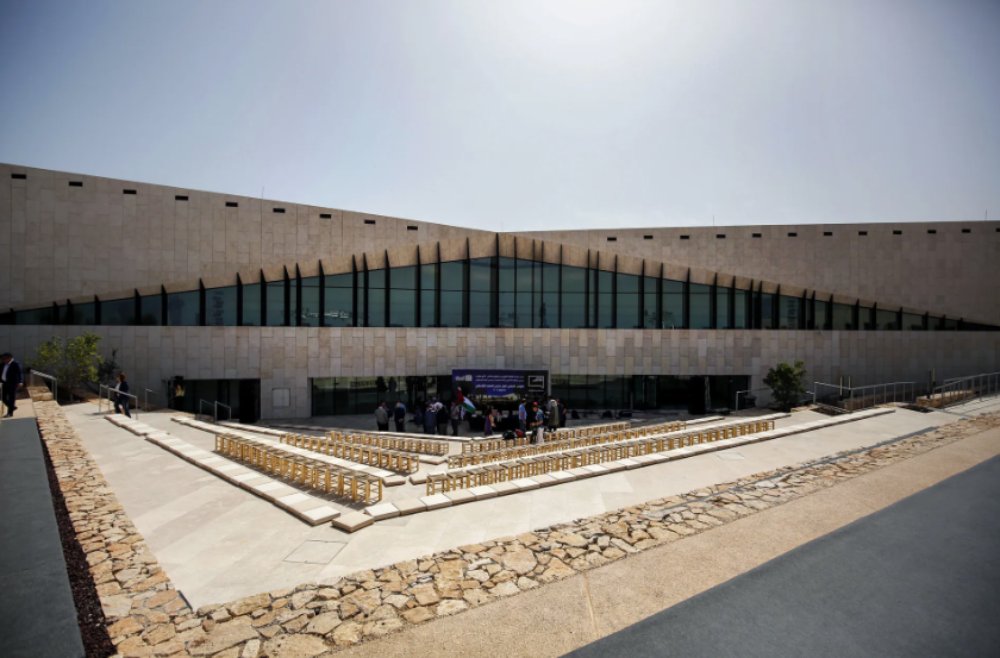
A secure, distributed digital archive is currently preserving hundreds of thousands of historical documents to ensure that Palestinian heritage survives.
According to a report by the technology magazine Wired, the Palestinian Museum in Birzeit has expanded its digital archive to store more than half a million digital items, including identity documents, official records, letters, diaries, manuscripts, maps, photographs, and audio recordings. The goal is to protect these materials from physical destruction.
According to the report, the project uses distributed backups to replicate information across several secure server locations around the world. Project managers hope that this approach will preserve the data and maintain online access to it even if a local server or building is physically damaged.
The archive functions as a bilingual digital platform in Arabic and English, according to the report, and prioritizes documenting the everyday lives of ordinary citizens and the family histories of Palestinians in Israel and abroad.
According to Amer Shomali, director general of the Palestinian Museum, approximately 80% of Palestinian national collections have been looted, destroyed, or are under Israeli control. He claimed that during the first week of the war in Gaza in 2023, two art galleries, seven museums, two major archives in Gaza, and hundreds of archaeological sites were bombed.
According to a 2025 report by the Applied Research Institute–Jerusalem, a Palestinian non-governmental organization, Israel has taken control of at least 2,400 archaeological sites in the West Bank. As of last March, UNESCO, the United Nations Educational, Scientific and Cultural Organization, reported that 164 cultural heritage sites in Gaza had been damaged since October 2023, including historic buildings, religious sites, museums, and archaeological locations.
Protection Against Disappearance
The Palestinian Museum, which opened its doors in 2016, began developing its digital archive in 2018. The archive does not rely on a single physical location. The team, consisting of three members supported by a network of volunteers, collected materials directly from families, requesting their access and permission to scan old photographs, letters, and documents.
The result is an open-source platform containing more than 500,000 items. The archive has been replicated several times across the world, creating a distributed system capable of withstanding a cyberattack or physical attack. “We cannot protect the system from being hacked, but we can protect it from disappearing,” Shomali told Wired.
An “IKEA-Style Exhibition”
According to the report, the museum developed a kind of “exhibition in a box” or an “IKEA-style kit” that allows anyone to download the materials, print them, and organize exhibitions about Palestinian life anywhere in the world. The project has already been presented more than 260 times, from Japan to San Francisco, and has been translated into five languages. International artists and curators also use the archive in their own projects.
Mohammad Rabai, who oversees digitization processes, told the magazine that digitizing delicate documents requires specialized expertise: “Digitization is not focused only on creating a digital image, but also on preserving historical materials for future generations.”
“The digital archive is a way to protect our memory,” Shomali said. “Every scan, every backup, and every copy represents an attempt to ensure that Palestinian memory survives, even if the physical places where it is held do not survive.”
The poet Mahmoud Darwish wrote: “We who are capable of remembering are also capable of liberating ourselves.” The archive is an embodiment of that principle.