
The Basic Law on Torah Study, which was approved by the Knesset plenum last week, consists of only 10 words: "Torah study is a foundational value in the heritage of the Jewish people and in the State of Israel." In its current wording, it is unclear whether the law has legal significance or whether it remains merely declarative. In any case, it received no fewer than 633 objections from opposition members of Knesset, a reference to the 613 commandments, who attempted to prevent its passage during the final week of activity of the current Knesset session.
The law was not so short when it began its legislative process. When it was approved in its first reading, it included an additional clause stating that it was intended "to create a balance of justice vis-à-vis the foundational values of the State of Israel." In the version approved in its preliminary reading, it even stated that the state would recognize those who undertake to dedicate themselves to Torah study for an extended period as performing meaningful service for the state and the Jewish people.
These clauses in the law raised concerns among the opposition and civil society organizations that it would serve as a constitutional foundation for the non-enlistment of yeshiva students and for the benefits granted to them — a legal framework that has not existed since 2024, when the High Court of Justice ruled that yeshiva students must be drafted.
The Basic Law on Torah Study is the 14th Basic Law in Israel. Despite the constitutional status of the Basic Laws, on the basis of which the High Court of Justice may invalidate other laws, they can be passed by a regular majority in the Knesset. Some Basic Laws require a majority of 61 members of Knesset in order to amend them, but none require a larger majority.
Shas Claims: The Law Is Directed at Judges
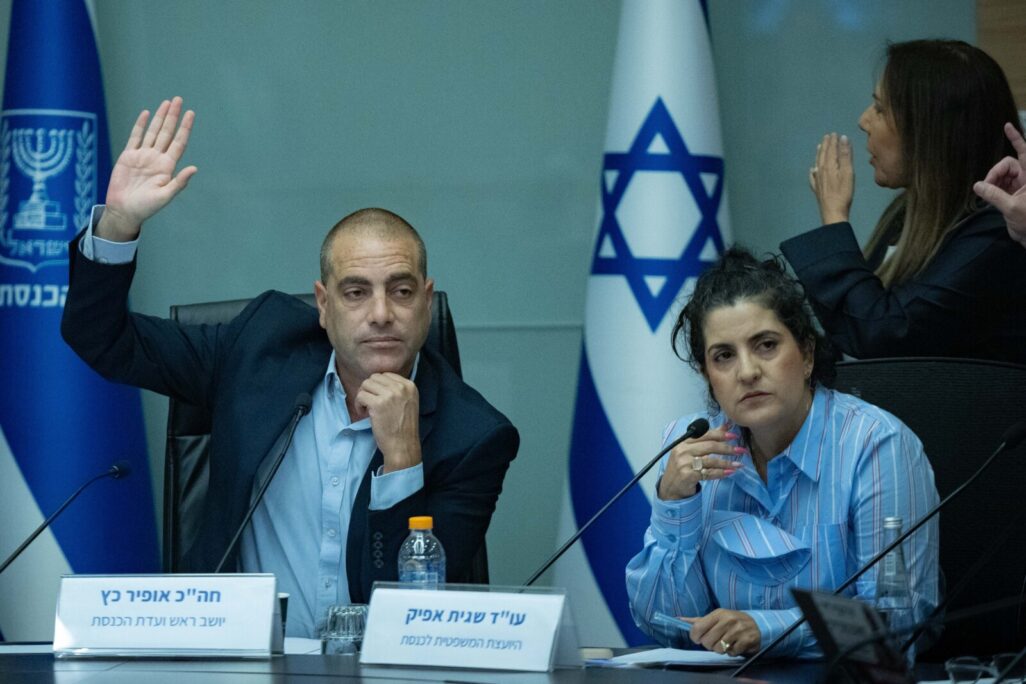
MK Ofir Katz (Likud), chairman of the coalition who also heads the Knesset Committee, was the one who proposed removing the second clause of the law, concerning "balances of justice." According to him, this was done "after discussions together with our partners in the ultra-Orthodox factions and conversations with many parties, including within the coalition." Katz said today that the law had undergone "significant changes," so that it "would not lead to harm to benefits for soldiers." He attacked the opposition which opposes even the shortened version of the law: "What bothers you? Everything that brings Zionism, Judaism — you are against everything."
The ultra-Orthodox parties exerted heavy political pressure in recent months to advance this Basic Law, and Shas made its legislation a condition for supporting any other law. MK Yaakov Margi of Shas said that the law is directed at "the High Court judges, who have lost their compass — please, show some consideration for the heritage of Israel."
MK Yinon Azoulay of Shas said last week that "the removal of Clause 2 is not in line with our wishes, but we accepted the request," and claimed that the remaining clause "does not speak about sanctions, but rather will provide a tool for a judge’s discretion, on issues such as the value of equality." In contrast, Chairman of United Torah Judaism Yitzhak Goldknopf said that "no one spoke to me about removing Clause 2, and I do not agree to it."
The law was initially discussed in the Knesset Constitution, Law and Justice Committee, chaired by MK Simcha Rothman from the Religious Zionist Party. Later, the law was transferred to the Knesset Committee at Rothman’s request. According to him, the reason was "an exceptional workload on the committee’s legislative agenda," but it is possible that the request was also connected to the fact that members of Knesset from the Religious Zionist Party and many of its voters oppose a blanket exemption from military service for yeshiva students.
Even After the Law Was Narrowed, Its Practical Meaning Remains Unclear
"The committee will need to explain what the meaning of the foundational value of Torah study is compared to the existing situation," said Deputy Attorney General Adv. Avital Sompolinsky last week, after the Knesset Committee advanced the law while removing the "balances of justice" clause.
According to her, "If the goal is to give the court a tool that it did not previously have, then deleting the clause changes nothing. And if removing the clause means that the value of Torah study that exists in judicial rulings remains subject to the same balancing considerations, then the bill is truly declarative, and all of the explanatory notes that accompanied it become irrelevant."
During the discussions, opposition parties opposed the law, arguing that it would harm those serving in the IDF. Opposition leader Yair Lapid called it the "draft evaders’ law." Combat trauma survivors also interrupted the discussion of the law, demanding that the wording be changed so that it would also recognize them.
From a legal perspective, Adv. Sompolinsky warned during the discussions about ambiguity, as it is unclear what the meaning of the foundational value that the law seeks to enshrine is. She expressed concern that it seeks to "silence the public dispute over the question of the enlistment of yeshiva students." Some of the legal difficulties were related to the "balances of justice" clause, which was later removed, because it did not specify which other foundational values it conflicted with.
Legal advisers from several government ministries also pointed during the discussions to a lack of clarity in the wording of the law and possible implications for budgets. Maayan Machnai-Ziv from the legal counsel of the Ministry of Defense said that "because the law is worded in a general and broad manner and contains no definitions, it is impossible to know whether there will be concrete effects." Knesset Legal Adviser Adv. Shagit Afik said at the time that "if this is a declarative law, the wording needs to be amended; at the moment, we are not certain what the extent of the impact will be."
The Objections: "It Will Not Serve as Grounds for an Exemption from Military Service"
"We, all of the opposition factions, submitted 6,130 objections, and in the end we will vote on 613 objections against the 613 commandments in the Torah," announced MK Merav Ben Ari from Yesh Atid, the opposition coordinator, before the vote on the law.
Yesh Atid proposed defining that "the term Torah study shall not be interpreted in a manner that grants any group, stream, or sector a monopoly over its definition; Torah study encompasses all its forms and streams, by women and men alike, including study in yeshivot, midrashot, houses of study of all Jewish streams, pre-military academies, academic institutions, and frameworks of Jewish renewal."
Alongside these, some of the opposition’s objections were ones that could have resolved the legal ambiguity in the current wording of the law. For example, one objection proposed adding to the law that "recognition of this value shall not serve as grounds for exemption from the obligation of military service or from any other civic obligation imposed by law."