

The Public Housing Law (Purchase Rights), also known as the Ran Cohen Law, which the coalition blocked last week, is a problematic piece of legislation. The intention of its sponsors, led by former Knesset member Ran Cohen, was both good and justified: to provide long-term public housing residents and their heirs with the security that private ownership of a home provides.
But alongside this pursuit of justice, the law also legitimized, even if morally, a situation in which the state sells off its public assets and gradually depletes the very system it created.
The Cohen Law is often compared to the privatization of public housing in Margaret Thatcher’s neoliberal Britain. While there are clear similarities between the two, Cohen’s socialist perspective saw something different: a specific Israeli injustice at a specific moment in time. Most public housing residents in Israel are immigrants living in peripheral areas, where the state settled them in economically disadvantaged communities with limited employment opportunities, infrastructure, and educational resources. For Cohen, the ability to purchase their homes at a discounted price represented the first step toward what is known as social mobility for these families.
Cohen saw something else as well when he brought the bill to the Knesset in the late 1990s: a large portion of Israel’s public housing stock, built hastily to accommodate waves of immigration, was entering its sixth decade. Its condition was deteriorating. Alongside the socio-economic trap, another trap had emerged, one of infrastructure. The apartments were small and neglected, and because they were not owned by the residents, they were often not renovated.
"Over the years, I would travel throughout the country and see the poverty and hardship in which people in public housing were living," Cohen told Davar in 2023. "The housing companies were supposed to take care of them, but they did not. Only after Tamar Gozansky from Hadash passed her law, which regulated the companies’ obligations toward residents, did the situation change."
According to the Housing Ministry, in 2026 the state owns 47,000 public housing units, around 5% of which are in severe condition. Thirty years ago, the number of state-owned public housing units was twice as high, and Cohen, who had seen thousands of them from Eilat to Kiryat Shmona, estimated that one in every five apartments was unfit for habitation.
Poverty, neglect, and the fear that selling apartments after residents’ deaths would turn into a wholesale sell-off of public assets to the private market led Cohen to a clear conclusion: if the apartments were going to be sold, they should at least be sold to the residents themselves.
Since many tenants did not have the financial means to purchase their homes, the state should assist them by selling the apartments at a discount based on the length of time they had lived there. Cohen hoped that the state’s obligation to use revenue from the sales to purchase new public housing units would prevent the collapse of the public housing system.
After 25 years, the facts must be acknowledged as they are: in terms of social mobility, Cohen enabled tens of thousands of families to achieve what they could previously only dream of, a home of their own. But from the perspective of the public housing system itself, it represented another significant step toward its dismantling.
The data show that during the period in which the law was in effect, from 2013 to the end of 2024, Israel’s public housing stock declined by an average of around 1,500 apartments per year. These figures are serious, but compared with the large-scale sales campaigns between 1998 and 2013, which reduced the stock by approximately 2,900 apartments per year, it is clear that the law did not stop the decline, but it did at least slow it.
However, given that over the past decade the state has had to sell at least four apartments in order to purchase one new unit, the reality is that, even if this was not Cohen’s intention, the law ultimately played a significant role in the deterioration of the public housing system.
But it would be an injustice to portray the law as the primary cause of the public housing system’s dire state, as officials in the Finance Ministry and Housing Ministry, which opposed it from the beginning, have argued. Over the years, both ministries, along with nearly all the ministers who headed them, worked to keep public housing on life support: purchasing only dozens to a few hundred apartments annually, while failing to implement budgets that had already been approved.
For example, in 2022, then-Housing Minister Ze’ev Elkin approved a budget of approximately NIS 2.5 billion to purchase 1,700 apartments over three years. To date, only around 1,000 apartments have been purchased, and most were not funded through the budget approved by Elkin, but rather through the Public Housing Fund, which receives revenue from the sale of apartments to eligible tenants at discounted prices.
The Finance Ministry refused to transfer to the Housing Ministry the funds it was obligated to provide, arguing that as long as the Public Housing Fund had not been depleted, there was no reason to allocate additional state funds to public housing. After the fund was exhausted, only NIS 200 million was transferred—around 10% of the amount that had been promised for purchasing new apartments.
Last week, following the defeat of the bill, Housing Minister Haim Katz and Interior Committee Chair Yitzhak Kroizer announced the allocation of NIS 450 million for apartment renovations. However, this is not a new achievement: these funds were supposed to have been transferred to public housing two years ago but were blocked by the Finance Ministry.
This is not an exception, but a pattern. One example is Amidar, the public housing company, which has neglected apartments, partly due to insufficient funding from the Finance Ministry. Another is the conduct of the Israel Land Authority (ILA): during the entire period in which Elkin’s planned apartment purchases were supposed to take place, the authority generated more than NIS 55 billion in state revenue from land sales, yet allocated not a single shekel or dunam of land for public housing.
In an alternative reality, those responsible for maintaining the public housing system would have done everything possible to pressure the Housing Minister to pursue a fundamental reform of the ILA, the only public body in the Western world that controls such a vast amount of land. But instead of establishing the inter-ministerial team the government committed to creating years ago to address the issue, the state continues with slow, piecemeal purchases of apartments on the private market, where prices continue to rise—partly due to the ILA’s policy of maximizing profits from land sales.
"If the middle class could see what public housing looks like in places where it receives proper investment, it would no longer be viewed only as a struggle of those who have nothing," public housing researcher Yaron Hoffman-Dishon told Davar, referring to the respected status public housing holds in many Western European city centers.
"It would become an issue that concerns the middle class as well—students, young parents, workers earning modest wages. Millions of people for whom public housing is a good solution."
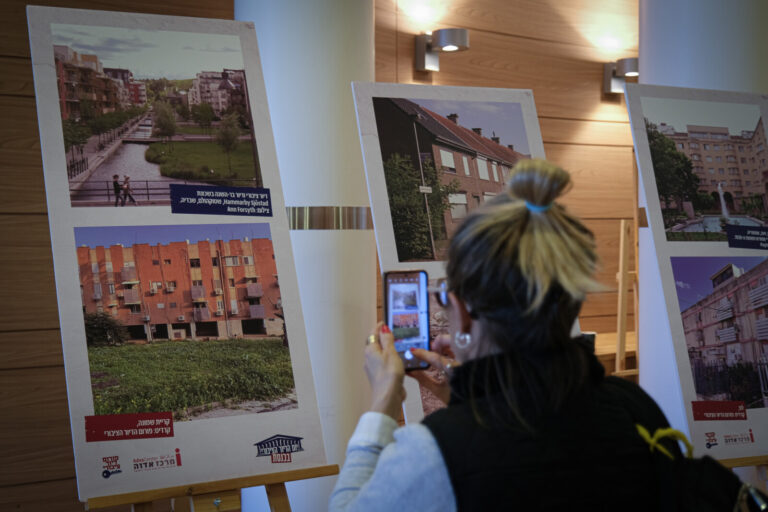
The reason the middle class does not see it this way is that public housing sits within the least valued division of a ministry whose primary role is managing Israel’s real estate market, a market that an increasing number of Israelis can no longer access.
Instead of making public housing the spearhead of the fight against the rising cost of living, the state allocates a significant portion of its budget to rent assistance, effectively transferring funds to private landlords. At the same time, it sets extremely restrictive eligibility criteria, leaving public housing as a last refuge for the poorest segments of society. This situation has frozen the system in place, preventing new groups from accessing it while making life increasingly difficult for those who already depend on it.
Public housing can and should serve as a solution for many more people. But for that to happen, it needs a new vision and new leadership with the willingness and ability to implement it.
The continued sale of public housing units, whether at a discount or not, represents a surrender of public assets and must therefore come to an end. If the state genuinely seeks to rebuild the system, it should be honest with tenants who were promised the ability to purchase their homes: stop stringing them along with ineffective legislation, or allow some of them to buy their apartments under clear and defined criteria.
But if the state does not wish to do so, then it should honor the commitment it has already made: pass the law, dispose of the remaining housing stock, and perhaps someday in the future, when the right people are found, it can start rebuilding the system.