
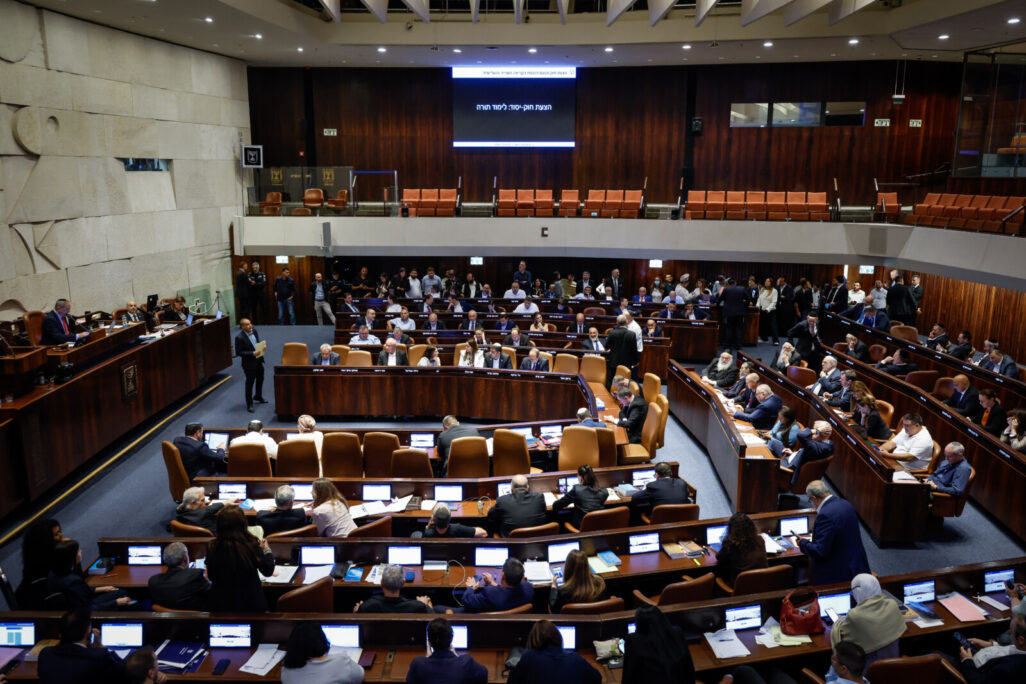
After an especially turbulent week marked by political clashes and controversial legislation, the final session of the 25th Knesset came to a close late Thursday night.
The final hours of the plenum were dominated by drama and heated exchanges between the coalition and the opposition over amendments to the Party Financing Law. Disagreements over the bill raised genuine concerns until the last minute that negotiations would collapse, forcing the Knesset to reconvene during the parliamentary recess to complete the legislative process.
Despite the tensions, and just before the session adjourned, the plenum gave final approval in the early hours of the morning to several notable bills, including initiatives sponsored by opposition lawmakers:
Among the bills that received final approval were:
The Golda Meir Commemoration Law: A bill introduced by Merav Michaeli (The Democrats) and Pnina Tamano-Shata (Blue and White) to preserve the legacy and commemorate the life and public service of former Prime Minister Golda Meir.
Stricter penalties and extended statutes of limitations for sexual offenses against minors: The law expands the definition of "family members" so that the special, extended statute of limitations for sexual offenses committed against minors within the family now also applies to first cousins.
The October 7 Massacre Remembrance and Heroism Law: The bill was passed under its original title, despite political controversy and attempts to remove the word "massacre" from its name.
- The Negev Development Authority Law: Among other provisions, the legislation extends the period for regulating individual farms in the Negev.
The overnight legislative marathon capped one of the Knesset's most dramatic and contentious weeks, coming immediately after the passage of several of the session's most significant and controversial laws, including the new Communications Law, the law maintaining mandatory military service at 32 months, and the Election Law.