
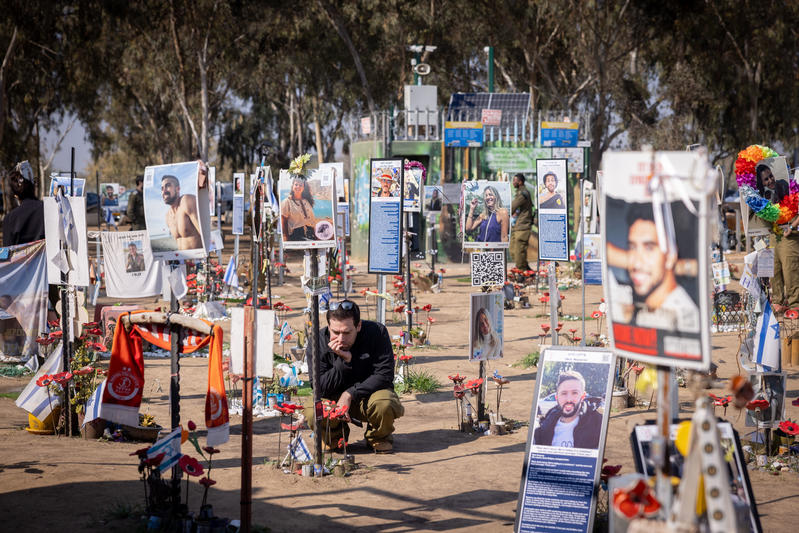
The Law for the Commemoration of the Massacre and the Memorialization of Heroism in the Events of October 7, which passed its second and third readings late last Friday night just before the Knesset adjourned, will establish the framework for national commemoration and regulate the creation of memorial projects related to the massacre.
Although the Prime Minister’s Office opposed including the word “massacre” in the law’s title, arguing that it could undermine the resilience of the national memory, the term was ultimately retained following the insistence of MK Yosef Taieb (Shas), who led the legislative process.
When and how will the memorial day be marked?
The law establishes 24 Tishrei, two days after Simchat Torah, as the official state memorial day for the events of October 7. During the day, flags will be lowered to half-mast at state institutions, IDF bases, police facilities, and Israel Prison Service facilities.
At the same time, official ceremonies will be held in the education system, local authorities, and public institutions. The Knesset will hold special discussions in the plenum and committees, while radio and television broadcasters will be required to air programs consistent with the character of the day.
In the coming year, the memorial day will be observed on October 5.
What are the goals of the law?
The law seeks to shape and preserve the memory of the events in three central areas:
- Documenting the massacre, the hostages, and the bereavement experienced by residents of the Gaza border communities, workers in the area, and participants of the festivals.
- Commemorating acts of heroism and mutual solidarity demonstrated by security forces and civilians.
- Documenting resilience, recovery, and rebuilding processes in the western Negev following the massacre.
How will the law be implemented?
The law instructs the establishment of a new public body, the “Memory Authority” (Rashut HaZikaron), which will be responsible for implementing its objectives and will receive annual state funding. The body will be legally and financially independent and will operate under the supervision of the Prime Minister’s Office.
Who will lead the authority?
The authority will be headed by a 13-member council, which will determine how the national memory of the events is shaped and oversee the implementation of related decisions.
The council will include representatives from government bodies, including employees of the Prime Minister’s Office, the Ministry of Defense, the Ministry of Education, and the Ministry of Heritage. It will also include a representative from the Tkuma Directorate, until its planned closure in 2028, and a representative from the National Insurance Institute’s Victims of Hostile Acts Department.
Representatives of civil society on the council will include members representing families of fallen security personnel; the Hostages and Missing Families Forum; families who lost loved ones at the festivals; and survivors of the festivals.
In addition, the council will include representatives from: the four regional councils in the area; the three settlement movements; the cities of Sderot and Ofakim.
Representation will operate through a rotation mechanism, with each representative serving a single term. Despite their requests, the Merhavim Regional Council and the city of Netivot will not be included in the rotation system.
A civil society representative will not be permitted to serve for more than eight years, while a representative from a public institution will not be permitted to serve for more than 12 years.

What will the authority do?
The law authorizes the authority to establish a central database on the events of October 7, in which testimonies and documentation from that day will be collected and preserved. The authority will publish research, develop educational programs, and organize memorial tours for both youth and adults. If it chooses to do so, it will also have the authority and funding to establish an archive.
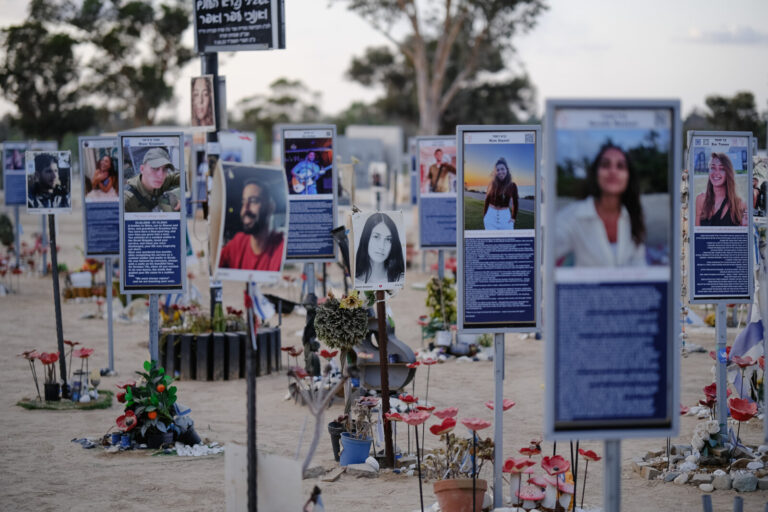
In addition, the authority will identify locations and establish a museum and memorial site in the western Negev commemorating the massacre.
As part of its activities, the authority will be required to establish four subcommittees: a committee to examine the impact of the authority’s activities on local authorities; a committee to commemorate the contributions of police officers, prison service personnel, and firefighters, which will include a representative from the Ministry of National Security; a committee to commemorate the victims and survivors who are not residents of the represented local authorities; an education and research committee.
What will the museum and memorial site include?
The museum and memorial site are effectively the only two physical institutions that the authority will be required to establish. They will be built in two separate locations, on land provided by the state, and will be operated by the authority.
The law stipulates that entry will be free of charge and that the sites will be adapted for audiences from Israel and around the world. However, if the authority wishes to do so and receives state approval, it will be able to hold additional paid activities at the sites, under the supervision of the Prime Minister’s Office.
The law is a general framework law and does not specify: the location of the institutions; their design; the content that will be displayed; the timeline for their establishment; or their estimated cost.
All of these decisions will be left to the next government. According to the wording of the law, the process will have to begin within six months of its approval, meaning by the beginning of 2027.
What will happen to the bomb shelters?
The law stipulates that a local authority containing a bomb shelter where a massacre took place will be required to report to the Knesset Education Committee if it decides to relocate the shelter or make a significant physical alteration to it.
The purpose of the reporting requirement is to allow for public discussion regarding any changes involving the shelters. However, the committee does not have the authority to prevent local authorities from moving them: the local authority does not require approval to do so, and the Knesset committee has no veto power on the matter.
The decision was made against the backdrop of a request by Eshkol Regional Council head Michal Uziyahu to relocate bomb shelters that were obstructing the planned expansion of Route 232, in order to balance competing interests. Following the passage of the law, Uziyahu committed not to take action on the matter without involving bereaved families.
What influence will the Prime Minister have over the shaping of memory?
Although the authority will be a statutory body, because it will operate under the Prime Minister’s Office, the prime minister will have significant influence over its appointments and activities.
The prime minister will be the official appointing authority for the council representatives, will approve the appointment of the chairperson, and will approve the authority’s annual and long-term plans.
These work plans will determine the content and messages guiding the authority’s documentation and educational activities. As part of this process, decisions will also be made regarding which testimonies, documents, and materials will be displayed in the museum and memorial site—and which materials will remain excluded from public presentation.