
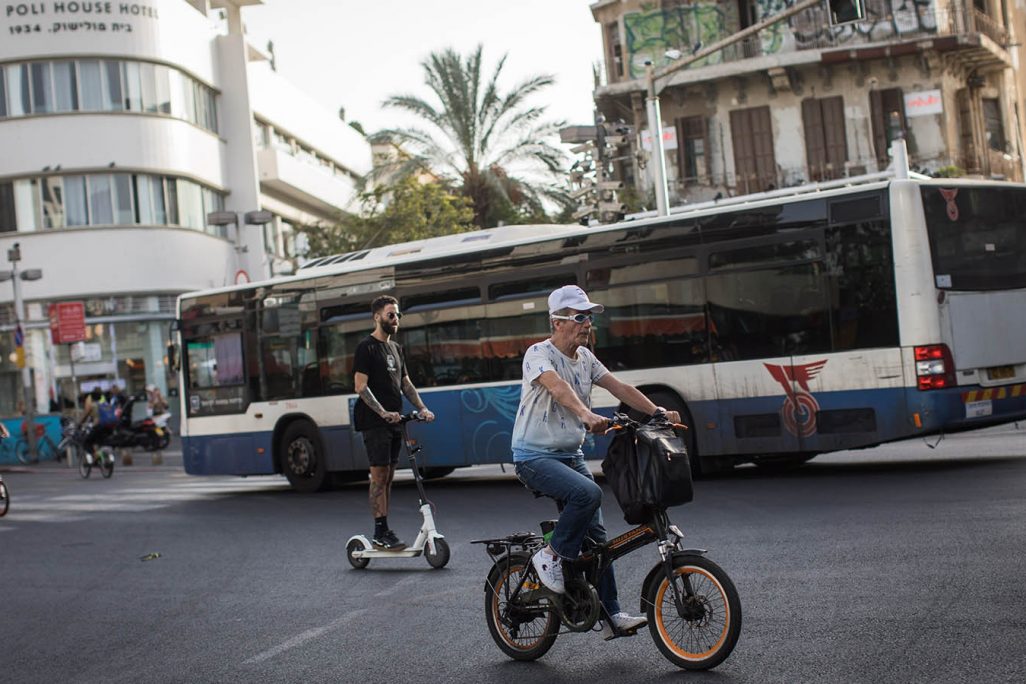
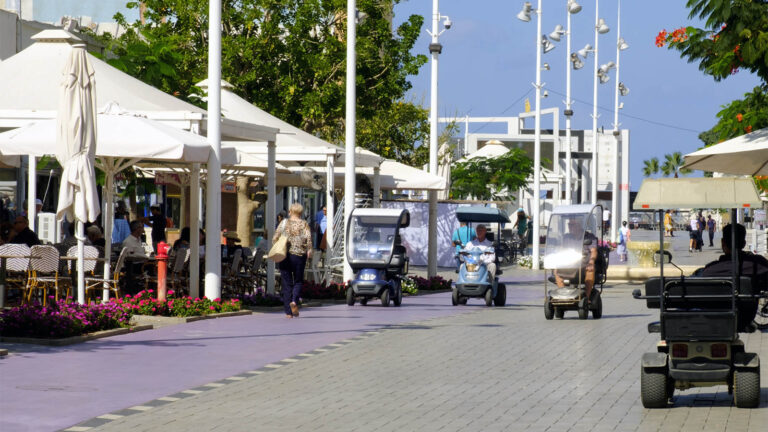
The phenomenon of accidents involving micromobility vehicles is expanding in Israel and around the world, raising concerns within the National Road Safety Authority (NRSA). Micromobility is a general term for a variety of powered vehicles, most of them electric. The two main types in this category are electric bicycles and electric scooters, but it also includes other vehicles such as mobility scooters, hoverboards, and more.
"This is a global phenomenon," says Yonatan Ilan, Deputy Director General for Information and Research at the National Road Safety Authority. "But it is also becoming more severe in Israel. This year alone, 13 micromobility users have been killed, and 73 people have so far been reported seriously injured."
However, Ilan clarifies that the figures for serious injuries are not entirely accurate. "Some serious injuries are reported and counted only after some time has passed, so these are not yet the final figures."
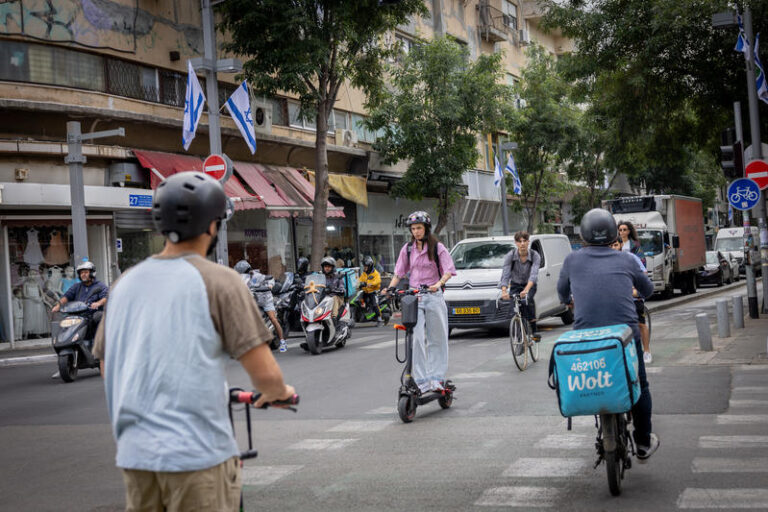
However, during the same period last year, a similar number of micromobility users were killed, 14 people, and the number of seriously injured stood at 123. According to Ilan, it is therefore likely that the number of seriously injured this year will be similar.
Throughout 2025, 24 micromobility users were killed, and 322 people were seriously injured. In addition, the National Road Safety Authority notes that many hundreds more people are likely injured with moderate and minor injuries, but these cases are not reported.
Public concern is rising — but the greatest danger is to riders themselves
According to Ilan, surveys conducted by the National Road Safety Authority have pointed to growing public concern about delivery workers riding micromobility vehicles. However, while the Authority is indeed concerned about harm to pedestrians, the statistics show that the primary danger is to riders themselves.
"Anyone who has used one of these vehicles," Ilan explains, "knows that the likelihood of being injured yourself is very high. This is especially true among young people, or people who are in a hurry, such as delivery workers."
According to the National Road Safety Authority's data, while 13 micromobility riders have been killed this year, only one pedestrian has been killed in a micromobility-related accident, and 35 pedestrians have been seriously injured. This figure demonstrates that micromobility riders pose the greatest danger primarily to themselves.
A global problem, but Israel has no way of tracking the number of vehicles on the road
In general, the number of accidents in this field has increased significantly in recent years. According to data from the National Road Safety Authority, in 2015 only four people were recorded as seriously or fatally injured in micromobility accidents, while in 2025 the number reached 356.
The dramatic increase is explained by the National Road Safety Authority mainly in light of the significant rise in the number of small vehicles in Israel. "This is a global phenomenon," says Ilan. "It is difficult to quantify because it is also new and not very well researched around the world, but there is concern about it in most of the Western world."
According to him, Israel also faces a significant difficulty in understanding and quantifying the phenomenon. Unlike other vehicles, which are required to be registered with identification numbers, there has not previously been customary oversight in the field of micromobility.
Some of the vehicles, including electric bicycles and electric scooters, have recently been required to carry license plates. However, despite the transfer of certain authorities to the police, according to National Road Safety Authority data, the law is still not being effectively enforced.
"We estimate that in Tel Aviv there are around 64% of vehicles with license plates," Ilan said during a discussion held in the Knesset about a month and a half ago. "But this is the place with the most enforcement and the most cameras. Everywhere else, we have no way of knowing how many vehicles there are."
According to sources in the National Road Safety Authority, the new import reform, which was given the nickname "What is good for Europe is good for Israel," cancelled many regulations, and today no one knows exactly how many micromobility vehicles, and of what types, are located in Israel.
"Trying to understand the role of parents"
According to data from the National Road Safety Authority, the situation is particularly severe in Arab communities. While the rate of casualties is increasing across the population as a whole, and especially among young people, the most significant increase is among Arab citizens, particularly young Arabs.
According to Ilan, the reason for this is not entirely clear. However, it may be related to the later arrival of the "trend" to Arab villages, and perhaps it is connected to work in the delivery sector, which is also associated with increased risk among young people.
"One of the things we are trying most to understand is what the role of parents is in this, whether they understand how dangerous it is," says Dr. Assaf Sharon, head of the research division at the National Road Safety Authority, which is responsible for conducting and planning the Authority’s research. "Ultimately, this is a relatively serious violation under the law."
According to the amendment to the Traffic Ordinance, riding an electric bicycle or electric scooter without a license plate constitutes an offence. In addition, riding these vehicles between the ages of 16–18 requires an A-class driver’s licence (a motorcycle licence). This means that most children below these ages are not permitted to ride these vehicles at all.
However, in reality, out of the 345 people seriously injured (fatally or severely) in 2025, 128 were aged 15 or younger.
A large part of the problem is likely rooted in enforcement. The law authorizes the police, and since 2024 also municipal inspectors, to confiscate vehicles that are used without a licence. However, in practice, stopping young people using a fast and mobile vehicle is a complex task that requires many police patrols and careful work to prevent harm to minors.
Although the law seemingly requires all users to register their vehicles, in practice the penalties for not carrying a licence plate are considered too lenient, only 500 shekels. Since the fine for this offence is so low, while fines for traffic offences recorded by cameras can be significantly higher, many riders prefer to take the risk and not install a licence plate.
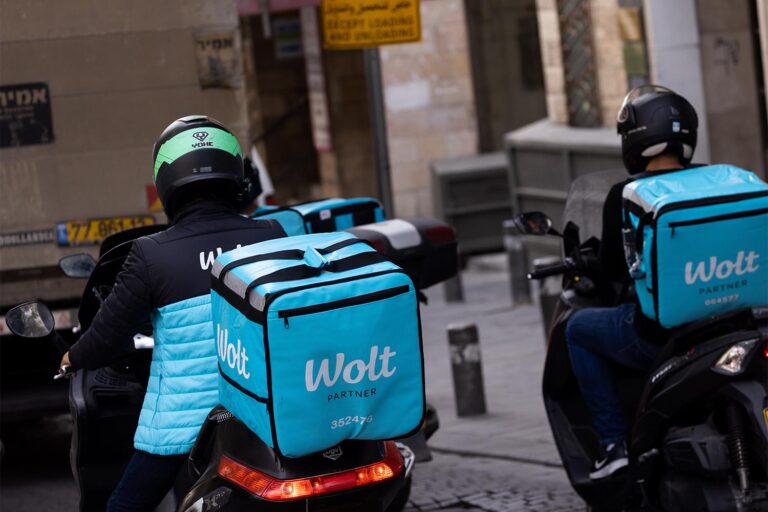
In addition, even among the major delivery companies, such as Wolt, which are responsible for a very significant share of all micromobility users, there is no complete oversight of the licence plate issue. According to the National Road Safety Authority, many delivery workers have already been observed riding without any licence plate at all. It is possible that this is a field that, without stricter enforcement, will remain unregulated.