
Despite its need to attract voters in order to cross the threshold of 61 Knesset seats, the opposition has largely refrained, and will likely continue to refrain, from appealing to coalition voters through its economic platform. Why? Among other reasons, such proposals are expected to face criticism from the liberal economic press, meaning that the electoral damage would be certain while the benefit remains only potential.
The result is that media outlets whose writers and readers largely want to see the government replaced may, through the economic consensus they uphold, actually narrow the room for manoeuvre available to the opposition to attract new voters.
A reminder of the importance of the economic side comes from Netanyahu’s 2022 election campaign, which ended in his victory after a series of elections without a clear outcome between the blocs.
Netanyahu promised free education from birth to age three, property tax reductions, and housing-linked bonds tied to the housing price index to guarantee returns for those who do not own a home and reduce demand for housing, and therefore curb price increases. He also promised to halt the import reforms introduced and protect local agriculture. In the 2020 campaign, Barkat and Netanyahu had actually supported lowering tariffs, but promised that this would be accompanied by “massive support” for farmers.
The reactions in the liberal economic press demonstrated the expected cost for those who deviate from this consensus. Calcalist, an Israeli daily financial newspaper, stated that the measures in the plan, “with the possible exception of free education from birth,” would not strengthen the economy in the long term; it described the housing bonds as an idea presented in a “populist” manner, and the proposal for free education as a “very expensive” move that could distort the labour market.
TheMarker, a daily business newspaper published under Haaretz, described the plan as a promise of a dream return that concealed the risk. Free education was presented as a move that would particularly benefit Netanyahu’s ultra-Orthodox allies, while halting agricultural reform was portrayed as preventing price reductions for consumers.
Some of the criticism was substantive and detailed, but the framing demonstrates what an opposition party that proposes broad public spending, universal services, or protection of domestic production can expect: it may be labelled as populist, irresponsible, and serving special interest groups.
Unlike Netanyahu, who is already attacked by the liberal press and whose supporters often grant it limited authority, opposition parties rely on a public that places greater weight on the judgments of Calcalist and TheMarker. Therefore, even if they sought to appeal to coalition voters through non-sectoral economic proposals with professional justification, they would risk immediate damage among their existing support base in exchange for uncertain electoral gains outside the bloc.
In this sense, the lack of economic pluralism in liberal media outlets makes it more difficult to appeal to coalition voters, due to fears of losing votes within the opposition bloc.
The professional standard, which requires examining proposals also on the basis of their economic logic, can be maintained. Some of the possible proposals have strong economic justification. Expanding free education to ages two to three, for example, would increase participation in the labour market, particularly among women. Tax reductions or other measures that increase the income of the middle and lower income deciles are expected to increase consumption and therefore economic growth.
In the 2022 elections, support for the coalition was particularly strong among socioeconomic clusters 4–7, and in the case of the ultra-Orthodox parties, among clusters 1–3. A progressive tax reform, such as increasing taxes on capital income among the ultra-wealthy who benefit from relatively low tax rates, could be both popular and economically justified. This is especially true if it is used to increase funding for public infrastructure and education, whose potential to promote growth is acknowledged even by the liberal media.
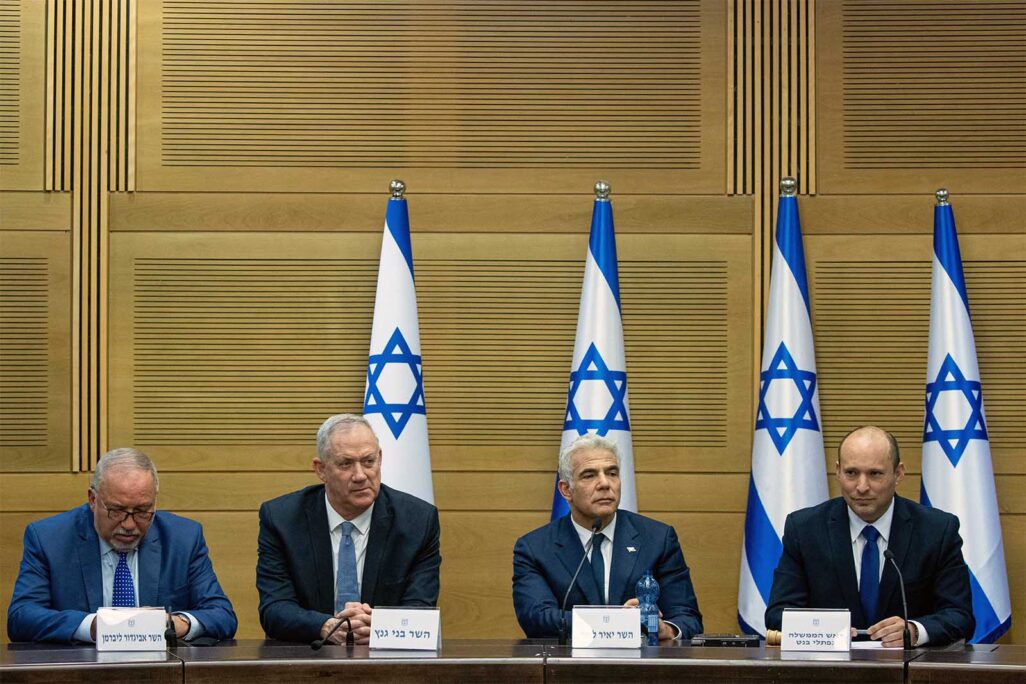
The issue of local agriculture is another example: many farmers, some of whom support the coalition, strongly opposed the policies of the Bennet-Lapid coalition led by then-Finance Minister Avigdor Lieberman and then-Agriculture Minister Oded Forer, and fought against them.
Dr. Liron Amador, a researcher at the Dasha Institute at Tel Aviv University and an expert in agricultural economics and food systems, explains in studies for the Yesodot Institute the advantages and necessity of local agriculture alongside imports and emergency stockpiles. Amador argues that food security requires a planned combination of imports, domestic production, and emergency reserves.
Overreliance on imports exposes Israel to concentration in global trade, geopolitical disruptions, and the impact of climate change on exporting countries. Agricultural capacity that has been eroded cannot be rebuilt quickly during a crisis, and therefore the lowest price at any given moment cannot be the only consideration.
With the exception of the Democrats, it is doubtful whether there is even any motivation among opposition parties to challenge the economic consensus. Yeshar and Yachad recruited former senior officials from the Finance Ministry who led policies of reducing public spending and are fully aligned with the economic establishment.
Their approach overlooks empirical studies that have found public spending contributes to economic growth, and that on average, cuts, particularly during periods of economic slowdown, do not improve the state of public debt.

Increasing civilian spending could contribute to economic growth and provide a foundation for necessary and popular policy measures. The Israel Democracy Institute is an institution with a positive reputation among the liberal public, and Prof. Flug comes directly from the economic establishment. In addition, the proposal expands economic room for manoeuvre without deviating from the liberal economic consensus.
Opposition parties tend to promise less corruption, fewer coalition funds, professional appointments, and more efficient governance. These are important issues, but they do not directly address the cost of housing, mortgages, wages, or the quality of public services. Netanyahu offered voters a tangible answer, even if it was partial or unreliable. The opposition, by contrast, mainly offers to manage the existing system better.
As long as economic authority within the liberal camp remains in the hands of a chorus that sets narrow limits on state intervention, and the camp’s voters continue to defer to that authority, opposition parties will struggle to offer a different distribution of resources and services. In doing so, they are giving up one of the possible tools for attracting voters from the coalition.