
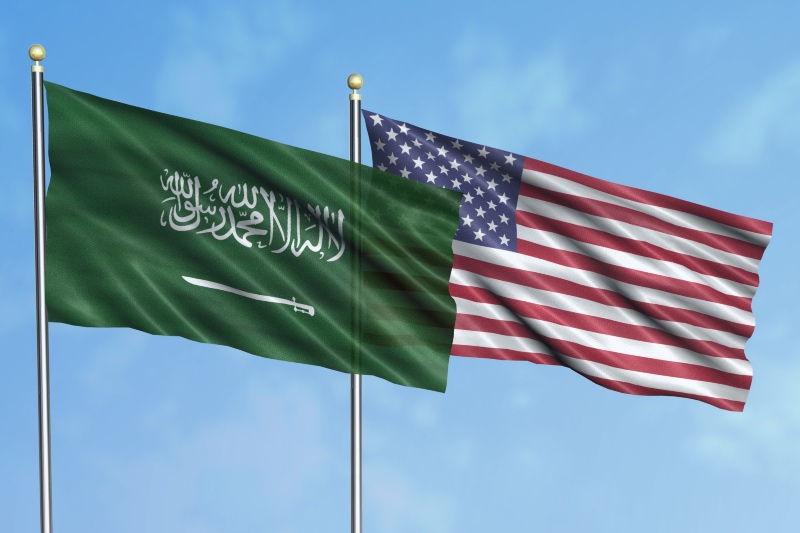
The US Department of Energy announced overnight (Wednesday–Thursday) that the United States and Saudi Arabia had signed a civilian nuclear cooperation agreement. The agreement, which does not include Saudi recognition of Israel, will allow the kingdom to build reactors using American technology, enrich uranium and reprocess nuclear waste.
The nuclear agreement with Saudi Arabia has been under discussion for years under the administrations of Donald Trump and Joe Biden, but has not yet been signed, partly due to concerns that it could provide the kingdom with a pathway to developing nuclear weapons.
Unlike the plan advanced by the Biden administration, the current agreement does not include an “Additional Protocol,” which allows the International Atomic Energy Agency (IAEA) to conduct comprehensive snap inspections.
Uranium enrichment and the reprocessing of nuclear waste can also be used in the production of nuclear weapons. The United Arab Emirates, by comparison, gave up both capabilities when it signed a civilian nuclear agreement with the United States in 2009.
US Energy Secretary Chris Wright and his Saudi counterpart, Prince Abdulaziz bin Salman, signed the agreement, known as the “123 Agreement.” The US administration claims that it meets the requirements for preventing the proliferation of nuclear weapons under US law.
The agreement, which will last around 30 years and is worth tens of billions of dollars, is intended to enable the construction of AP1000-type reactors.
The concern: an arms race in the Middle East
The agreement will now be submitted to Congress and will enter into force if lawmakers do not object within 90 legislative days. Experts and Democratic lawmakers have called for it to be rejected, warning that it could expand nuclear proliferation and trigger an arms race in the Middle East.
The concern is heightened by repeated statements from Saudi Crown Prince Mohammed bin Salman, who has said that the kingdom does not want to develop nuclear weapons, but would do so if Iran develops such weapons.
Democratic Senator Edward Markey said that the United States is allowing Saudi Arabia to develop technologies required for nuclear weapons while fighting Iran on the grounds that it seeks to prevent Tehran from obtaining a nuclear bomb.
“This agreement will make all of us less safe,” he said.