
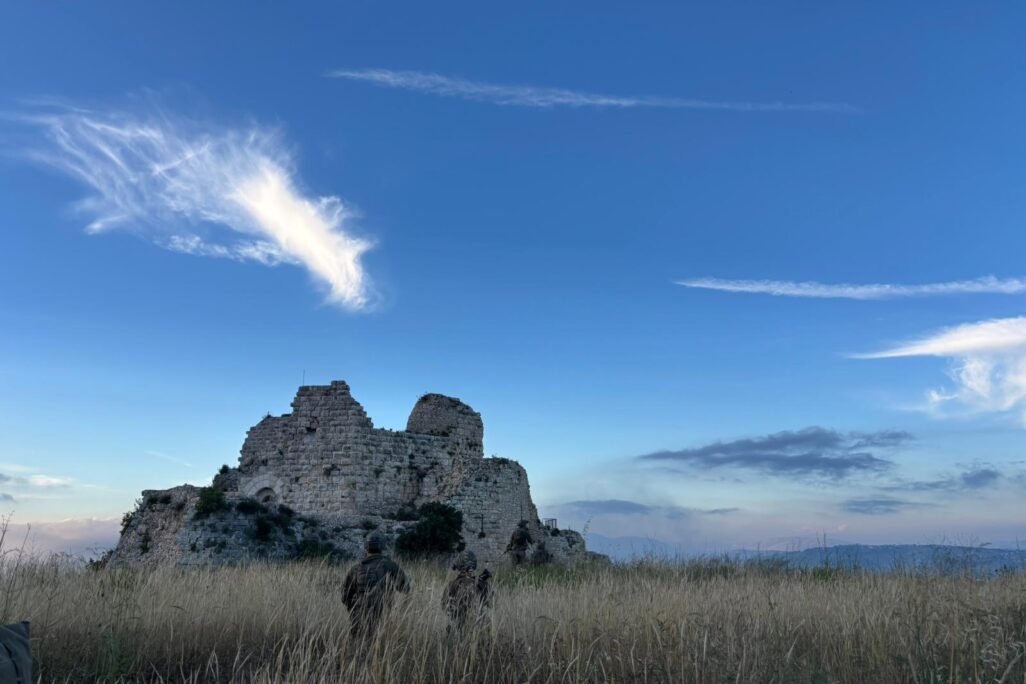
Israel strongly condemned the decisions adopted by UNESCO’s World Heritage Committee, which approved proposals submitted by the Palestinian Authority and Lebanon concerning the sites of Sebastia (biblical city of Samaria inside the West Bank) and the Beaufort Fortress (in Lebanon).
The Israeli Foreign Ministry in Jerusalem criticised the organisation, claiming that the decisions, which were adopted without a vote, represent “a surrender to politicisation and a distortion of history.”
According to a Foreign Ministry statement, the decision regarding Sebastia ignores the site’s documented history and serves as a political tool for the Palestinian Authority. Israel argues that the move is intended to erase the Jewish and Christian history of the site, as well as the Jewish people’s historical connection to the ancient capital of the Kingdom of Israel.
Foreign Minister Gideon Sa’ar responded to the decision, saying: “The Palestinian Authority and those who assist it in international institutions are not merely trying to rewrite history; they are attempting to invent a completely false narrative, erase and deny the connection of the Jewish people to the Land of Israel. Sebastia is a site of immense importance in the history of the Jewish people and the ancient Kingdom of Israel, and it serves as evidence of the history of the kings of Israel. No political decision can erase this. No vote in an international organisation can change history.”
Ambassador Nina Ben-Ami, Deputy Director-General for International Organisations at the Foreign Ministry, spoke during the committee discussion and said: “Any discussion of Sebastia must explicitly recognise the ancient Jewish presence and the Jewish connection to this land. However, the Palestinian proposal deliberately ignores this historical fact. In doing so, it seeks to erase the connection of the Jewish people to the Land of Israel. The eternal connection of the Jewish people to the Land of Israel cannot be severed through a UNESCO decision.”
In addition, Israel sharply criticised UNESCO’s decision regarding the Beaufort Fortress in southern Lebanon, describing it as “a profound moral failure.”
Israel noted that for years Hezbollah had turned the historic Crusader fortress into a military outpost, digging a network of tunnels beneath it and launching hundreds of rockets and unmanned aerial vehicles toward Israel from the site. The Foreign Ministry accused UNESCO of choosing to ignore the fact that Lebanon allowed a terrorist organisation to exploit a heritage site for military purposes, and instead chose to direct blame toward Israel.
In Israel, particular anger was expressed over the fact that the chair of the World Heritage Convention Committee did not allow a vote to be held on the decisions. The Foreign Ministry argued that this demonstrates the lack of professional and moral legitimacy behind the decisions, and shows that “UNESCO mechanisms have become captive to political considerations at the expense of their original purpose.”
These decisions follow another announcement by UNESCO made during the 48th session of the World Heritage Committee, currently being held in Busan, South Korea.
At the request of the Lebanese government, the organisation declared the city of Tyre a “World Heritage Site in Danger.” UNESCO justified the decision by stating that the archaeological site in the city had been directly damaged as a result of bombardments in the area, and that the conditions required to protect its historical value were no longer being met.
Lebanon’s Culture Minister welcomed the declaration, noting that it would help increase international attention toward protecting the site.