
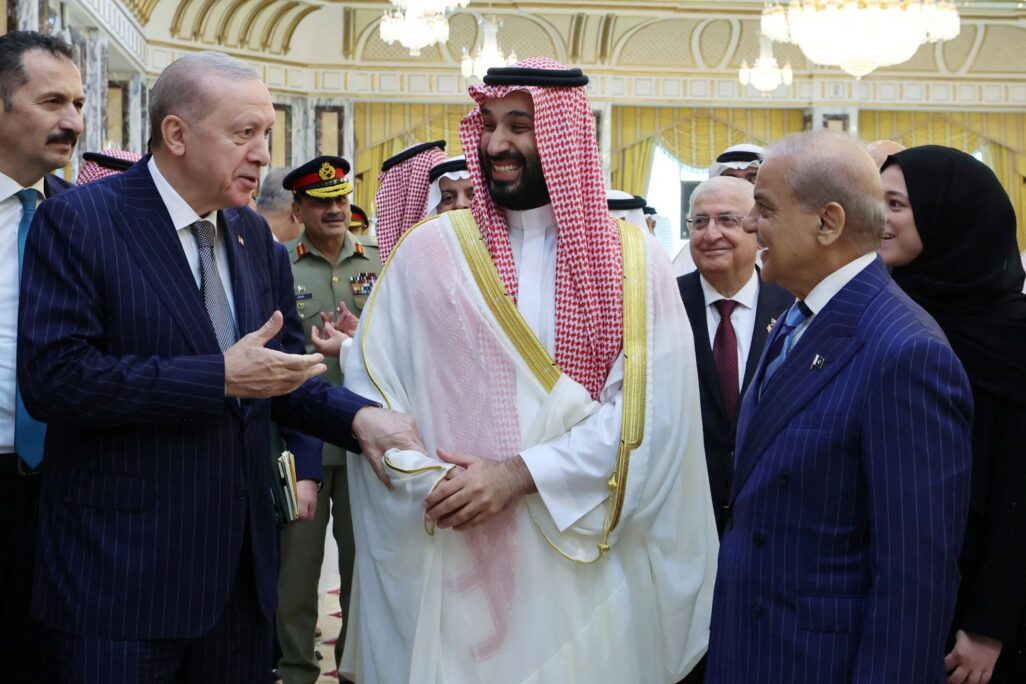
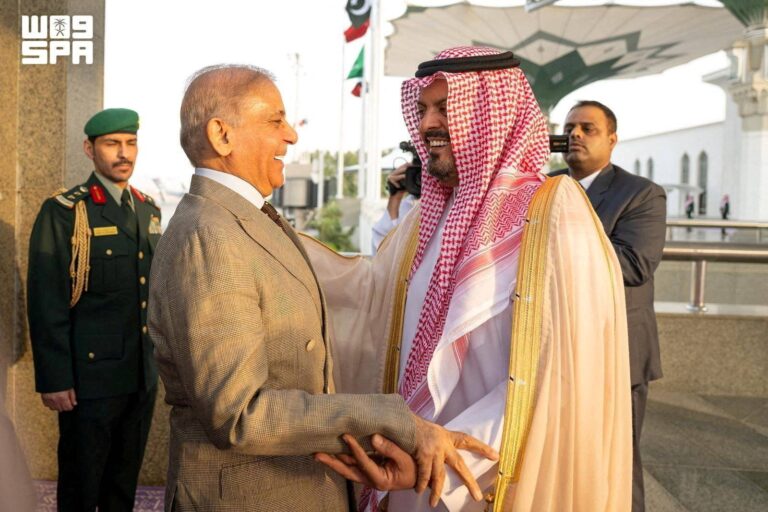
Saudi Arabia, Pakistan, and Türkiye signed a joint defense agreement on Friday in Mecca. According to a joint statement issued by the three countries, the agreement is intended to strengthen collective deterrence and stipulates that an armed attack against any one of the three countries will be considered an attack against all three.
Saudi Arabia had earlier warned that the Houthis in Yemen and Iran-backed Iraqi militias could soon launch a coordinated attack against civilian targets in the kingdom, including energy facilities, ports, and airports. The warning came after a Houthi attack in southern Saudi Arabia wounded 11 people.
The statement did not detail the practical military commitments of each country, but said the agreement aims to strengthen their shared security and promote peace, security, and stability in the region and beyond. Saudi Arabia and Pakistan already have a security cooperation agreement. A Turkish official told Reuters that the new agreement is defensive in nature, is not directed against any particular country or actor, and is open to additional countries in the region joining. According to the official, the agreement also does not cancel or replace existing bilateral or multilateral defense agreements. Reuters reported that the agreement is the result of nearly a year of negotiations between the three countries.
A senior Saudi official told Reuters, speaking anonymously, that intelligence gathered by Saudi Arabia, the United States, and other countries in the Middle East indicates that the Houthis and Iraqi militias, under the supervision of Iran’s Islamic Revolutionary Guard Corps (IRGC), could soon launch coordinated attacks on targets in Saudi Arabia.
According to the official, the threat is particularly concerning amid Riyadh’s efforts to promote de-escalation and a political settlement in its conflict with Iran. He assessed that one possible aim of the attacks could be to disrupt those diplomatic efforts.
The Houthi attack, which wounded 11 people, took place in Najran province in southern Saudi Arabia. Maj. Gen. Turki al-Maliki, spokesperson for the Saudi-led military coalition, said those wounded included seven Saudi citizens, one Yemeni citizen, two Egyptians, and one Pakistani citizen. Among the casualties was also a four-year-old child who suffered second-degree burns.
Al-Maliki accused the Houthis of indiscriminate fire toward civilian areas and said the coalition would continue to take all necessary measures to protect the population. A Saudi official told Reuters that cooperation between Riyadh and Washington remains “at a very high level” at all levels, including operational cooperation with the U.S. military’s Central Command. According to the official, Saudi Arabia is prepared to take all necessary measures in response to any aggression.
The Houthis Increase the Risk to Riyadh
Saudi Arabia’s decade-long conflict with the Houthis is becoming increasingly intertwined with the broader regional war with Iran. Houthi actions, including the Red Sea blockade that disrupted Saudi oil exports, have increased the risks facing Riyadh and expanded the number of fronts on which it must contend with groups backed by Tehran.
The Houthis claimed responsibility for an attack last week on Najran Airport, as part of a broader escalation that has included strikes on military targets, infrastructure, and shipping. On Thursday last week, more than 30 soldiers from Yemen’s government forces were killed in Houthi attacks in the Marib and Hadramawt provinces, which the Houthis described as attacks targeting Saudi military deployments.
Iraqi militias have also become directly involved in the confrontation with Saudi Arabia. On July 29, Riyadh announced that, in coordination with the U.S. Central Command, it had carried out strikes against Iran-backed groups in Iraq after accusing them of launching drones at Saudi oil facilities. The Iraqi militias responded by saying they would retaliate against the Saudi strikes.
In September 2025, before the war with Iran, Saudi Arabia signed a mutual defense agreement with Pakistan. However, Pakistan did not respond militarily to Iran’s numerous attacks on the kingdom. Last summer, Ankara was a third party in talks ahead of the agreement between Riyadh and Islamabad, but ultimately decided to postpone joining. Now, according to reports, Türkiye is set to join, turning the defense agreement into a trilateral pact.
Analysts around the world have dubbed the trilateral alliance “the NATO of the Middle East” and predict that Egypt may also join soon. However, unlike NATO, the alliance’s arrangements are not publicly disclosed, and it has no publicly available charter or formal mechanism specifying how member states would assist one another.
Türkiye and Pakistan have maintained a strong strategic and ideological alliance with each other and with Qatar for roughly two decades. The three countries have sponsored activities by the Muslim Brotherhood, which opposes the governments of Saudi Arabia and Egypt. Against this backdrop, the prospect of these countries joining the same military alliance is far from straightforward.